THE CLASSIC COLLECTION✦The Long White Cloud: “Ao Tea Roa”CLASSIC FREE BOOKS
The Long White Cloud: “Ao Tea Roa”
William Pember Reeves
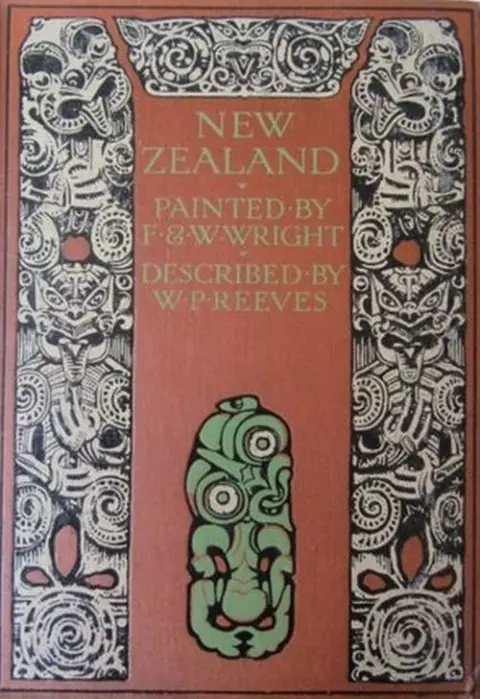
THE CLASSIC COLLECTION · 1898
"New Zealand" by William Pember Reeves is a descriptive travelogue written in the early 20th century. The work explores the landscapes, environments, and lifestyle of New Zealand, painting a vivid picture of the islands’ unique character and culture. The author’s insights into the natural beauty, climate, and agricultural practices provide an informative glimpse into life on the islands for potential travelers or those curious about the region. At the start of the book, the author introduces the islands and their geographical context, emphasizing their isolation in the southern waters. Reeves notes the diverse climates of New Zealand, highlighting how the mixture of lush landscapes and rugged mountains contributes to its distinct beauty. He contrasts the islands with Great Britain, debunking common stereotypes and illustrating how the local culture has developed uniquely. The opening sets the tone for a deeper exploration into New Zealand's allure, including natural wonders and societal characteristics, all of which readers can expect to discover in the following chapters.
Introduction adapted from the source catalogue; source summaries may be automatically generated.
Free to read · English · 64,054 words · No account needed
MAKE TIME FOR A GOOD BOOK
On by default. Untick to stop anonymous reading totals. Each page counts after 10 seconds in view. How this works.
Anonymous counting is on unless you have switched it off.
There are thirty-seven establishments in the colony for meat freezing and preserving, employing over three thousand hands and paying nearly £300,000 a year in wages. The value of their output is about £5,000,000 a year, and the bulk of it is exported to the port of London. The weight of meat sent to the United Kingdom last year was two hundred and thirty-seven million pounds avoirdupois. Then there are about three hundred and twenty dairy-butter or cheese factories, without counting a larger outer circle of skimming stations. To these the dairy-farmers send their milk, getting it back after skimming. That completes their share of the work; expert factory hands and managers do the rest. As for meat-freezing, from beginning to end the industry is scientifically managed and carefully supervised. At its inception, a quarter of a century ago, the flocks of the colony were healthy and of good strains of blood. But they were bred chiefly to grow wool, and mainly showed a basis of Merino crossed with Lincoln or Leicester. Nowadays the Romney Marsh blood predominates in the stud flocks, especially in the North Island. Lincoln, Leicester, Merino, Border Leicester, Shropshire, and South Down follow in order. For five-and-twenty years our breeders have brought their skill to bear on crossing, with a view to producing the best meat for the freezing factory, without ruining the quality of their wool. They still face the cost and trouble of importing stud sheep from England, though their own selected animals have brought them good prices in South America, Australia, and South Africa. Flocks and herds alike are subjected to regular inspection by the veterinary officers of the Department of Agriculture; and though the slaughter-yards and factories of the freezing companies are models of order, speed, and cleanliness, the Government expert is there too, and nothing may be sold thence without his certificate, for every carcase must bear the official mark. From the factory to the steamer, from one end of the earth to the other, the frozen carcases are vigilantly watched, and the temperature of the air they are stored in is regulated with painful care. As much trouble is taken to keep freezing chambers cold as to keep a king’s palace warm. The shipping companies are as jealously anxious about the condition of their meat cargoes as they are for the contentment of their passengers and the safety of their ships. At the London Docks the meat is once more examined by a New Zealand official, and finally at Smithfield, as the carcases are delivered there in the small hours of the morning, they are scanned for the last time by a veterinary expert from the Antipodes. Moreover, since our meat goes now to other British ports as well as to London, and since, too, nearly half of what is discharged in the Thames no longer finds its way to Smithfield, our inspectors have to follow our meat into the provinces and report upon the condition in which it reaches such towns as Bristol, Cardiff, Liverpool, and Manchester. Furthermore, they do their best to track it a stage farther and ascertain its fate at the hands of the unsentimental retail trader. Most New Zealand meat is now honestly sold as what it is. Some of the best of it, however, is still palmed off on the consumer as British. On the other hand, South American mutton is sometimes passed off as New Zealand. The housewife who buys “Canterbury Lamb” because she likes all things Kentish is not yet altogether extinct. For all this the clumsily-drawn English law, which makes conviction so difficult, must be held mainly responsible. New Zealand butter, too, suffers at the hands of English manipulators. It is what Tooley Street calls a dry butter--that is to say, it contains on an average not more than some eleven per cent of moisture. This renders it a favourite for mixing with milk and for selling as “milk-blended” butter, a process at which makers in the colony can only look on wrathfully but helplessly. Otherwise they have little to complain about, for their butter has for years past brought them prices almost as high as those of good Danish, while during the butter famine of the first few months of 1908 as much as 150 shillings a hundredweight was paid for parcels of it. Before shipment in the colony, butter and cheese are graded by public inspectors. Every box bears the Government stamp. In practice the verdict of the grader is accepted by the English purchasers. Relatively the amount of frozen beef which we export is not large; but our climate and pastures are too well suited for beef-growing to make it likely that the discrepancy will continue. Probably frozen beef will give place to chilled; that is to say, improvements in the art of chilling will enable our beef to be carried at a temperature of, let us say, 30° Fahrenheit, instead of 12°. It will then arrive in England soft and fit for immediate use: thawing will not be needed, and a higher price will be obtained. But, however far behind New Zealand may as yet lag in the beef trade, enough has been done in other branches of refrigeration to show how scientific, well-organised, and efficient colonial industry is becoming, and how very far the farmers and graziers of the islands are from working in the rough and hand-to-mouth fashion that settlers in new countries are supposed to affect.
Your reading position is saved on this browser. Take it to another device with a library code. Reading pages adapt to text, rather than matching a printed edition.
BEHIND THE BOOK
This eBook is for the use of anyone anywhere in the United States and most other parts of the world at no cost and with almost no restrictions whatsoever. You may copy it, give it away or re-use it under the terms of the Project Gutenberg License included with this eBook or online at www.gutenberg.org. If you are not located in the United States, you will have to check the laws of the country where you are located before using this eBook. Read the source licence.
The original source file, including credits and licence, is retained by this library. Request an original-format copy at no charge. Please include the book title and Project Gutenberg identifier #60645.
KEEP YOUR CURIOSITY GOING
Wilfrid Scawen Blunt
Wilfrid Scawen Blunt

E. W. (Edgar Watson) Howe
Cécile Tormay

Moritz Busch
John L. Ransom