THE CLASSIC COLLECTION✦The Long White Cloud: “Ao Tea Roa”CLASSIC FREE BOOKS
The Long White Cloud: “Ao Tea Roa”
William Pember Reeves
THE CLASSIC COLLECTION · 1898
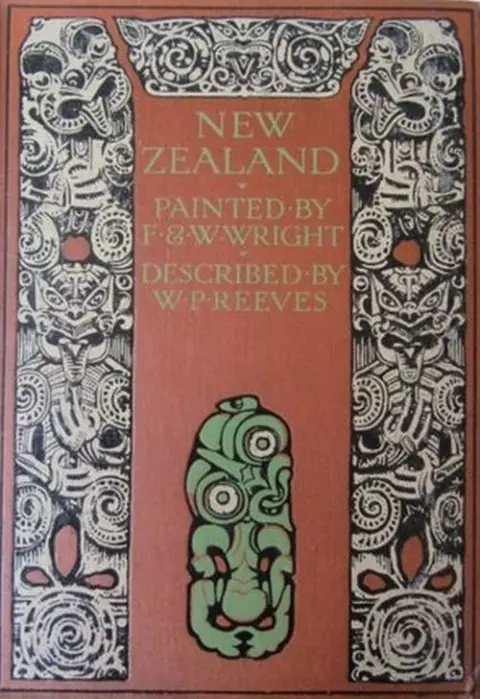
"New Zealand" by William Pember Reeves is a descriptive travelogue written in the early 20th century. The work explores the landscapes, environments, and lifestyle of New Zealand, painting a vivid picture of the islands’ unique character and culture. The author’s insights into the natural beauty, climate, and agricultural practices provide an informative glimpse into life on the islands for potential travelers or those curious about the region. At the start of the book, the author introduces the islands and their geographical context, emphasizing their isolation in the southern waters. Reeves notes the diverse climates of New Zealand, highlighting how the mixture of lush landscapes and rugged mountains contributes to its distinct beauty. He contrasts the islands with Great Britain, debunking common stereotypes and illustrating how the local culture has developed uniquely. The opening sets the tone for a deeper exploration into New Zealand's allure, including natural wonders and societal characteristics, all of which readers can expect to discover in the following chapters.
Introduction adapted from the source catalogue; source summaries may be automatically generated.
Free to read · English · 64,054 words · No account needed
MAKE TIME FOR A GOOD BOOK
On by default. Untick to stop anonymous reading totals. Each page counts after 10 seconds in view. How this works.
Anonymous counting is on unless you have switched it off.
For a bit of New Zealand colour you may turn to Colenso’s description of a certain morning in early October when he found himself on a high hill-top in face of Mount Ruapehu. Snow had fallen in the night and the volcano was mantled heavily therewith. The forest and native village on the hill on which Colenso stood were sprinkled with white, and, though the rising sun was shining brightly, a few big flakes continued to flutter down. Outside the village a grove of kowhai was covered with golden-and-russet blossoms, all the more noticeable because the young leaves were only on the way. Suddenly from the evergreen forest a flock of kakas descended on the kowhais, chattering hoarsely. The great parrots, walking out on the underside of the boughs to the very end of the branches, began to tear open the flowers, piercing them at the side of their base and licking out the honey with their brush-tipped tongues. Brown-skinned Maori boys climbing the trees brought to the naturalist specimens of the blossoms thus opened by the big beaks. The combination of the golden-brown flowers and green forest; the rough-voiced parrots, olive-brown and splashed with red, swaying on the slender branch-tips; and the sunlight gleaming on the white snow, made, with the towering volcano in the background, a picture as brilliant as curious.
Whatever the dim flowers, purple fruit, and glossy leaves of many of our plants might lead the imaginative to expect, the number that are poisonous is very small. Only two examples are conspicuous, and but one does any damage to speak of. Of the noxious pair the karaka, a handsome shrub, is a favourite garden plant, thanks to its large polished leaves and the deep orange colour of its fruit. It has been a favourite, too, with the Maori from time immemorial. They plant it near their villages, and they claim to have brought it in their canoes from Polynesia. Botanists shake their heads over this assertion, however, the explanation of which is somewhat similar to a famous statement by a certain undergraduate on the crux of the Baconian controversy. “The plays of Shakespeare,” said this young gentleman, “were not written by him, but by another fellow of the same name.” It seems that there is a Polynesian karaka in the islands where the Maori once dwelt, but that it is no relation of the New Zealand shrub. The affection of the Maori for the latter was based on something more practical than an ancestral association. They were extremely fond of the kernel of its fruit. When raw, this is exceedingly bitter and disagreeable--fortunately so, for it contains then a powerful poison. Somehow the Maori discovered that by long baking or persistent steaming the kernels could be freed from this, and they used to subject them to the process in a most patient and elaborate fashion. Now and then some unlucky person--usually a child--would chew a raw kernel and then the result was extraordinary. The poison distorted the limbs and then left them quite rigid, in unnatural postures. To avoid this the Maori would lash the arms and legs of the unfortunate sufferer in a natural position, and then bury him up to his shoulders in earth. Colenso once saw a case in which this strong step had not been taken, or had failed. At any rate the victim of karaka poison, a well-grown boy, was lying with limbs stiff and immovable, one arm thrust out in front, one leg twisted backwards; he could neither feed himself nor beat off the swarm of sandflies that were pestering him. White children must be more cautious than the Maori, for though the karaka shines in half the gardens of the North Island, one never hears of any harm coming from it. The other plant with noxious properties is the tutu, and this in times past did much damage among live-stock, sheep especially. Much smaller than the karaka, it is still an attractive-looking bush, with soft leaves and purple-black clusters of berries. Both berries and shoots contain a poison, powerful enough to interest chemists as well as botanists. Sheep which eat greedily of it, especially when tired and fasting after a journey, may die in a few hours. It kills horned cattle also, though horses do not seem to suffer from it. Its chief recorded achievement was to cause the death of a circus elephant many years ago, a result which followed in a few hours after a hearty meal upon a mixture of tutu and other vegetation. So powerful is the poison that a chemist who handles the shoots of the plant for an hour or two with his fingers will suffer nausea, pain, and a burning sensation of the skin. An extremely minute internal dose makes the nausea very violent indeed. Of course, so dangerous a plant does not get much quarter from the settlers, and for this and other reasons the losses caused by tutu among our flocks and herds are far less than was the case forty or fifty years ago. Strangely enough the Maoris could make a wine from the juice of the berries, which was said to be harmless and palatable, though I venture to doubt it. White men are said to have tried the liquor, though I have never met any of these daring drinkers. Though the most dangerous plant in the islands, it does not seem to have caused any recorded death among white people for more than forty years.
Your reading position is saved on this browser. Take it to another device with a library code. Reading pages adapt to text, rather than matching a printed edition.
BEHIND THE BOOK
This eBook is for the use of anyone anywhere in the United States and most other parts of the world at no cost and with almost no restrictions whatsoever. You may copy it, give it away or re-use it under the terms of the Project Gutenberg License included with this eBook or online at www.gutenberg.org. If you are not located in the United States, you will have to check the laws of the country where you are located before using this eBook. Read the source licence.
The original source file, including credits and licence, is retained by this library. Request an original-format copy at no charge. Please include the book title and Project Gutenberg identifier #60645.
KEEP YOUR CURIOSITY GOING
Wilfrid Scawen Blunt
Wilfrid Scawen Blunt

E. W. (Edgar Watson) Howe
Cécile Tormay

Moritz Busch
John L. Ransom