THE CLASSIC COLLECTION✦The Long White Cloud: “Ao Tea Roa”CLASSIC FREE BOOKS
The Long White Cloud: “Ao Tea Roa”
William Pember Reeves
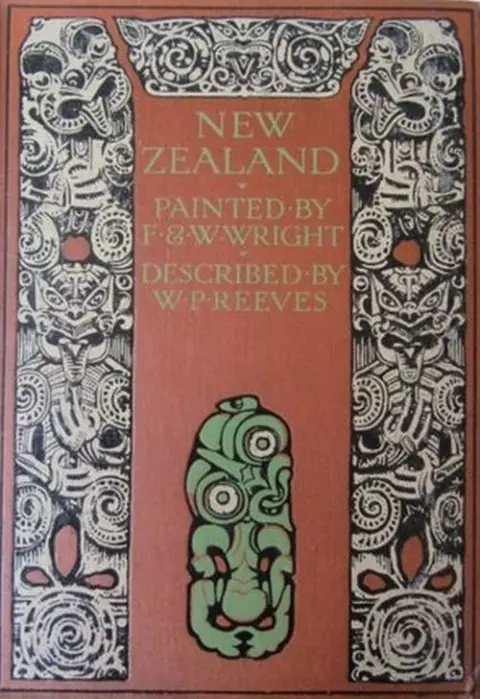
THE CLASSIC COLLECTION · 1898
"New Zealand" by William Pember Reeves is a descriptive travelogue written in the early 20th century. The work explores the landscapes, environments, and lifestyle of New Zealand, painting a vivid picture of the islands’ unique character and culture. The author’s insights into the natural beauty, climate, and agricultural practices provide an informative glimpse into life on the islands for potential travelers or those curious about the region. At the start of the book, the author introduces the islands and their geographical context, emphasizing their isolation in the southern waters. Reeves notes the diverse climates of New Zealand, highlighting how the mixture of lush landscapes and rugged mountains contributes to its distinct beauty. He contrasts the islands with Great Britain, debunking common stereotypes and illustrating how the local culture has developed uniquely. The opening sets the tone for a deeper exploration into New Zealand's allure, including natural wonders and societal characteristics, all of which readers can expect to discover in the following chapters.
Introduction adapted from the source catalogue; source summaries may be automatically generated.
Free to read · English · 64,054 words · No account needed
MAKE TIME FOR A GOOD BOOK
On by default. Untick to stop anonymous reading totals. Each page counts after 10 seconds in view. How this works.
Anonymous counting is on unless you have switched it off.
In a word, the outlook for the Maori, though still doubtful, is by no means desperate. They will own land; they will collect substantial rents from white tenants; they will be educated; they will retain the franchise. At last they are beginning to learn the laws of sanitation and the uses of ventilation and hospitals. The doctors of the Health Department have persuaded them to pull down hundreds of dirty old huts, are caring for their infants, and are awaking a wholesome distrust of the trickeries of those mischievous conjuror-quacks, the tohungas. Some of these good physicians--Dr. Pomaré, for instance--are themselves Maori. More of his stamp are wanted; also more Maori lawyers like Mr. Apirana Ngata, M.P. Much will turn upon the ability of the race to master co-operative farming. That there is hope of this is shown by the success of the Ngatiporou tribesmen, who in recent years have cleared and sown sixty thousand acres of land, and now own eighty-three thousand sheep, more than three thousand cattle, and more than eight thousand pigs. Only let the sanitary lesson be learned and the industrial problem solved, and the qualities of the Maori may be trusted to do the rest. Their muscular strength and courage, their courtesy and vein of humour, their poetic power and artistic sense, are gifts that make it desirable that the race should survive and win a permanent place among civilised men.
Watching the tendencies of New Zealand life and laws to-day, one is tempted to look ahead and think of what country life in the islands may become in a generation or so, soon after the colony has celebrated its hundredth anniversary. It should be a pleasant life, even pleasanter than that of our own time; for more gaps will have been filled up and more angles rubbed off. Limiting laws and graduated taxes will have made an end of the great estates: a land-owner with more than £120,000 of real property will probably be unknown. Many land-owners will be richer than that, but it will be because a part of their money is invested in personalty. But in peacefully making an end of latifundia the law-makers will not have succeeded--even if that were their design--in handing over the land to peasants: there will be no sweeping revolution. Much of the soil will still be held by large and substantial farmers,--eight or ten thousand in number, perhaps,--educated men married to wives of some culture and refinement. The process of subdivision will have swelled the numbers and increased the influence of land-holders. The unpopularity which attached itself to the enormous estates will pass away with them. Some of the farming gentlemen of the future will be descendants of members of the English upper and upper-middle classes. Others will be the grandsons of hard-headed Scotch shepherds, English rural labourers, small tenants, or successful men of commerce. Whatever their origin, however, education, intermarriage, and common habits of life will tend to level them into a homogeneous class. Dressed in tweed suits, wide-awake hats, and gaiters, riding good horses or driving in powerful motors, and with their alert, bony faces browned and reddened by sun and wind, they will look and will be a healthy, self-confident, intelligent race. Despite overmuch tea and tobacco, their nerves will seldom be highly strung; the blessed sunshine and the air of the sea and the mountains will save them from that. Moreover, colonial cookery will be better than it has been, and diet more varied. Nor will our farmers trouble the doctors much or poison themselves with patent drugs. Owning anything from half a square mile to six or seven square miles of land, they will be immensely proud of their stake in the country and cheerfully convinced of their value as the backbone of the community. They will not be a vicious lot; early marriage and life in the open air will prevent that. Nor will drunkenness be fashionable, though there will be gambling and probably far too much horse-racing. Varying in size from three or four hundred to four or five thousand acres, their properties, with stock and improvements, may be worth anything from five or six thousand to seventy or eighty thousand pounds, but amongst themselves the smaller and larger owners will meet on terms of easy equality. They will gradually form an educated rural gentry with which the wealthier townspeople will be very proud and eager to mix. A few of them, whose land is rich, may lease it out in small allotments, and try to become squires on a modified English pattern. But most of them will work their land themselves, living on it, riding over it daily, directing their men, and, if need be, lending a hand themselves. That will be their salvation, bringing them as it will into daily contact with practical things and working humanity. Conservative, of course, they will be, and in theory opposed to Socialism, yet assenting from time to time to Socialistic measures when persuaded of their immediate usefulness. Thus they will keep a keen eye on the State railways, steamships, and Department of Agriculture, and develop the machinery of these in their own interests. A few of the richer of them from time to time may find that life in Europe so pleases them--or their wives--that they will sell out and cut adrift from the colony; but there will be no class of absentee owners--growling, heavily taxed, and unpopular. Our working gentlemen will stick to the country, and will be hotly, sometimes boisterously, patriotic, however much they may at moments abuse governments and labour laws. Most of them will be freeholders. Allied with them will be State pastoral tenants--holding smaller runs than now--to be found in the mountains, on the pumice plateau, or where the clay is hungry. Socially these tenants will be indistinguishable from the freeholders.
Your reading position is saved on this browser. Take it to another device with a library code. Reading pages adapt to text, rather than matching a printed edition.
BEHIND THE BOOK
This eBook is for the use of anyone anywhere in the United States and most other parts of the world at no cost and with almost no restrictions whatsoever. You may copy it, give it away or re-use it under the terms of the Project Gutenberg License included with this eBook or online at www.gutenberg.org. If you are not located in the United States, you will have to check the laws of the country where you are located before using this eBook. Read the source licence.
The original source file, including credits and licence, is retained by this library. Request an original-format copy at no charge. Please include the book title and Project Gutenberg identifier #60645.
KEEP YOUR CURIOSITY GOING
Wilfrid Scawen Blunt
Wilfrid Scawen Blunt

E. W. (Edgar Watson) Howe
Cécile Tormay

Moritz Busch
John L. Ransom