THE CLASSIC COLLECTION✦The Long White Cloud: “Ao Tea Roa”CLASSIC FREE BOOKS
The Long White Cloud: “Ao Tea Roa”
William Pember Reeves
THE CLASSIC COLLECTION · 1898
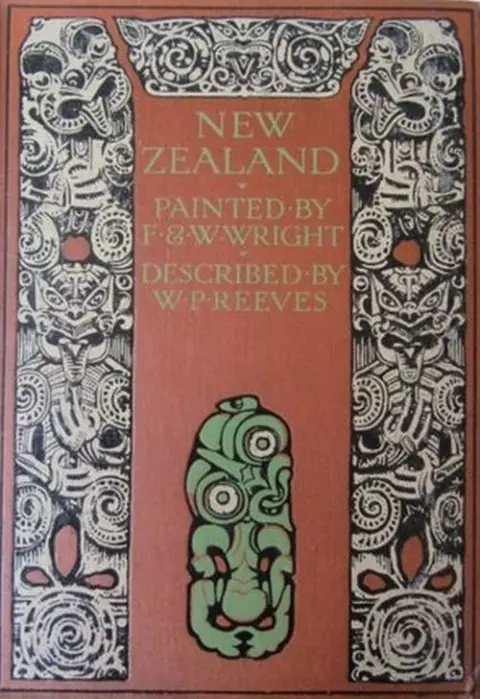
"New Zealand" by William Pember Reeves is a descriptive travelogue written in the early 20th century. The work explores the landscapes, environments, and lifestyle of New Zealand, painting a vivid picture of the islands’ unique character and culture. The author’s insights into the natural beauty, climate, and agricultural practices provide an informative glimpse into life on the islands for potential travelers or those curious about the region. At the start of the book, the author introduces the islands and their geographical context, emphasizing their isolation in the southern waters. Reeves notes the diverse climates of New Zealand, highlighting how the mixture of lush landscapes and rugged mountains contributes to its distinct beauty. He contrasts the islands with Great Britain, debunking common stereotypes and illustrating how the local culture has developed uniquely. The opening sets the tone for a deeper exploration into New Zealand's allure, including natural wonders and societal characteristics, all of which readers can expect to discover in the following chapters.
Introduction adapted from the source catalogue; source summaries may be automatically generated.
Free to read · English · 64,054 words · No account needed
MAKE TIME FOR A GOOD BOOK
On by default. Untick to stop anonymous reading totals. Each page counts after 10 seconds in view. How this works.
Anonymous counting is on unless you have switched it off.
The change in country life now going on so rapidly has not meant merely more comfort for the employer: the position of the men also has altered for the better. While the land-owner’s house and surroundings show a measure of refinement, and even something that may at the other end of the earth pass for luxury, the station hands are far better cared for than was the case a generation or two ago. The interior of the “men’s huts” no longer reminds you of the foc’sle of a merchantship. Seek out the men’s quarters on one of the better managed estates, and it may easily happen that you will now find a substantial, well-built cottage with a broad verandah round two sides. Inside you are shown a commodious dining-room, and a reading-room supplied with newspapers and even books. To each man is assigned a separate bedroom, clean and airy, and a big bathroom is supplemented by decent lavatory arrangements. The food was always abundant--in the roughest days the estate owners never grudged their men plenty of “tucker.” But it is now much more varied and better cooked, and therefore wholesome. To some extent this improvement in the country labourer’s lot is due to legal enactment and government inspection. But it is only fair to say that in some of the most notable instances it comes from spontaneous action by employers themselves. New Zealand has developed a public conscience during the last twenty years in matters relating to the treatment of labour, and by this development the country employers have been touched as much as any section of the community. They were never an unkindly race, and it may now be fairly claimed that they compare favourably with any similar class of employers within the Empire.
At the other end of the rural scale to the establishment of the great land-owner we see the home of the bush settler--the pioneer of to-day. Perhaps the Crown has leased a block of virgin forest to him; perhaps he is one of the tenants of a Maori tribe, holding on a twenty-one or forty-two years’ lease; perhaps he has contrived to pick up a freehold in the rough. At any rate he and his mate are on the ground armed with saw and axe for their long attack upon Nature; and as you note the muscles of their bared arms, and the swell of the chests expanding under their light singlets, you are quite ready to believe that Nature will come out of the contest in a damaged condition. It is their business to hack and grub, hew and burn, blacken and deface. The sooner they can set the fire running through tracts of fern or piles of felled bush the sooner will they be able to scatter broadcast the contents of certain bags of grass seed now carefully stowed away in their shanty under cover of tarpaulins. Sworn enemies are they of tall bracken and stately pines. To their eyes nothing can equal in beauty a landscape of black, fire-scorched stumps and charred logs--if only on the soil between these they may behold the green shoots of young grass thrusting ten million blades upward. What matter the ugliness and wreckage of the first stages of settlement, if, after many years, a tidy farm and smiling homestead are to be the outcome? In the meantime, while under-scrubbing and bush-felling are going on, the axemen build for themselves a slab hut with shingled roof. The furniture probably exemplifies the great art of “doing without.” The legs of their table are posts driven into the clay floor: to other posts are nailed the sacking on which their blankets are spread. A couple of sea chests hold their clothes and odds and ends. A sheepskin or two do duty for rugs. Tallow candles, or maybe kerosene, furnish light. A very few well-thumbed books, and a pack or two of more than well-thumbed cards, provide amusement. Not that there are many hours in the week for amusement. When cooking is done, washing and mending have to be taken in hand. Flannel and blue dungaree require washing after a while, and even garments of canvas and moleskin must be repaired sooner or later. A camp oven, a frying-pan, and a big teapot form the front rank of their cooking utensils, and fuel, at least, is abundant. Baking-powder helps them to make bread. Bush pork, wild birds, and fish may vary a diet in which mutton and sardines figure monotonously. After a while a few vegetables are grown behind the hut, and the settlers find time to milk a cow. Soon afterwards, perhaps, occurs the chief event of pioneer life--the coming of a wife on to the scene. With her arrival is the beginning of a civilised life indoors, though her earlier years as a housekeeper may be an era of odd shifts and desperate expedients. A bush household is lucky if it is near enough to a metalled road to enable stores to be brought within fairly easy reach. More probably such necessaries as flour, groceries, tools, and grass seed--anything, in short, from a grindstone to a bag of sugar--have to be brought by pack-horse along a bush-track where road-metal is an unattainable luxury, and which may not unfairly be described as a succession of mud-holes divided by logs. Along such a thoroughfare many a rain-soaked pioneer has guided in days past the mud-plastered pack-horse which has carried the first beginnings of his fortunes. For what sustains the average settler through the early struggles of pioneering in the wilderness is chiefly the example of those who have done the same thing before, have lived as hard a life or harder, and have emerged as substantial farmers and leading settlers, respected throughout their district. Success has crowned the achievement so many thousand times in the past that the back-country settler of to-day, as he fells his bush and toils along his muddy track, may well be sustained by hope and by visions of macadamised coach roads running past well-grassed, well-stocked sheep or dairy farms in days to come.
Your reading position is saved on this browser. Take it to another device with a library code. Reading pages adapt to text, rather than matching a printed edition.
BEHIND THE BOOK
This eBook is for the use of anyone anywhere in the United States and most other parts of the world at no cost and with almost no restrictions whatsoever. You may copy it, give it away or re-use it under the terms of the Project Gutenberg License included with this eBook or online at www.gutenberg.org. If you are not located in the United States, you will have to check the laws of the country where you are located before using this eBook. Read the source licence.
The original source file, including credits and licence, is retained by this library. Request an original-format copy at no charge. Please include the book title and Project Gutenberg identifier #60645.
KEEP YOUR CURIOSITY GOING
Wilfrid Scawen Blunt
Wilfrid Scawen Blunt

E. W. (Edgar Watson) Howe
Cécile Tormay

Moritz Busch
John L. Ransom