THE CLASSIC COLLECTION✦The Long White Cloud: “Ao Tea Roa”CLASSIC FREE BOOKS
The Long White Cloud: “Ao Tea Roa”
William Pember Reeves
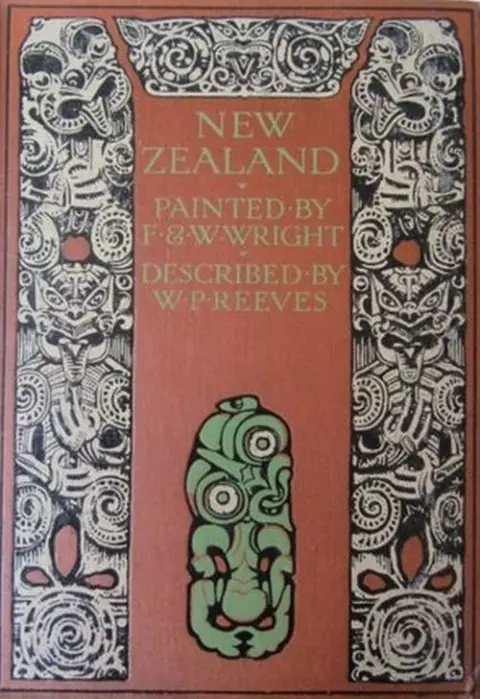
THE CLASSIC COLLECTION · 1898
"New Zealand" by William Pember Reeves is a descriptive travelogue written in the early 20th century. The work explores the landscapes, environments, and lifestyle of New Zealand, painting a vivid picture of the islands’ unique character and culture. The author’s insights into the natural beauty, climate, and agricultural practices provide an informative glimpse into life on the islands for potential travelers or those curious about the region. At the start of the book, the author introduces the islands and their geographical context, emphasizing their isolation in the southern waters. Reeves notes the diverse climates of New Zealand, highlighting how the mixture of lush landscapes and rugged mountains contributes to its distinct beauty. He contrasts the islands with Great Britain, debunking common stereotypes and illustrating how the local culture has developed uniquely. The opening sets the tone for a deeper exploration into New Zealand's allure, including natural wonders and societal characteristics, all of which readers can expect to discover in the following chapters.
Introduction adapted from the source catalogue; source summaries may be automatically generated.
Free to read · English · 64,054 words · No account needed
MAKE TIME FOR A GOOD BOOK
On by default. Untick to stop anonymous reading totals. Each page counts after 10 seconds in view. How this works.
Anonymous counting is on unless you have switched it off.
“There is an island out in the ocean not far from here to the eastward. It is full of birds--both land and sea-birds--of all kinds, some living in the peaty soil, with albatross in plenty on the outlying islands. There is abundance of sea and shell-fish; the lakes swarm with eels; and it is a land of the karaka. The inhabitants are very numerous, but they do not know how to fight, and have no weapons.”
His hearers saw a vision of a Maori El Dorado! But how was it to be reached? In canoes they could not venture so far, nor did they know the way. Doubtless, however, they remembered how Stewart of the Elisabeth had carried Rauparaha and his warriors to Akaroa in the hold of his brig a few years before. Another brig, the Rodney, was in Cook’s Strait now, seeking a cargo of scraped flax. Her captain, Harewood, was not such a villain as Stewart; but if he could not be bribed he could be terrified--so thought the Ngatiawa. In Port Nicholson (Wellington harbour) lies a little islet with a patch of trees on it, like a tuft of hair on a shaven scalp. Nowadays it is used as a quarantine place for dogs and other doubtful immigrants. Thither the Ngatiawa decoyed Harewood and a boat’s crew, and then seizing the men, cajoled or frightened the skipper into promising to carry them across the sea to their prey. Whether Harewood made much ado about transporting the filibustering cannibals to the Chathams will probably never be known. He seems to have had some scruples, but they were soon overcome, either by fear or greed. Once the bargain was struck he performed his part of it without flinching. The work of transport was no light task. No less than nine hundred of the Maori of Cook’s Strait had resolved to take part in the enterprise, so much had Rauparaha’s freebooting exploits in the south inflamed and unsettled his tribe. To carry this invading horde to the scene of their enterprise the Rodney had to make two trips. On the first of them the Maori were packed in the hold like the negroes on a slaver, and when water ran short suffered miseries of thirst. Had the Moriori known anything of war they might easily have repelled their enemies. As it was, the success of the invasion was prompt and complete. Without losing a man the Maori soon took possession of the Chathams and their inhabitants. The land was parcelled out among the new-comers, and the Moriori and their women tasted the bitterness of enslavement by insolent and brutal savages. They seem to have done all that submissiveness could do to propitiate their swaggering lords. But no submissiveness could save them from the cruelty of barbarians drunk with easy success. Misunderstandings between master and slave would be settled with a blow from a tomahawk. On at least two occasions there were massacres, the results either of passion or panic. In one of these fifty Moriori were killed; in the other, perhaps three times that number of all ages and sexes. On the second occasion the dead were laid out in a line on the sea-beach, parents and children together, so that the bodies touched each other. The dead were of course eaten; it is said that as many as fifty were baked in one oven. I have read, moreover, that the Maori coolly kept a number of their miserable slaves penned up, feeding them well, and killed them from time to time like sheep when butcher’s meat was wanted. This last story is, I should think, doubtful, for as the whole island was but one large slave-pen, there could be no object in keeping victims shut up in a yard. The same story has been told of Rauparaha’s treatment of the islanders of Kapiti. But Kapiti is but a few miles from the main shore, and one of his destined victims, a woman, is said to have swum across the strait with her baby on her back. The unhappy Moriori had nowhere to flee to, unless they were to throw themselves into the sea. The white traders and sealers on the coast were virtually in league with their oppressors. The only escape was death, and that way they were not slow to take. Chroniclers differ as to the precise disease which played havoc with them, but I should imagine that the pestilence which walked among them in the noonday was Despair. At any rate their number, which had been 2000 in 1836, was found to be 212 in 1855. The bulk of the race had then found peace in the grave. It is a relief to know that the sufferings of the survivors had by that time come to an end. Long before 1855 the British flag had been hoisted on the Chathams and slavery abolished. After a while the New Zealand Government insisted upon a certain amount of land being given back to the Moriori. It was a small estate, but it was something. The white man, now lord of all, made no distinction between the two brown races, and in process of time the Maori, themselves reduced to a remnant, learned to treat the Moriori as equals. These better days, however, came too late. The Moriori recognised this. For in 1855, seeing that their race was doomed, they met together and solemnly agreed that the chronicles of their people should be arranged and written down, so that when the last was dead, their name and story should not be forgotten. The conquering Maori themselves did not fare so much better. They stood the test of their easy success as badly as did Pizarro’s filibusters in Peru. They quarrelled with their friends, the white traders and sealers, and suffered in an unprovoked onslaught by the crew of a certain French ship, the Jean Bart. Then two of the conquering clans fell out and fought with each other. In the end a number of them returned to New Zealand, and the remainder failed to multiply or keep up their strength in the Chathams. In the present day Moriori and Maori together--for their blood has mingled--do not number two hundred souls.
Your reading position is saved on this browser. Take it to another device with a library code. Reading pages adapt to text, rather than matching a printed edition.
BEHIND THE BOOK
This eBook is for the use of anyone anywhere in the United States and most other parts of the world at no cost and with almost no restrictions whatsoever. You may copy it, give it away or re-use it under the terms of the Project Gutenberg License included with this eBook or online at www.gutenberg.org. If you are not located in the United States, you will have to check the laws of the country where you are located before using this eBook. Read the source licence.
The original source file, including credits and licence, is retained by this library. Request an original-format copy at no charge. Please include the book title and Project Gutenberg identifier #60645.
KEEP YOUR CURIOSITY GOING
Wilfrid Scawen Blunt
Wilfrid Scawen Blunt

E. W. (Edgar Watson) Howe
Cécile Tormay

Moritz Busch
John L. Ransom