THE CLASSIC COLLECTION✦The Long White Cloud: “Ao Tea Roa”CLASSIC FREE BOOKS
The Long White Cloud: “Ao Tea Roa”
William Pember Reeves
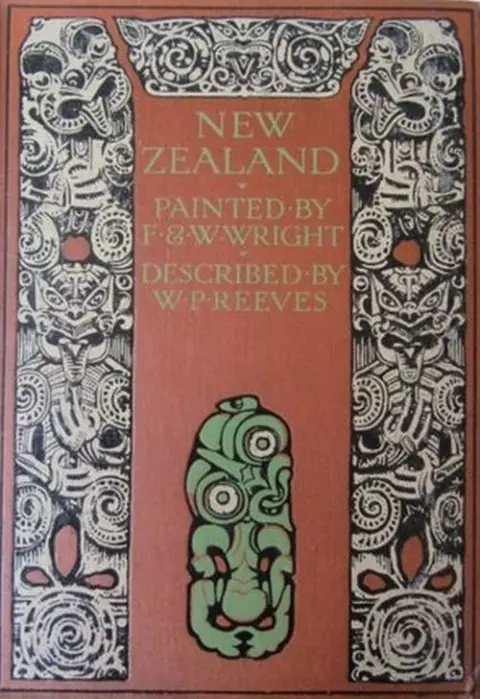
THE CLASSIC COLLECTION · 1898
"New Zealand" by William Pember Reeves is a descriptive travelogue written in the early 20th century. The work explores the landscapes, environments, and lifestyle of New Zealand, painting a vivid picture of the islands’ unique character and culture. The author’s insights into the natural beauty, climate, and agricultural practices provide an informative glimpse into life on the islands for potential travelers or those curious about the region. At the start of the book, the author introduces the islands and their geographical context, emphasizing their isolation in the southern waters. Reeves notes the diverse climates of New Zealand, highlighting how the mixture of lush landscapes and rugged mountains contributes to its distinct beauty. He contrasts the islands with Great Britain, debunking common stereotypes and illustrating how the local culture has developed uniquely. The opening sets the tone for a deeper exploration into New Zealand's allure, including natural wonders and societal characteristics, all of which readers can expect to discover in the following chapters.
Introduction adapted from the source catalogue; source summaries may be automatically generated.
Free to read · English · 64,054 words · No account needed
MAKE TIME FOR A GOOD BOOK
On by default. Untick to stop anonymous reading totals. Each page counts after 10 seconds in view. How this works.
Anonymous counting is on unless you have switched it off.
The sealers and whalers of the first four decades of the nineteenth century knew our outlying islands well. Of the interior of our mainland they knew nothing whatever; but they searched every bay and cove of the butt-end of the South Island, of Rakiura, and of the smaller islets for the whale and fur seal. The schooners and brigs that carried these rough-handed adventurers commonly hailed either from Sydney, Boston, or Nantucket, places that were not in those days schools of marine politeness or forbearance. The captains and crews that they sent out to southern seas looked on the New Zealand coast as a No Man’s Land, peopled by ferocious cannibals, who were to be traded with, or killed, as circumstances might direct. The Maori met them very much in the same spirit. Many are the stories told of the dealings, peaceable or warlike, of the white ruffians with the brown savages. In 1823, for instance, the schooner Snapper brought away from Rakiura to Sydney a certain James Caddell, a white seaman with a tattooed face. This man had, so he declared, been landed on Stewart Island seventeen years earlier, as one of a party of seal-hunters. They were at once set upon by the natives, and all killed save Caddell, who saved his life by clutching the sacred mantle of a chief and thus obtaining the benefit of the law of Tapu. He was allowed to join the tribe, to become one of the fighting men, and to marry a chief’s daughter. At any rate, that was his story. It may have been true, for he is said to have turned his back on Sydney and deliberately returned to live among the Maori.
A more dramatic tale is that of the fate of a boat’s crew from the General Gates, American sealing ship. In 1821 her captain landed a party of six men somewhere near Puysegur Point to collect seal-skins. So abundant were the fur seals on our south-west coast in those days that in six weeks the men had taken and salted 3563 skins. Suddenly a party of Maori burst into their hut about midnight, seized the unlucky Americans, and, after looting the place, marched them off as prisoners. According to the survivors, they were compelled to trudge between three and four hundred miles, and were finally taken to a big sandy bay on the west coast of the South Island. Here they were tied to trees and left without food till they were ravenously hungry. Then one of them, John Rawton, was killed with a club. His head was buried in the ground; his body dressed, cooked, and eaten. On each of the next three days another of the wretched seamen was seized and devoured in the same way, their companions looking on like Ulysses in the cave of the Cyclops. As a crowning horror the starving seamen were offered some of the baked human flesh and ate it. After four days of this torment there came a storm with thunder and lightning, which drove the natives away to take shelter. Left thus unguarded, Price and West, the two remaining prisoners, contrived to slip their bonds of flax. A canoe was lying on the beach, and rough as the surf was, they managed to launch her. Scarcely were they afloat before the natives returned and rushed into the sea after them, yelling loudly. The Americans had just sufficient start and no more. Paddling for dear life, they left the land behind, and had the extraordinary fortune, after floating about for three days, to be picked up, half dead, by the trading schooner Margery. The story of their capture and escape is to be found in Polack’s New Zealand, published in 1838. Recently, Mr. Robert M’Nab has unearthed contemporary references to the General Gates, and, in his book Muri-huku, has given an extended account of the adventures of her skipper and crew. The captain, Abimelech Riggs by name, seems to have been a very choice salt-water blackguard. He began his career at the Antipodes by enlisting convicts in Sydney, and carrying them off as seamen. For this he was arrested in New Zealand waters, and had to stand his trial in Sydney. In Mr. M’Nab’s opinion, he lost two if not three parties of his men on the New Zealand coast, where he seems to have left them to take their chance, sailing off and remaining away with the finest indifference. Finally, he appears to have taken revenge by running down certain canoes manned by Maori which he chanced to meet in Foveaux Straits. After that coup, Captain Abimelech Riggs vanishes from our stage, a worthy precursor of Captain Stewart of the brig Elisabeth, the blackest scoundrel of our Alsatian period.
Your reading position is saved on this browser. Take it to another device with a library code. Reading pages adapt to text, rather than matching a printed edition.
BEHIND THE BOOK
This eBook is for the use of anyone anywhere in the United States and most other parts of the world at no cost and with almost no restrictions whatsoever. You may copy it, give it away or re-use it under the terms of the Project Gutenberg License included with this eBook or online at www.gutenberg.org. If you are not located in the United States, you will have to check the laws of the country where you are located before using this eBook. Read the source licence.
The original source file, including credits and licence, is retained by this library. Request an original-format copy at no charge. Please include the book title and Project Gutenberg identifier #60645.
KEEP YOUR CURIOSITY GOING
Wilfrid Scawen Blunt
Wilfrid Scawen Blunt

E. W. (Edgar Watson) Howe
Cécile Tormay

Moritz Busch
John L. Ransom