THE CLASSIC COLLECTION✦A dead man’s diaryCLASSIC FREE BOOKS
A dead man’s diary
Coulson Kernahan
THE CLASSIC COLLECTION · 1885
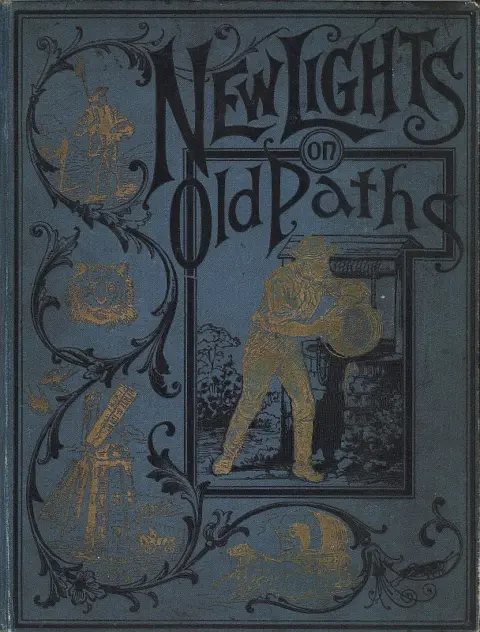
"New Lights on Old Paths" by Charles Foster is a collection of moral tales and fables written in the late 19th century. The work aims to revisit and apply timeless morals to contemporary life, suggesting that the author believes in the importance of applying old truths rather than seeking new ones. Each story is accompanied by illustrations, driving home key lessons intended for personal reflection and growth. The opening of the book introduces a fable about an innkeeper who must choose which type of guests he will welcome into his establishment. On one side, he has the honest farm people who are good for his business but avoid drinking, while on the other are the trouble-making men from the nearby forest who are rowdy and may cause him more trouble than profit. The innkeeper wrestles with his choice, ultimately deciding to favor the farm people for their virtuous behavior and consistent patronage. This tale sets the stage for the overarching themes in the collection: the importance of morals in decision-making and the challenges of maintaining integrity in the face of temptation.
Introduction adapted from the source catalogue; source summaries may be automatically generated.
Free to read · English · 49,101 words · No account needed
MAKE TIME FOR A GOOD BOOK
On by default. Untick to stop anonymous reading totals. Each page counts after 10 seconds in view. How this works.
Anonymous counting is on unless you have switched it off.
“You know I am looking for a man as night-watchman; I think he can be found among those who have just left, and I want you to assist me in making a selection. To-morrow will be Sunday. Be up, all of you, bright and early, and one go and stand near the lodging-place of each of these men. Watch them when they come out in the morning, keep near them all day, and come here at night and report what you have seen.”
The servants, promising obedience, retired, and the next night, according to orders, returned to their master.
“And what have you to tell about your man?” he said to the first who
appeared.
“He spent the day in the country,” replied the servant.
“Sensible fellow!” said his master. “And did you go with him?”
“Indeed I did—got off at the same station, took dinner at the same table, and came back in the same train.”
“And how did he behave himself?”
“Like a sensible fellow, sir, as you called him. He had a friend with him, and they just smoked their cigars and lay about in the shade all day; took a glass of beer now and then—nothing more. I believe he’s the very man that would suit you.” Here the second servant came in.
“And what have you to say?” asked his master.
“My man,” replied the servant, “went to the tavern.”
“He’s none the worse for that, if he didn’t take too much after he got
there.”
“And he didn’t; only three glasses—I counted them—between breakfast and
dinner.”
“Little enough!”
“You’d have thought so if you had only seen how his friends pressed him, a dozen times, to take more.”
“But he wouldn’t?”
“They couldn’t make him. He’s just the man for a watchman, I’m sure.” The third servant now appeared.
“And where did your man go?” asked his master.
“To church,” replied the servant.
“Did you follow him?”
“You told me to, and I did, and sat in the pew right behind him.” At this the other men laughed.
“Well, did he gape around at his neighbors, and then fall asleep, like the rest of the hypocrites who go there?”
“No; I must tell you the truth.”
“Let’s have it, then.”
“I watched him and never took my eyes off him, and I tell you he’s in
earnest.”
“What do you mean?”
“I mean he’s among them that believe there’s a God, and have made up their mind to serve him.”
“That’ll do,” said the master. “You have made your report, and now you
may go.”
Your reading position is saved on this browser. Take it to another device with a library code. Reading pages adapt to text, rather than matching a printed edition.
BEHIND THE BOOK
This eBook is for the use of anyone anywhere in the United States and most other parts of the world at no cost and with almost no restrictions whatsoever. You may copy it, give it away or re-use it under the terms of the Project Gutenberg License included with this eBook or online at www.gutenberg.org. If you are not located in the United States, you will have to check the laws of the country where you are located before using this eBook. Read the source licence.
The original source file, including credits and licence, is retained by this library. Request an original-format copy at no charge. Please include the book title and Project Gutenberg identifier #51062.
KEEP YOUR CURIOSITY GOING
Coulson Kernahan

Maurice Baring
Frances Wright
Cécile Tormay

Frederic Jesup Stimson

W. H. P. (William Henry Pope) Jarvis