THE CLASSIC COLLECTION✦Yellow gentians and blueCLASSIC FREE BOOKS
Yellow gentians and blue
Zona Gale
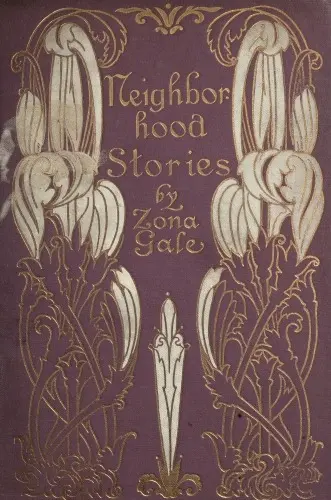
THE CLASSIC COLLECTION · 1912
"Neighborhood Stories" by Zona Gale is a collection of fictional narratives written in the early 20th century. The book captures the essence of life in small Midwestern towns, presenting vivid characters and their interactions within the community. The main character, Calliope Marsh, serves as a lens through which readers witness the dynamics of Friendship Village and its inhabitants, addressing themes of social change, community bonding, and the quest for meaningful connection amidst tradition. The opening of "Neighborhood Stories" introduces Calliope Marsh as she contemplates the significance of celebrating Christmas in a connected way rather than in isolated family units. While engaging in conversation with various townspeople, she expresses a desire to share the holiday spirit with the entire community, reflecting on the communal aspects of Christmas versus individual celebrations. As the text progresses, we see Calliope's plans unfold, ultimately leading to an innovative community Christmas tree celebration that emphasizes unity and shared experiences. Through her interactions and internal thoughts, Gale effectively sets the stage for exploring deeper societal themes and character development throughout the collection.
Introduction adapted from the source catalogue; source summaries may be automatically generated.
Free to read · English · 71,170 words · No account needed
MAKE TIME FOR A GOOD BOOK
On by default. Untick to stop anonymous reading totals. Each page counts after 10 seconds in view. How this works.
Anonymous counting is on unless you have switched it off.
“How much religion really, really, do they let you talk on these calls?” I ask’ him. “Don’t it seem kind of bad taste if you say much about it? And as a matter of fact, don’t ministers pride themselves nowdays on being all-around men who can talk about everything, from concerts to motion pictures, and this here city gollif? Of course they do. That is, if folks keep off their complaints long enough to leave you prove how really broad your interests are.”
“Yes, I know--well,” he says patient, “they expect the calls. What,” he adds, “had you thought of for the order of the four Sunday services?”
“I thought,” I says, “for the first fifteen minutes or so, we might sing
together.”
“A short praise service,” says he, comprehending. “Well--that’s a little out of the order for the Sunday morning service, but it might be indulged.”
“Yes,” I says, dry. “Praise ought not to offend most people. And then I thought of it for what it does to people to sing together for a while. It makes real things seem sort of possible, I always think. After the Doxology, we might start in with ‘America,’ and----”
“America?” says he.
I waited. I thought the next observation belonged to him.
“We’ve sung ‘America’ at Sunday evening mass meetings,” he says, “but for the opening hymn of the regular morning worship--still, of course it’s in the hymnal. I suppose there is really no objection.”
“That,” says I, “was how I looked at it. There’s no objection. Then the Lord’s prayer--all of us together. And the reading--something read from one heart right to another, wouldn’t it be? And then we might sing again--‘Love For Every Unloved Creature,’ or something of that sort. I think,” I says, “we’d ought to be very careful what hymns we pick out, for these Sundays. Take just the religious ones, why don’t you?”
“I beg your pardon,” said our minister. “What did you say then?”
“Well, for instance,” I says....
“‘The Son of God goes forth to war
A kingly crown to gain.
His blood-red banner streams afar.
Who follows in his train?’
“I call a good deal of that hymn immoral. Think of that gentle soul caring to gain a kingly crown. Think of his having a blood-red banner. Think of him going forth to war. It’s a wicked hymn, some of it.”
“Oh, well,” said our minister, “those things are just figurative. You mustn’t take them too literally, Miss Marsh.”
I looked over at him, across my cherries.
Your reading position is saved on this browser. Take it to another device with a library code. Reading pages adapt to text, rather than matching a printed edition.
Zona Gale
Zona Gale
Zona Gale
Zona Gale
BEHIND THE BOOK
This eBook is for the use of anyone anywhere in the United States and most other parts of the world at no cost and with almost no restrictions whatsoever. You may copy it, give it away or re-use it under the terms of the Project Gutenberg License included with this eBook or online at www.gutenberg.org. If you are not located in the United States, you will have to check the laws of the country where you are located before using this eBook. Read the source licence.
The original source file, including credits and licence, is retained by this library. Request an original-format copy at no charge. Please include the book title and Project Gutenberg identifier #52089.
KEEP YOUR CURIOSITY GOING
Coulson Kernahan

Maurice Baring
Frances Wright
Cécile Tormay

Frederic Jesup Stimson

W. H. P. (William Henry Pope) Jarvis