THE CLASSIC COLLECTION✦A dead man’s diaryCLASSIC FREE BOOKS
A dead man’s diary
Coulson Kernahan
THE CLASSIC COLLECTION · 1912
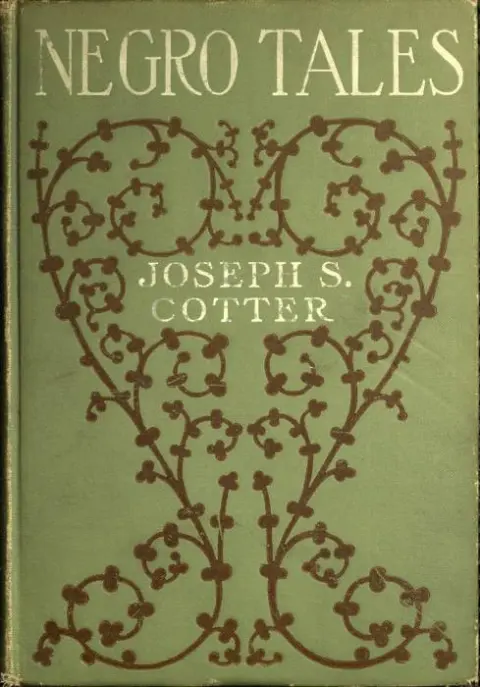
"Negro Tales" by Joseph S. Cotter is a collection of short stories written in the early 20th century. The work explores themes of life, struggle, and the complexity of human relationships within the African American experience, often through the lens of humor and tragedy. The opening narratives introduce a variety of characters dealing with their circumstances, highlighting social issues and the interplay between personal flaws and societal expectations. At the start of the collection, the first story, "Caleb," sets a somber and critical tone by depicting a family dynamic marred by conflict and tragedy. As the conversation turns dark between Caleb and his parents, his father's unexpected death unfolds dramatically, leaving his mother to grapple with grief and questions about responsibility. The narrative quickly escalates, revealing Caleb's morally ambiguous character, deep disdain for others’ judgments, and tendency towards self-serving attitudes that lead to further disintegration of familial bonds. Meanwhile, subsequent snippets hint at other characters facing similar dilemmas, establishing a framework for the exploration of themes like poverty, betrayal, and the search for dignity amidst life's adversities.
Introduction adapted from the source catalogue; source summaries may be automatically generated.
Free to read · English · 28,318 words · No account needed
MAKE TIME FOR A GOOD BOOK
On by default. Untick to stop anonymous reading totals. Each page counts after 10 seconds in view. How this works.
Anonymous counting is on unless you have switched it off.
"You are too generous," said Rodney's mother, and refilled the plate.
Rodney sat on the floor, stroked his cat, and eyed the fine dresses. The ladies munched with dignity, or fingered the laces on their sleeves.
"I see Rodney has had the smallpox," said one.
"Yes," replied his mother.
"My boy had it, too."
"How did it serve him?"
"It killed him. All the good children die. It was a sad stroke to me. Well, since his death I have been able to dress like a lady."
"Like a lady!" said the other. "How my old mistress used to say that word. I caught the inspiration then. It lingered in my bones a long time before it crept out thus."
Here she surveyed her clothing with satisfaction.
"I see that parched horse-corn and fine dresses go well together," said Rodney's mother, as she helped their empty plates.
"You see we are considerate," said one.
"Yes, and ladylike," said the second.
"Yes, and patched with the blue and the gray," said Rodney's mother.
They looked at their clothes, but saw not the point.
"Mother," said Rodney, lying flat on his back, hugging the cat, and beating his heels upon the floor, "what is fine lace worth a yard?"
"What is it worth, ladies?" said she.
They looked at each other and frowned.
"Rodney has begun, ladies. Be prepared," said his mother.
Here she emptied the last of the corn into her visitors' plates.
"When I washed for Mrs. Rodman a few months ago she had beautiful lace
on her pillow slips."
"Yes, she did, mother," said Rodney. Then, turning to the two women: "You ladies work for her now. You cook, and you wash. She and her daughter, General Bradford's wife, have gone to the springs. Did it take all the pillow-slip lace for your sleeves?"
"Don't be too plain, Rodney," said his mother.
"Mother, that's the dress General Bradford gave his wife. You know she told you about it. Mother, mother, what did you mean when you said that the ladies are patched with the blue and the gray?"
"Mrs. Rodman is of the North. General Bradford is of the South. One means the blue, the other the gray."
"If we are wearing things that belong to the blue and the gray, we are not patched," said one, as she arose from the table and put on her hat.
"No," said the other, "we are ladies when we are dressed so."
"That hat!" said Rodney.
The other one put her hat behind her.
"That one, too!" roared Rodney.
"Look after your half-white brat," said they.
"Look after your bare heads when Mrs. Rodman and her daughter return,"
said Rodney's mother.
Your reading position is saved on this browser. Take it to another device with a library code. Reading pages adapt to text, rather than matching a printed edition.
BEHIND THE BOOK
This eBook is for the use of anyone anywhere in the United States and most other parts of the world at no cost and with almost no restrictions whatsoever. You may copy it, give it away or re-use it under the terms of the Project Gutenberg License included with this eBook or online at www.gutenberg.org. If you are not located in the United States, you will have to check the laws of the country where you are located before using this eBook. Read the source licence.
The original source file, including credits and licence, is retained by this library. Request an original-format copy at no charge. Please include the book title and Project Gutenberg identifier #41590.
KEEP YOUR CURIOSITY GOING
Coulson Kernahan

Maurice Baring
Frances Wright
Cécile Tormay

Frederic Jesup Stimson

W. H. P. (William Henry Pope) Jarvis