THE CLASSIC COLLECTION✦A dead man’s diaryCLASSIC FREE BOOKS
A dead man’s diary
Coulson Kernahan
THE CLASSIC COLLECTION · 1912
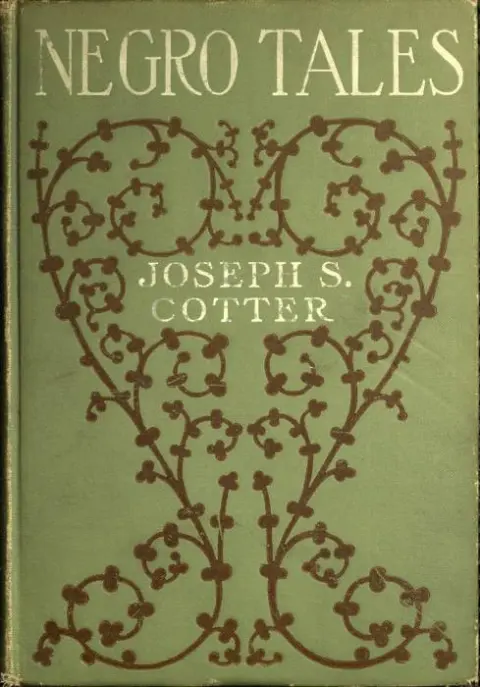
"Negro Tales" by Joseph S. Cotter is a collection of short stories written in the early 20th century. The work explores themes of life, struggle, and the complexity of human relationships within the African American experience, often through the lens of humor and tragedy. The opening narratives introduce a variety of characters dealing with their circumstances, highlighting social issues and the interplay between personal flaws and societal expectations. At the start of the collection, the first story, "Caleb," sets a somber and critical tone by depicting a family dynamic marred by conflict and tragedy. As the conversation turns dark between Caleb and his parents, his father's unexpected death unfolds dramatically, leaving his mother to grapple with grief and questions about responsibility. The narrative quickly escalates, revealing Caleb's morally ambiguous character, deep disdain for others’ judgments, and tendency towards self-serving attitudes that lead to further disintegration of familial bonds. Meanwhile, subsequent snippets hint at other characters facing similar dilemmas, establishing a framework for the exploration of themes like poverty, betrayal, and the search for dignity amidst life's adversities.
Introduction adapted from the source catalogue; source summaries may be automatically generated.
Free to read · English · 28,318 words · No account needed
MAKE TIME FOR A GOOD BOOK
On by default. Untick to stop anonymous reading totals. Each page counts after 10 seconds in view. How this works.
Anonymous counting is on unless you have switched it off.
"No, my man," said Abraham, "that is the stranger himself."
At this the mob seized the bound man and yelled: "Confess, confess! You shall confess!" They pulled him in and out of the closet. They lowered him into the cistern and hauled him out again and again. At times a hundred voices were bawling: "Confess, confess! You shall confess!" During all this confusion the parson was the only person who noticed that the poor fellow was still gagged.
"How can he confess," said the parson, "when he is gagged as daintily as
a parson in a closet?"
They removed the gag, but not the cords.
"Gentlemen," said he, "if you are as ready to give me justice as I am to confess the truth in this matter, my part of the mystery will soon be cleared up and I can enjoy myself here with my uncle and aunt."
"Claiming kin again, Abraham," said Ruth. "Look out for your life next
time."
"Strangle the hypocrite," said one.
"Give the impudent whelp a bath in the mill-pond," said another.
"No," said the parson, "let him confess."
"Gentlemen," said he, "I am innocent. If I stole the bag of money, why should I leave my saddlebags behind, with my name on them, and one side of which is full of money?"
The saddlebags were now examined by the crowd, and the stranger's
statements found to be true.
"Then," said he, "why should I encumber myself this way? In fact, how could I? It would be impossible."
This somewhat appeased the crowd, until someone suggested that maybe he took the bag of money outside to hide it, intending to come back and get his own property; but as daylight overtook him he hired someone to gag and cord him in that way. On hearing this one man grabbed the prisoner by the foot and started to drag him to the cistern again. In so doing one boot was pulled off, out of which fell a picture.
"Here, Abraham," said Ruth, handing him the picture, "this may be all you will ever get for your bag of money."
Abraham took the picture and looked at it closely.
"Now, gentlemen," said the stranger, "a few more points, and I will have
this mystery clear."
"You had better clear it quickly," said the crowd.
"Don't be too hard," said the parson. "Let him confess."
Your reading position is saved on this browser. Take it to another device with a library code. Reading pages adapt to text, rather than matching a printed edition.
BEHIND THE BOOK
This eBook is for the use of anyone anywhere in the United States and most other parts of the world at no cost and with almost no restrictions whatsoever. You may copy it, give it away or re-use it under the terms of the Project Gutenberg License included with this eBook or online at www.gutenberg.org. If you are not located in the United States, you will have to check the laws of the country where you are located before using this eBook. Read the source licence.
The original source file, including credits and licence, is retained by this library. Request an original-format copy at no charge. Please include the book title and Project Gutenberg identifier #41590.
KEEP YOUR CURIOSITY GOING
Coulson Kernahan

Maurice Baring
Frances Wright
Cécile Tormay

Frederic Jesup Stimson

W. H. P. (William Henry Pope) Jarvis