THE CLASSIC COLLECTION✦A dead man’s diaryCLASSIC FREE BOOKS
A dead man’s diary
Coulson Kernahan
THE CLASSIC COLLECTION · 1912
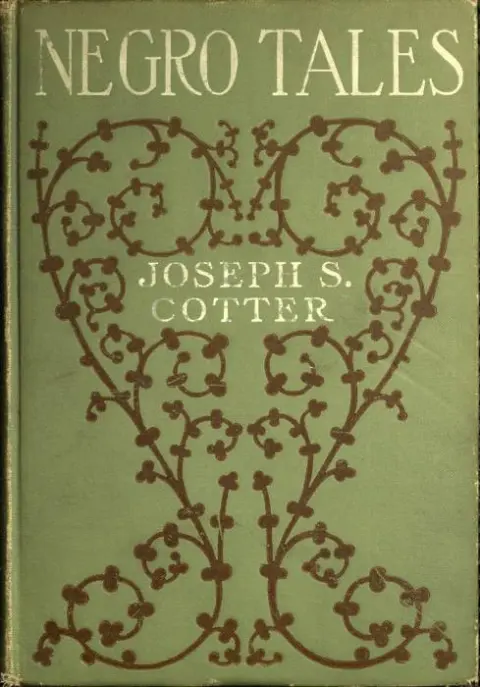
"Negro Tales" by Joseph S. Cotter is a collection of short stories written in the early 20th century. The work explores themes of life, struggle, and the complexity of human relationships within the African American experience, often through the lens of humor and tragedy. The opening narratives introduce a variety of characters dealing with their circumstances, highlighting social issues and the interplay between personal flaws and societal expectations. At the start of the collection, the first story, "Caleb," sets a somber and critical tone by depicting a family dynamic marred by conflict and tragedy. As the conversation turns dark between Caleb and his parents, his father's unexpected death unfolds dramatically, leaving his mother to grapple with grief and questions about responsibility. The narrative quickly escalates, revealing Caleb's morally ambiguous character, deep disdain for others’ judgments, and tendency towards self-serving attitudes that lead to further disintegration of familial bonds. Meanwhile, subsequent snippets hint at other characters facing similar dilemmas, establishing a framework for the exploration of themes like poverty, betrayal, and the search for dignity amidst life's adversities.
Introduction adapted from the source catalogue; source summaries may be automatically generated.
Free to read · English · 28,318 words · No account needed
MAKE TIME FOR A GOOD BOOK
On by default. Untick to stop anonymous reading totals. Each page counts after 10 seconds in view. How this works.
Anonymous counting is on unless you have switched it off.
As Patsy lay cold in death Caleb had a pleasant dream. He dreamed that she was well and at the washtub. He thought he held in his hand money she had drawn in advance for him. When he awoke the next morning and found it was but a dream he lighted the stump of a cigar; and, between puffs, mumbled something about starch-eating mothers and dignified sons. When a neighbor called to see what Patsy would have for breakfast, he said: "Ask the old woman."
"She is dead," cried the neighbor.
"Then bury her," said he.
The next day Noah, the father of Melviny, the grave-digger for the poor, said: "Melviny, my child, I go to dig poor Patsy's grave."
"Poor Caleb!" said Melviny, and covered her face with her apron.
Noah's hands fell to his side, leaving the spade dangling about his
neck.
"Melviny!" he shouted fiercely.
"Father?" she answered soberly.
"Why your thought of Caleb?"
"Why your interest in Patsy?"
"She is dead, child."
"So is Caleb, father." Melviny dropped her apron and began to toy with the spade. "Dear father, you are kind to the neighbors."
"Dear child, you are making your own perdition."
"Where go you, father?"
"I go to bury Patsy in the potter's field."
"I go to bury Caleb in my affections, that he may be resurrected a man."
Noah kissed his daughter three times.
"The first," said he, "is for your mother, who was a wise woman."
"In marrying you, father? I never heard her say so in her curtain lectures. Why didn't you say she was a brave woman?"
"Don't be frivolous, child."
"Cling to facts, father. Remember, you will soon be on the brink of the
grave."
"The second is for your innocence," said he, kissing her again. "The
third--the third----"
"Is for what, father? Say it's to encourage Caleb in his wooing. Say it,
father."
"'Tis my dying kiss--my curse. Go! When he drags you to want and death, you will see how foolish you have been."
"When I lift him to honor and life the world will see how wise and heroic I have been. That extra kiss, father?"
Noah looked puzzled.
"I see it now, father. That's to commend my heroism. You would say so in words, but you are a bit too human at present. Poor Patsy is to be buried in a pauper's grave; poor Caleb in my affections. Your task is noble. No parting word for me? None? I go not alone."
"You go not alone, for the fires of tribulation go with you," said Noah, and shouldered his spade.
As Noah crossed the bridge leading to the potter's field he met Caleb.
Your reading position is saved on this browser. Take it to another device with a library code. Reading pages adapt to text, rather than matching a printed edition.
BEHIND THE BOOK
This eBook is for the use of anyone anywhere in the United States and most other parts of the world at no cost and with almost no restrictions whatsoever. You may copy it, give it away or re-use it under the terms of the Project Gutenberg License included with this eBook or online at www.gutenberg.org. If you are not located in the United States, you will have to check the laws of the country where you are located before using this eBook. Read the source licence.
The original source file, including credits and licence, is retained by this library. Request an original-format copy at no charge. Please include the book title and Project Gutenberg identifier #41590.
KEEP YOUR CURIOSITY GOING
Coulson Kernahan

Maurice Baring
Frances Wright
Cécile Tormay

Frederic Jesup Stimson

W. H. P. (William Henry Pope) Jarvis