THE CLASSIC COLLECTION✦Scottish toastsCLASSIC FREE BOOKS
Scottish toasts
Charles Welsh
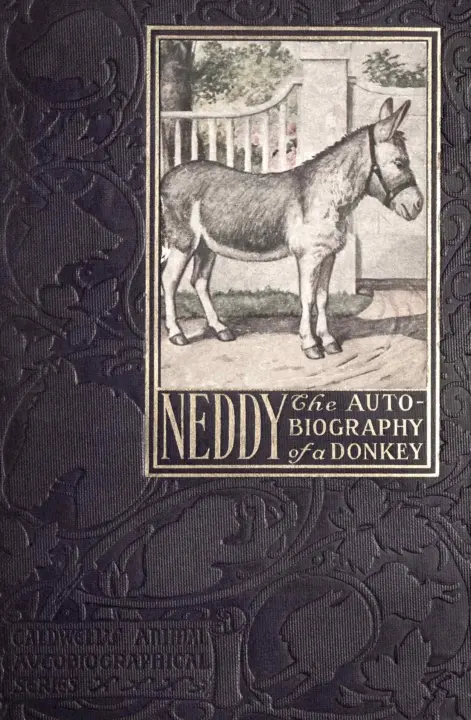
THE CLASSIC COLLECTION · 1905
"Neddy" by Charles Welsh is a children's animal autobiography written in the early 20th century. Told in the first person by a donkey, it blends adventure and moral reflection as Neddy navigates kindness and cruelty, work and temptation, and the hope of reunion with a beloved young mistress named Annie. Readers can expect a gentle, instructive narrative about compassion toward animals and the consequences of honesty and deceit.
The opening of this tale follows a curious young donkey content in a sunny field with his mother, befriended by the kindly gardener Old Thomas, and then won over by the affection of Annie when her family returns home. Neddy learns to trust, accepts the bridle under Annie’s patient hand, but soon bolts in a burst of independence, only to be found after a night of misadventure by a village boy and returned to his overjoyed mistress. Early lessons bite: he fakes lameness to avoid a hated stop and is found out, then later truly suffers with a stone in his hoof, underscoring the cost of deceit. A lively interlude paints the bustle of country fairs and a comic “performing donkey” story. Trouble deepens when a spiteful servant, Richard, mistreats him; after tossing the boy in a market squabble, Neddy is seized by a rough man, crudely disguised, hobbled, and driven into peddler life. Small kindness comes from a child who feeds him, but he is soon hauling wares through grim industrial towns and ferrying fairground riders, growing tougher yet better groomed, and clinging to one hope: that someone, somewhere, will recognize him and lead him home.
Introduction adapted from the source catalogue; source summaries may be automatically generated.
Free to read · English · 25,636 words · No account needed
MAKE TIME FOR A GOOD BOOK
On by default. Untick to stop anonymous reading totals. Each page counts after 10 seconds in view. How this works.
Anonymous counting is on unless you have switched it off.
“I’m sure you’re a well-bred donkey,” she said, presently. “I wonder where you came from, and to whom you belong. If I can’t find your owner, I shall keep you myself, for I’m sure I can make you useful. But I think you must have a master somewhere.”
I shuddered at the words “make you useful,” for I had an idea that that must mean bit and bridle again. But when I heard the word “master,” I could not help regretting the home I had left,—Old Thomas and Miss Annie, and my mother and all her lessons, which I had so badly learned.
However, I was determined to keep the liberty I had earned, and when a bright-looking little boy of about six or seven years of age came out of the door to ask his grandmother to whom she was talking, I at once made up my mind that we could be friends.
“Why, granny, where did that donkey come from? May I stroke him?” said
he.
“Of course, my boy, but he is a stranger to me,—a lost donkey, I think,—so take care he does not bite you.”
Georgie, for that was his name, tiptoed to reach me. I did not stir, so as not to frighten him, but I liked the little lad so well that I could not help turning my head and licking his hand.
“Oh, what a dear donkey!” said Georgie. “Look, granny, he is licking my
hand.”
“I wonder how he came here all by himself,” said the old lady. “Run into the village, Georgie, and inquire if any one has lost a donkey. I am sure any one to whom he belongs must be very anxious about him.”
Off went Georgie, and off I went after him. When he saw me coming, he said: “Oh, dear, I must not lose him,” and he set off at a run back to the house. Soon he came with a piece of cord, which he put around my neck, and we started again for the village.
First Georgie went to the village inn. But the innkeeper had not heard of a lost donkey. Then he went from place to place where he thought a donkey might have been living, but nobody was missing a donkey in that village.
At last, however, the village policeman came along.
“Hello, Georgie; where did you get that donkey?” cried he.
“He came up to our door this afternoon, and I am trying to find his owner,” said the brave little fellow.
Your reading position is saved on this browser. Take it to another device with a library code. Reading pages adapt to text, rather than matching a printed edition.
BEHIND THE BOOK
This eBook is for the use of anyone anywhere in the United States and most other parts of the world at no cost and with almost no restrictions whatsoever. You may copy it, give it away or re-use it under the terms of the Project Gutenberg License included with this eBook or online at www.gutenberg.org. If you are not located in the United States, you will have to check the laws of the country where you are located before using this eBook. Read the source licence.
The original source file, including credits and licence, is retained by this library. Request an original-format copy at no charge. Please include the book title and Project Gutenberg identifier #78484.
KEEP YOUR CURIOSITY GOING
Coulson Kernahan

Maurice Baring
Frances Wright
Cécile Tormay

Frederic Jesup Stimson

W. H. P. (William Henry Pope) Jarvis