THE CLASSIC COLLECTION✦Scottish toastsCLASSIC FREE BOOKS
Scottish toasts
Charles Welsh
THE CLASSIC COLLECTION · 1905
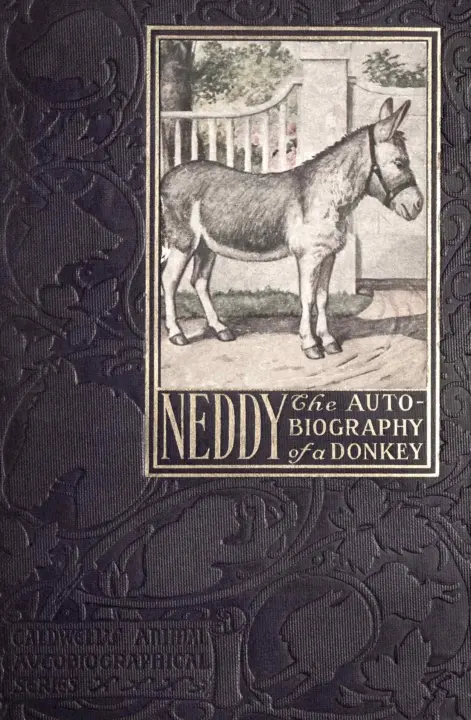
"Neddy" by Charles Welsh is a children's animal autobiography written in the early 20th century. Told in the first person by a donkey, it blends adventure and moral reflection as Neddy navigates kindness and cruelty, work and temptation, and the hope of reunion with a beloved young mistress named Annie. Readers can expect a gentle, instructive narrative about compassion toward animals and the consequences of honesty and deceit.
The opening of this tale follows a curious young donkey content in a sunny field with his mother, befriended by the kindly gardener Old Thomas, and then won over by the affection of Annie when her family returns home. Neddy learns to trust, accepts the bridle under Annie’s patient hand, but soon bolts in a burst of independence, only to be found after a night of misadventure by a village boy and returned to his overjoyed mistress. Early lessons bite: he fakes lameness to avoid a hated stop and is found out, then later truly suffers with a stone in his hoof, underscoring the cost of deceit. A lively interlude paints the bustle of country fairs and a comic “performing donkey” story. Trouble deepens when a spiteful servant, Richard, mistreats him; after tossing the boy in a market squabble, Neddy is seized by a rough man, crudely disguised, hobbled, and driven into peddler life. Small kindness comes from a child who feeds him, but he is soon hauling wares through grim industrial towns and ferrying fairground riders, growing tougher yet better groomed, and clinging to one hope: that someone, somewhere, will recognize him and lead him home.
Introduction adapted from the source catalogue; source summaries may be automatically generated.
Free to read · English · 25,636 words · No account needed
MAKE TIME FOR A GOOD BOOK
On by default. Untick to stop anonymous reading totals. Each page counts after 10 seconds in view. How this works.
Anonymous counting is on unless you have switched it off.
My mother seldom made so long a speech; and, finding I paid but little attention, she did not again trouble me with her advice; and, indeed, I soon forgot her words, till they were brought back to my recollection by those of my young mistress, and a very uncomfortable feeling they gave me.
The following day I was busy eating my breakfast, when I saw Thomas come into the field holding something in his hand. My suspicions being aroused, I determined to have a good look at the enemy before allowing his nearer approach. So, with a snort of defiance, I started back, prepared, if necessary, to take to my heels and be off.
“So—whoo—gently, Neddy,” said Thomas. “Koop—koop, Neddy,” added Thomas, putting his arm behind him that I might not see what he carried in his hand.
But this action, instead of disarming my suspicions, only excited them further. If no foul play was intended, what was there to conceal? and so, determined to be on the safe side, with a defiant kick I started off at a gallop, as much as to say, “Catch me who can.”
I soon found out that Old Thomas’s feeble legs were no match for my young nimble ones; and, having the advantage, I kept it, and a pretty chase I led my old friend. Now, for a moment, I would stand still and look at him, as if I intended to give myself up his prisoner, and then, in an instant, just as he thought I was within his reach, I would slip from his touch, and be off with a gallop to the other end of the field.
How long this struggle might have continued, it is impossible for me to say. Thomas was evidently losing both his breath and his temper, whilst I was only getting my wind in the enjoyment of the game. But just at this instant who should come into the field but my young mistress?
“What, Thomas!” she exclaimed, “cannot you catch Neddy?”
“Catch him!” repeated Thomas, standing still and wiping the perspiration off his face; “you might as well try to catch the will-o’-the-wisp. He wants a good flogging, that he does, to bring him to order.”
“Oh, do not flog him!” said my mistress, in a tone of alarm. “You will spoil his temper if you do, Thomas.”
“Spare the rod and spoil the child,” answered Thomas, in his dry,
peculiar way.
“Ah, we know better than that now, Thomas,” replied my mistress, with a
smile.
Your reading position is saved on this browser. Take it to another device with a library code. Reading pages adapt to text, rather than matching a printed edition.
BEHIND THE BOOK
This eBook is for the use of anyone anywhere in the United States and most other parts of the world at no cost and with almost no restrictions whatsoever. You may copy it, give it away or re-use it under the terms of the Project Gutenberg License included with this eBook or online at www.gutenberg.org. If you are not located in the United States, you will have to check the laws of the country where you are located before using this eBook. Read the source licence.
The original source file, including credits and licence, is retained by this library. Request an original-format copy at no charge. Please include the book title and Project Gutenberg identifier #78484.
KEEP YOUR CURIOSITY GOING
Coulson Kernahan

Maurice Baring
Frances Wright
Cécile Tormay

Frederic Jesup Stimson

W. H. P. (William Henry Pope) Jarvis