THE CLASSIC COLLECTION✦An outlaw’s diary: the CommuneCLASSIC FREE BOOKS
An outlaw’s diary: the Commune
Cécile Tormay
THE CLASSIC COLLECTION · 1898
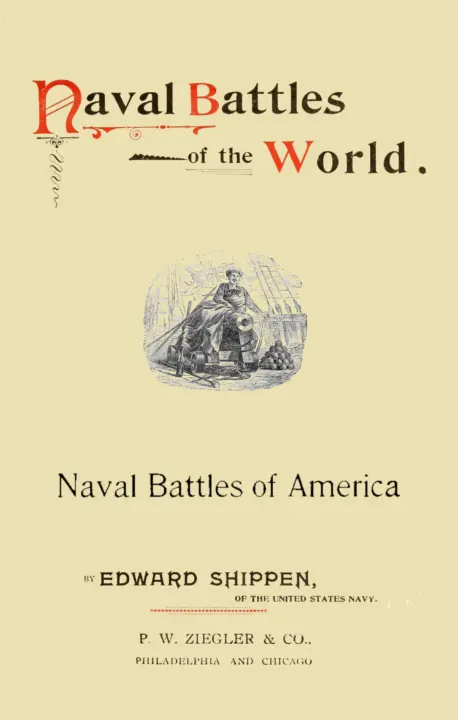
"Naval Battles of the World" by Edward Shippen is a historical account written in the late 19th century. This work provides a comprehensive examination of significant naval battles throughout history, exploring their causes and consequences. Shippen aims to present these events in an accessible manner, shedding light on the pivotal role of naval power in shaping global affairs. The opening portion of the text lays a foundational understanding of the significance of naval battles, introducing the necessity of a navy for nations with extensive coastlines. It highlights early misconceptions about the sea, emphasizing how ancient civilizations displayed a mix of reverence and fear toward maritime navigation. Shippen discusses the advancements in naval technology and tactics over the centuries, mentioning notable events and figures that shaped naval history. By evoking examples ranging from the ancient Egyptians and Greeks to the Romans and beyond, he sets the stage for a detailed exploration of various decisive conflicts at sea.
Introduction adapted from the source catalogue; source summaries may be automatically generated.
Free to read · English · 255,960 words · No account needed
MAKE TIME FOR A GOOD BOOK
On by default. Untick to stop anonymous reading totals. Each page counts after 10 seconds in view. How this works.
Anonymous counting is on unless you have switched it off.
Recalde maintained the unequal fight for some hours, and with great obstinacy; all the while endeavoring to get within small-arm range of the English, which he knew would be fatal to them, as he had a large force of arquebusiers embarked in his division.
But his wary antagonists, whose vessels, “light, weatherly and nimble, sailed six feet to the Spaniards’ two, and tacked twice to their once,” evaded every effort to close, and keeping at long range, inflicted much damage upon their enemy without receiving any themselves.
At length, seeing how matters stood, the Duke Medina Sidonia signaled to Recalde to join the main body of the fleet; and, hoisting the Royal standard of Spain at his main, drew out his whole force in order of battle, and endeavored to bring on a general engagement. This Howard prudently avoided, and so the Spaniards had to keep on their course again, up channel, and “maintain a running fight of it;” the English now, as before, hanging on their rear, and receiving constant reinforcements from their seaport towns, in full view of which, as the Armada hugged the English shore, Howard, with his gallant ships and men, was passing.
In these days London alone sent forth fifty armed ships.
The night which followed was one fraught with disaster to the Spaniards. The gunner of the Santa Anna, a Fleming by birth, who had been reprimanded by his captain for some neglect of duty, in revenge laid a train to the magazine, and blew up all the after part of the vessel, with more than half her officers and crew.
The vessel nearest the Santa Anna hurried to her assistance, and was engaged in rescuing the survivors, when, in the darkness and confusion, two galleys fell foul of the flagship of the Andalusian squadron, and carried away her foremast close to the deck, so that she dropped astern of the Armada, and, the night being very dark, was soon lost sight of by her friends, and assailed by her vigilant foes.
Being well manned, and carrying fifty guns, she maintained her defence until daylight, when, finding the English hemming her in on all sides, Don Pedro de Valdez, the Admiral, struck his flag to Drake, in the Revenge, much to the chagrin of Frobisher and Hawkins, who had hoped to make prize of her themselves.
Don Pedro, who was courteously received by Drake, remained on board the Revenge until the 10th of August; so that he was an eye witness of all the subsequent events, and of the final discomfiture of his countrymen.
Your reading position is saved on this browser. Take it to another device with a library code. Reading pages adapt to text, rather than matching a printed edition.
BEHIND THE BOOK
This eBook is for the use of anyone anywhere in the United States and most other parts of the world at no cost and with almost no restrictions whatsoever. You may copy it, give it away or re-use it under the terms of the Project Gutenberg License included with this eBook or online at www.gutenberg.org. If you are not located in the United States, you will have to check the laws of the country where you are located before using this eBook. Read the source licence.
The original source file, including credits and licence, is retained by this library. Request an original-format copy at no charge. Please include the book title and Project Gutenberg identifier #73068.
KEEP YOUR CURIOSITY GOING
Cécile Tormay

Moritz Busch
John L. Ransom
Frances Wright
Cécile Tormay

Mabel Potter Daggett