THE CLASSIC COLLECTION✦An outlaw’s diary: the CommuneCLASSIC FREE BOOKS
An outlaw’s diary: the Commune
Cécile Tormay
THE CLASSIC COLLECTION · 1898
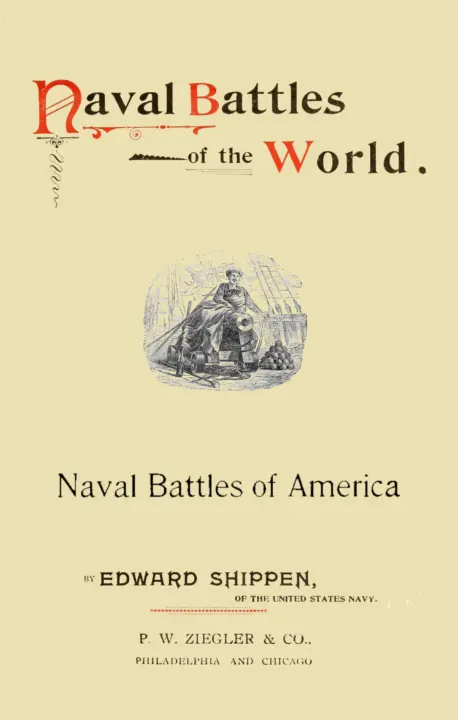
"Naval Battles of the World" by Edward Shippen is a historical account written in the late 19th century. This work provides a comprehensive examination of significant naval battles throughout history, exploring their causes and consequences. Shippen aims to present these events in an accessible manner, shedding light on the pivotal role of naval power in shaping global affairs. The opening portion of the text lays a foundational understanding of the significance of naval battles, introducing the necessity of a navy for nations with extensive coastlines. It highlights early misconceptions about the sea, emphasizing how ancient civilizations displayed a mix of reverence and fear toward maritime navigation. Shippen discusses the advancements in naval technology and tactics over the centuries, mentioning notable events and figures that shaped naval history. By evoking examples ranging from the ancient Egyptians and Greeks to the Romans and beyond, he sets the stage for a detailed exploration of various decisive conflicts at sea.
Introduction adapted from the source catalogue; source summaries may be automatically generated.
Free to read · English · 255,960 words · No account needed
MAKE TIME FOR A GOOD BOOK
On by default. Untick to stop anonymous reading totals. Each page counts after 10 seconds in view. How this works.
Anonymous counting is on unless you have switched it off.
The first contest between a monitor and fifteen-inch guns, and an ironclad with stationary casemate or turret and rifled guns, was now to take place.
The Atlanta was commanded by an officer of energy and ability, named Webb, formerly a Lieutenant in the United States Navy.
The Confederate authorities were certain that this latest production of their naval architects was to overcome the redoubtable monitors, and they fully believed that, while the Atlanta’s armor would resist their heavy round shot, her heavy rifled guns, at close quarters, would tear the monitor turret to pieces, while the ram and torpedo would finish the work begun by the guns.
The vessel, being ready, came down from Savannah, passed through the Wilmington, a mouth of the Savannah River, and so passed down into Wassaw Sound, improperly named, in many books and maps, Warsaw.
Admiral Du Pont had taken measures to keep himself informed as regarded this vessel’s state of preparation, and the monitors Weehawken and Nahant had been sent to meet her and some other armored vessels preparing at Savannah.
Both the Nahant and Weehawken were at anchor when the strange vessel was seen. It was at daylight, and she was then about three miles from the Nahant, and coming down very rapidly. The Weehawken was commanded by that capable and sterling officer, John Rogers, and he at once slipped his cable, and made rapidly off, seaward, as if in headlong flight, but, in the meantime, making preparations for action.
At about half-past four, on this bright summer morning, the Weehawken rounded to, and breasted the tide, approaching her enemy.
The Nahant had no pilot, and could only follow in the Weehawken’s wake, through the channels of the Sound.
The Atlanta fired the first shot, at about a quarter to five, being then distant about a mile and a half. This passed across the stern of the Weehawken, and struck the water near the Nahant. The Atlanta seemed to be lying across the channel, awaiting attack, and keeping up her fire.
The Weehawken steadily came up the channel, and at a little after 5 a. m., having approached within about three hundred yards, opened her fire. She fired five shots, which took her fifteen minutes, and at the end of that time the Atlanta hauled down the Confederate colors, and hoisted a white flag. Such a rapid threshing is seldom recorded in naval history, and is the more remarkable when we remember that the commander of the Atlanta was a cool and experienced officer, trained in the United States Navy, and an excellent seaman.
Your reading position is saved on this browser. Take it to another device with a library code. Reading pages adapt to text, rather than matching a printed edition.
BEHIND THE BOOK
This eBook is for the use of anyone anywhere in the United States and most other parts of the world at no cost and with almost no restrictions whatsoever. You may copy it, give it away or re-use it under the terms of the Project Gutenberg License included with this eBook or online at www.gutenberg.org. If you are not located in the United States, you will have to check the laws of the country where you are located before using this eBook. Read the source licence.
The original source file, including credits and licence, is retained by this library. Request an original-format copy at no charge. Please include the book title and Project Gutenberg identifier #73068.
KEEP YOUR CURIOSITY GOING
Cécile Tormay

Moritz Busch
John L. Ransom
Frances Wright
Cécile Tormay

Mabel Potter Daggett