THE CLASSIC COLLECTION✦An outlaw’s diary: the CommuneCLASSIC FREE BOOKS
An outlaw’s diary: the Commune
Cécile Tormay
THE CLASSIC COLLECTION · 1898
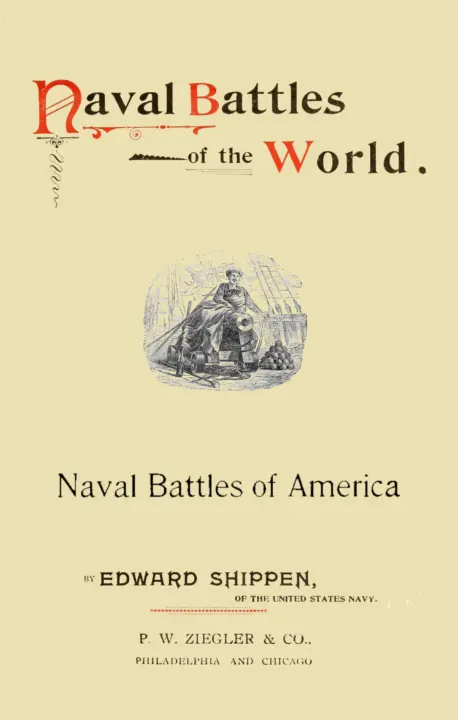
"Naval Battles of the World" by Edward Shippen is a historical account written in the late 19th century. This work provides a comprehensive examination of significant naval battles throughout history, exploring their causes and consequences. Shippen aims to present these events in an accessible manner, shedding light on the pivotal role of naval power in shaping global affairs. The opening portion of the text lays a foundational understanding of the significance of naval battles, introducing the necessity of a navy for nations with extensive coastlines. It highlights early misconceptions about the sea, emphasizing how ancient civilizations displayed a mix of reverence and fear toward maritime navigation. Shippen discusses the advancements in naval technology and tactics over the centuries, mentioning notable events and figures that shaped naval history. By evoking examples ranging from the ancient Egyptians and Greeks to the Romans and beyond, he sets the stage for a detailed exploration of various decisive conflicts at sea.
Introduction adapted from the source catalogue; source summaries may be automatically generated.
Free to read · English · 255,960 words · No account needed
MAKE TIME FOR A GOOD BOOK
On by default. Untick to stop anonymous reading totals. Each page counts after 10 seconds in view. How this works.
Anonymous counting is on unless you have switched it off.
The victory was a splendid one, and was pre-eminently due to the exertions of one person--a young man of twenty-seven, who had never before borne a part in a naval engagement.
He dashed into action in the Lawrence, with youthful ardor, trusting that his rear would get up in time. The want of support of the Niagara caused the fearful loss sustained by the Lawrence, more than the tardiness of the smaller vessels. We have seen that there was no thought of submission, even at the darkest moment, and Perry’s act in passing, at great risk, to the Niagara, cannot be sufficiently extolled. It was a combination of genius and hardihood, which snatched victory from the grasp of an enemy whose exultant cheers had already claimed it.
Labor does not end with victory. After the enemy’s colors had been hauled down, and the prizes officered and manned, the prisoners were confined, wounded masts secured, and shot-holes stopped, when all the vessels were hauled by the wind, on the starboard tack.
Perry then retired to his cabin, to communicate to General Harrison the intelligence of the event which was to admit of the immediate advance of his army, and the rescue of our territory from the savage warfare which the surrender of Hull’s army and subsequent disasters had entailed upon it.
As far as the immediate seat of war was concerned, the British naval power was utterly destroyed, and a great and threatening danger removed.
Perry’s letter was short, but covered the whole ground. It was as
follows:--
We have met the enemy, and they are ours. Two ships; two brigs; one
schooner; and one sloop.
Yours with very great respect and esteem,
O. H. PERRY.”
He also wrote to the Secretary of the Navy, by the same express:--
“U. S. BRIG NIAGARA,
OFF THE WESTERNMOST SISTER,
Head of Lake Erie,
Sept. 10, 1813--4 P. M.
It has pleased the Almighty to give to the arms of the United States a signal victory over their enemy on this lake.
The British squadron, consisting of two ships, two brigs, one schooner and one sloop, have this moment surrendered to the force under my command, after a sharp conflict.
I have the honor to be, &c., &c.,
O. H. PERRY.”
This letter, written without deliberation, in the moment of victory, is modest in describing his battle as a “sharp conflict;” and his allusion to the Almighty power was sincere, for Perry was a religious man.
Your reading position is saved on this browser. Take it to another device with a library code. Reading pages adapt to text, rather than matching a printed edition.
BEHIND THE BOOK
This eBook is for the use of anyone anywhere in the United States and most other parts of the world at no cost and with almost no restrictions whatsoever. You may copy it, give it away or re-use it under the terms of the Project Gutenberg License included with this eBook or online at www.gutenberg.org. If you are not located in the United States, you will have to check the laws of the country where you are located before using this eBook. Read the source licence.
The original source file, including credits and licence, is retained by this library. Request an original-format copy at no charge. Please include the book title and Project Gutenberg identifier #73068.
KEEP YOUR CURIOSITY GOING
Cécile Tormay

Moritz Busch
John L. Ransom
Frances Wright
Cécile Tormay

Mabel Potter Daggett