THE CLASSIC COLLECTION✦An outlaw’s diary: the CommuneCLASSIC FREE BOOKS
An outlaw’s diary: the Commune
Cécile Tormay
THE CLASSIC COLLECTION · 1898
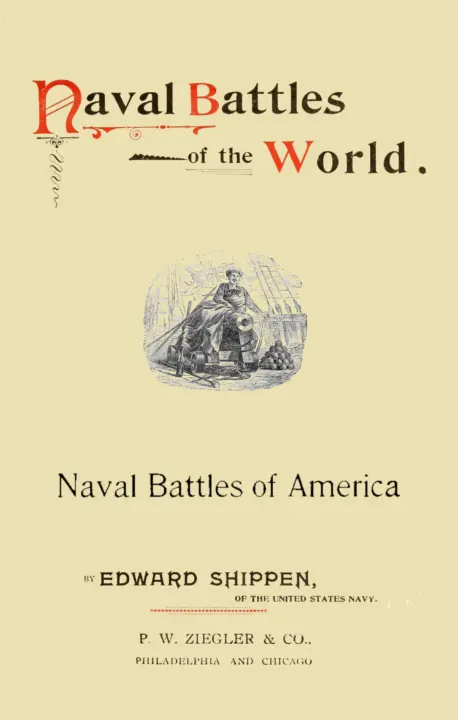
"Naval Battles of the World" by Edward Shippen is a historical account written in the late 19th century. This work provides a comprehensive examination of significant naval battles throughout history, exploring their causes and consequences. Shippen aims to present these events in an accessible manner, shedding light on the pivotal role of naval power in shaping global affairs. The opening portion of the text lays a foundational understanding of the significance of naval battles, introducing the necessity of a navy for nations with extensive coastlines. It highlights early misconceptions about the sea, emphasizing how ancient civilizations displayed a mix of reverence and fear toward maritime navigation. Shippen discusses the advancements in naval technology and tactics over the centuries, mentioning notable events and figures that shaped naval history. By evoking examples ranging from the ancient Egyptians and Greeks to the Romans and beyond, he sets the stage for a detailed exploration of various decisive conflicts at sea.
Introduction adapted from the source catalogue; source summaries may be automatically generated.
Free to read · English · 255,960 words · No account needed
MAKE TIME FOR A GOOD BOOK
On by default. Untick to stop anonymous reading totals. Each page counts after 10 seconds in view. How this works.
Anonymous counting is on unless you have switched it off.
Captain Jones was not destined to bring his prize into port, for a few hours afterward the Poictiers, a British 74, hove in sight. Now appeared the value of the Frolic’s desperate defence; if she could not prevent herself from being captured, she had at least ensured her own recapture, and also the capture of her foe. When the Wasp made sail they were found to be cut into ribbons, and she could not make off with sufficient speed. The Poictiers soon overtook her, and carried both vessels into Bermuda. Captain Jones and his officers and men were soon exchanged, and Congress voted them prize money for their capture; while the Captain and Lieutenant Biddle were both deservedly promoted.
After the declaration of war with England, on the 18th of June, 1812, Vice-Admiral Sawyer, of the British Navy, prepared a squadron at Halifax, and dispatched it, on July 5th, to cruise against the United States. This squadron was commanded by Captain Broke, of the Shannon, 38, an officer of great merit and experience, who had under him the Belvidera, 36, Captain Byron, another excellent officer, the Africa, 64, and the Æolus, 32.
On the 9th of July, off Nantucket, they were joined by the Guerrière, 38, Captain Dacres. This squadron, on the 16th, fell in with and captured the United States brig Nautilus, 14, which, like all the brigs of that day, was overloaded with men and guns; she threw her guns overboard, and made use of every expedient to escape, but with no avail.
At 3 P. M. on the following day, when the British squadron was off Barnegat, and about twelve miles from the shore, a strange sail was seen in the southeast, or windward quarter, standing to the northeast. This vessel was the United States frigate Constitution, 44, Captain Isaac Hull. When the war broke out he was in the Chesapeake, engaged in getting a new crew. Having on board about four hundred and fifty souls, he sailed on the 12th of July. His crew was entirely new, drafts of men coming on board up to the last moment. Hull wrote, just before sailing, that “the crew are as yet unacquainted with a ship-of-war, as many have but lately joined and have never been on an armed ship before. We are doing all that we can to make them acquainted with their duty, and in a few days we shall have nothing to fear from any single-decked ship.” On the 17th, at 2 P. M., Hull discovered four sail to the northward, heading to the westward. An hour after, the wind being very light, the Constitution made more sail, and tacked ship, being in eighteen and a-half fathoms. At four P. M. the Constitution discovered a fifth sail, which was the Guerrière. At about six o’clock the wind shifted and blew lightly from the south, bringing the American ship to windward, and she immediately wore, with her head to the eastward, set studding-sails and stay-sails, and at half-past seven beat to quarters, intending to speak the nearest vessel, the Guerrière. The two frigates neared each other gradually, and the Constitution, at ten P. M., began making signals. These were not answered, and the two frigates gradually drew near each other; the Guerrière discovered, on her lee beam, the other British vessels, and signalled to them.
Your reading position is saved on this browser. Take it to another device with a library code. Reading pages adapt to text, rather than matching a printed edition.
BEHIND THE BOOK
This eBook is for the use of anyone anywhere in the United States and most other parts of the world at no cost and with almost no restrictions whatsoever. You may copy it, give it away or re-use it under the terms of the Project Gutenberg License included with this eBook or online at www.gutenberg.org. If you are not located in the United States, you will have to check the laws of the country where you are located before using this eBook. Read the source licence.
The original source file, including credits and licence, is retained by this library. Request an original-format copy at no charge. Please include the book title and Project Gutenberg identifier #73068.
KEEP YOUR CURIOSITY GOING
Cécile Tormay

Moritz Busch
John L. Ransom
Frances Wright
Cécile Tormay

Mabel Potter Daggett