THE CLASSIC COLLECTION✦An outlaw’s diary: the CommuneCLASSIC FREE BOOKS
An outlaw’s diary: the Commune
Cécile Tormay
THE CLASSIC COLLECTION · 1898
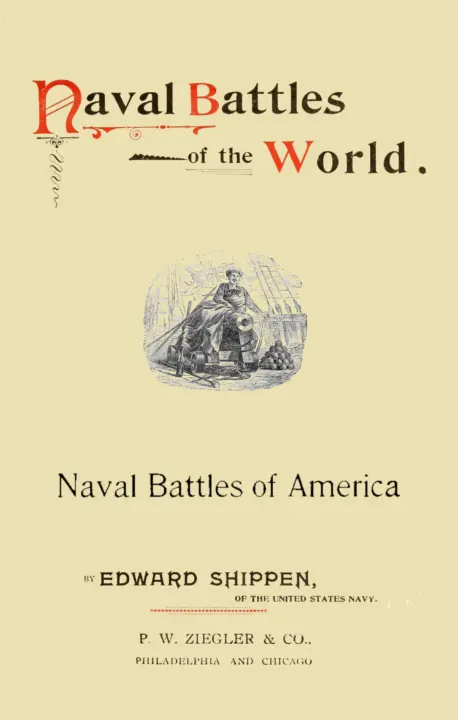
"Naval Battles of the World" by Edward Shippen is a historical account written in the late 19th century. This work provides a comprehensive examination of significant naval battles throughout history, exploring their causes and consequences. Shippen aims to present these events in an accessible manner, shedding light on the pivotal role of naval power in shaping global affairs. The opening portion of the text lays a foundational understanding of the significance of naval battles, introducing the necessity of a navy for nations with extensive coastlines. It highlights early misconceptions about the sea, emphasizing how ancient civilizations displayed a mix of reverence and fear toward maritime navigation. Shippen discusses the advancements in naval technology and tactics over the centuries, mentioning notable events and figures that shaped naval history. By evoking examples ranging from the ancient Egyptians and Greeks to the Romans and beyond, he sets the stage for a detailed exploration of various decisive conflicts at sea.
Introduction adapted from the source catalogue; source summaries may be automatically generated.
Free to read · English · 255,960 words · No account needed
MAKE TIME FOR A GOOD BOOK
On by default. Untick to stop anonymous reading totals. Each page counts after 10 seconds in view. How this works.
Anonymous counting is on unless you have switched it off.
She was, properly, a single-decked ship, that is, carrying her armament on one gun-deck, with the usual additions on the quarter-deck and forecastle.
But Commodore Jones, with a view to attacking the enemy’s large convoys, caused twelve ports to be cut in the gun-room, below, where six old 18-pounders were mounted, with the intention of fighting all of them on the same side, in smooth water. It was foreseen that these guns could only be of use in moderate weather, or when engaged to leeward, but the ship’s height admitted of them, and it was done.
On her gun-deck proper the ship had twenty-eight ports, the regular construction of an English 38-gun ship at that time. Here the 12-pounders were placed. On her quarter-deck and forecastle were mounted eight 9’s; making, in all, a mixed armament, rather light, to be sure, of 42 guns. If the six 18’s were taken away, the ship would have been what was called a 32-gun frigate.
She was a clumsy vessel, built many years before, with the high, old-fashioned poop, which resembled a tower.
With a vessel of this singular armament and unwieldy construction, Jones was compelled to receive on board a crew of very doubtful composition. A few Americans filled officers’ positions; but the crew embraced representatives of more than twelve nationalities. To keep this motley crew in order, one hundred and thirty-five marines, or soldiers, were put on board. These were nearly as much mixed, as to nationalities, as the sailors.
Just as the squadron was about to sail M. le Ray de Chaumont appeared at l’Orient, and presented a concordat or agreement, for the signature of all the commanders. This looked very much like a partnership in a privateering expedition, and was the cause of much after disobedience among Jones’ captains.
On June 19th, 1779, the ships sailed, bound south, with a small convoy of vessels. These they escorted safely into the Garonne, and other ports; but not without repeated exhibition, thus early, of disobedience of orders, and unseamanlike conduct, which marked the whole career of this squadron, so ill assorted and manned.
While lying to, off the coast, the Alliance, by lubberly handling, got foul of the Richard, and lost her mizzen-mast; carrying away, at the same time, the head, cutwater and jib-boom of the Richard. This necessitated a return to port, to refit.
When at sea again, and steering to the northward, the Cerf cutter was sent in chase of a strange sail, and parted company.
Your reading position is saved on this browser. Take it to another device with a library code. Reading pages adapt to text, rather than matching a printed edition.
BEHIND THE BOOK
This eBook is for the use of anyone anywhere in the United States and most other parts of the world at no cost and with almost no restrictions whatsoever. You may copy it, give it away or re-use it under the terms of the Project Gutenberg License included with this eBook or online at www.gutenberg.org. If you are not located in the United States, you will have to check the laws of the country where you are located before using this eBook. Read the source licence.
The original source file, including credits and licence, is retained by this library. Request an original-format copy at no charge. Please include the book title and Project Gutenberg identifier #73068.
KEEP YOUR CURIOSITY GOING
Cécile Tormay

Moritz Busch
John L. Ransom
Frances Wright
Cécile Tormay

Mabel Potter Daggett