THE CLASSIC COLLECTION✦An outlaw’s diary: the CommuneCLASSIC FREE BOOKS
An outlaw’s diary: the Commune
Cécile Tormay
THE CLASSIC COLLECTION · 1898
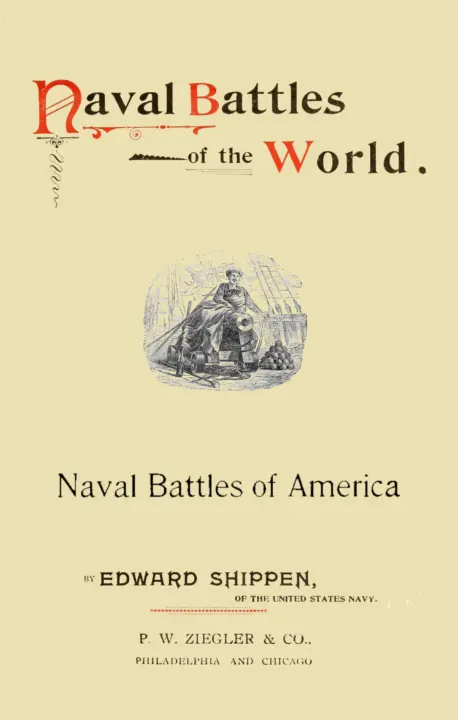
"Naval Battles of the World" by Edward Shippen is a historical account written in the late 19th century. This work provides a comprehensive examination of significant naval battles throughout history, exploring their causes and consequences. Shippen aims to present these events in an accessible manner, shedding light on the pivotal role of naval power in shaping global affairs. The opening portion of the text lays a foundational understanding of the significance of naval battles, introducing the necessity of a navy for nations with extensive coastlines. It highlights early misconceptions about the sea, emphasizing how ancient civilizations displayed a mix of reverence and fear toward maritime navigation. Shippen discusses the advancements in naval technology and tactics over the centuries, mentioning notable events and figures that shaped naval history. By evoking examples ranging from the ancient Egyptians and Greeks to the Romans and beyond, he sets the stage for a detailed exploration of various decisive conflicts at sea.
Introduction adapted from the source catalogue; source summaries may be automatically generated.
Free to read · English · 255,960 words · No account needed
MAKE TIME FOR A GOOD BOOK
On by default. Untick to stop anonymous reading totals. Each page counts after 10 seconds in view. How this works.
Anonymous counting is on unless you have switched it off.
After this he received from the French government an old Indiaman, called the Duc de Duras, which he renamed the “Bonhomme Richard,” or Poor Richard, in allusion to the publication by Benjamin Franklin.
He had some other armed vessels, mostly “letters of marque,” under his
command.
The Bonhomme Richard had 40 guns, and a mixed crew, of various nationalities. Jones sailed under such hampering restrictions that he was prevented from carrying out many promising projects; but at last, on the 23d of September, he fell in with a Baltic fleet of merchantmen, convoyed by the English frigate Serapis, 44, and the Countess of Scarborough, 20. The result of the engagement which ensued will be given hereafter.
To continue the sketch of Jones himself, we may say that, in 1780, the year after this action, he sailed for the United States, in the Ariel, 20, but lost his masts in a severe gale of wind, and was obliged to return to France; whence he sailed again and arrived safely, about the beginning of 1781.
He was then launched in the America, 74, which was presented by our Government to the French; and he made a cruise in her as a volunteer.
In 1783 he was prize agent of the United States in Europe; and finally, in 1787, while in Denmark, he resigned, and entered the Russian Navy--hoisting his flag, as Rear Admiral, in the “Vladimir,” on the 28th of June, 1788. He found so much jealousy and enmity towards him that he resigned in about a year.
Afterwards he resided in Holland and France, and was appointed Commissioner of the United Slates to Algiers--but his death occurred at this time, at the age of forty-five.
And now, to return to his cruise in the Bonhomme Richard:--
Paul Jones had obtained so much celebrity for his cruise in the Ranger, that, after that ship departed for America he remained in France, in the hope of receiving a more important command.
During the years 1778-9 various projects were discussed, in which he was to have a part. One idea was to make a descent upon Liverpool, with a body of troops to be commanded by La Fayette. These plans all came to nothing, and his offers of service were repulsed; until at last a singular arrangement was proposed to him.
M. de Sartine, French Minister of Marine, in a letter of February, 14th, 1779, states that the King of France had decided to purchase, and put at the disposition of Captain Jones, the Duras--an old Indiaman of some size, then at l’Orient. To this vessel were added three more, procured by means of M. le Ray de Chaumont, a banker who had connections with the French Ministry.
Your reading position is saved on this browser. Take it to another device with a library code. Reading pages adapt to text, rather than matching a printed edition.
BEHIND THE BOOK
This eBook is for the use of anyone anywhere in the United States and most other parts of the world at no cost and with almost no restrictions whatsoever. You may copy it, give it away or re-use it under the terms of the Project Gutenberg License included with this eBook or online at www.gutenberg.org. If you are not located in the United States, you will have to check the laws of the country where you are located before using this eBook. Read the source licence.
The original source file, including credits and licence, is retained by this library. Request an original-format copy at no charge. Please include the book title and Project Gutenberg identifier #73068.
KEEP YOUR CURIOSITY GOING
Cécile Tormay

Moritz Busch
John L. Ransom
Frances Wright
Cécile Tormay

Mabel Potter Daggett