THE CLASSIC COLLECTION✦An outlaw’s diary: the CommuneCLASSIC FREE BOOKS
An outlaw’s diary: the Commune
Cécile Tormay
THE CLASSIC COLLECTION · 1898
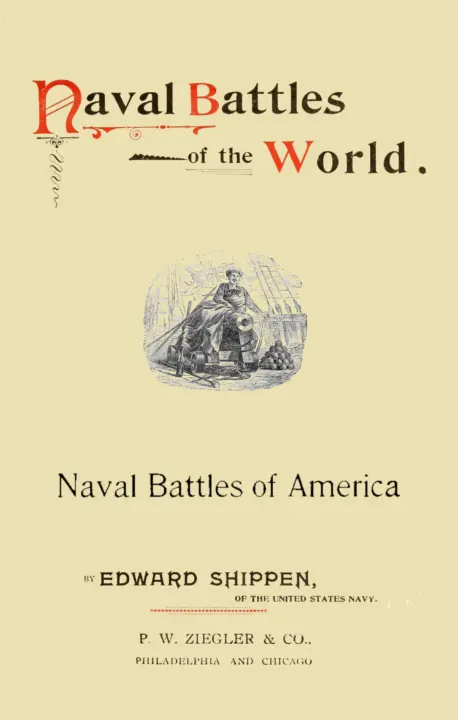
"Naval Battles of the World" by Edward Shippen is a historical account written in the late 19th century. This work provides a comprehensive examination of significant naval battles throughout history, exploring their causes and consequences. Shippen aims to present these events in an accessible manner, shedding light on the pivotal role of naval power in shaping global affairs. The opening portion of the text lays a foundational understanding of the significance of naval battles, introducing the necessity of a navy for nations with extensive coastlines. It highlights early misconceptions about the sea, emphasizing how ancient civilizations displayed a mix of reverence and fear toward maritime navigation. Shippen discusses the advancements in naval technology and tactics over the centuries, mentioning notable events and figures that shaped naval history. By evoking examples ranging from the ancient Egyptians and Greeks to the Romans and beyond, he sets the stage for a detailed exploration of various decisive conflicts at sea.
Introduction adapted from the source catalogue; source summaries may be automatically generated.
Free to read · English · 255,960 words · No account needed
MAKE TIME FOR A GOOD BOOK
On by default. Untick to stop anonymous reading totals. Each page counts after 10 seconds in view. How this works.
Anonymous counting is on unless you have switched it off.
Almost at the same moment Captain Jenkins was shot in the thigh, breaking the bone, and was necessarily removed from the deck, as was the Lieutenant of Marines, from wounds in the thigh and shoulder.
Scarcely had these left the deck when the Master was shot through the head, and instantly killed. The only surviving Lieutenant, who had left his sick bed to take part in the defence, was now wounded in the head.
The gunner at this moment came on deck, and reported the ship on fire below and abaft, which so alarmed the uninjured portion of the crew, on account of the neighborhood of the magazine, that they left their quarters on the gun-deck, and went below.
The fire was occasioned by some cartridges which had been carelessly left upon the rudder head, and which, on the discharge of a gun through the cabin window or stern port, into the bows of the Bayonnaise, had exploded, badly wounding every man at the gun, besides blowing out a part of the Ambuscade’s stern, and destroying the boat which was hanging there.
In the height of all this confusion on board the Ambuscade the French soldiers, who, throughout, had behaved splendidly, charged across the bowsprit of their vessel, which formed a bridge to the quarter-deck of the Ambuscade, now undefended, and, after a short struggle on the main deck, found themselves in possession of the frigate. There is no doubt that this result was most humiliating to a nation who had grown to consider themselves irresistible by sea, when the odds were not too great. The great advantage of the Ambuscade, her gun force, was not made the most of; and although she was evidently the faster vessel, the Frenchman, from superior tactics, was enabled to make his superiority in musketeers tell. In fact, the whole story shows that the English ship was sadly deficient in discipline and drill. It was immediately given out that the majority of her crew “were the scum of the British navy,” but the great trouble appears to have been with the captain himself. This officer had been promoted to the command of the Ambuscade from the Carnatic, 74, where he had been first lieutenant, and he had brought with him from that ship a party of seamen whom he chose to call the “gentlemen Carnatics,” and distinguishing those men whom he found on board the frigate by the very opprobrious epithet of “blackguard Ambuscades.” One can hardly speak calmly of the fact that such an idiot as this was placed in such a responsible position; and, as he himself had raised two parties in his ship, the only wonder is that she made so good a defence. When Captain Jenkins and his surviving officers and ship’s company were, some months later, exchanged, a court-martial was, of course, held upon him, for the loss of the Ambuscade. The Captain was suffering still from the effects of his dreadful wound, and he and the rest were acquitted, in spite of the evidence showing that his ship was in bad discipline, and that the action had been conducted in a lubberly manner, on the part of the English, from first to last. No questions appear to have been pressed as to why the Bayonnaise’s character was not earlier ascertained, whereby confusion would have been avoided in the opening of the engagement, and the Ambuscade might have obtained the weather-gage, and kept her adversary from boarding; while in that position, her superiority in metal should have told. It was proved that the hammocks were not in the nettings, in spite of the musketry being so much used, and other equally shameful points were made manifest. Yet Jenkins was acquitted, and the sentence of the court avoided even naming the ship by which he had been captured. The French took their prize into Rochefort, and great were the rejoicings, not without cause, for a French corvette had captured an English frigate. Richer was promoted by the French Directory, over one grade, to that of Capitaine de Vaisseau, and the crew properly rewarded. The gallant officer in command of the troops, to whom so much of the credit of the action is due, was killed on the Bayonnaise’s deck.
Your reading position is saved on this browser. Take it to another device with a library code. Reading pages adapt to text, rather than matching a printed edition.
BEHIND THE BOOK
This eBook is for the use of anyone anywhere in the United States and most other parts of the world at no cost and with almost no restrictions whatsoever. You may copy it, give it away or re-use it under the terms of the Project Gutenberg License included with this eBook or online at www.gutenberg.org. If you are not located in the United States, you will have to check the laws of the country where you are located before using this eBook. Read the source licence.
The original source file, including credits and licence, is retained by this library. Request an original-format copy at no charge. Please include the book title and Project Gutenberg identifier #73068.
KEEP YOUR CURIOSITY GOING
Cécile Tormay

Moritz Busch
John L. Ransom
Frances Wright
Cécile Tormay

Mabel Potter Daggett