THE CLASSIC COLLECTION✦An outlaw’s diary: the CommuneCLASSIC FREE BOOKS
An outlaw’s diary: the Commune
Cécile Tormay
THE CLASSIC COLLECTION · 1895
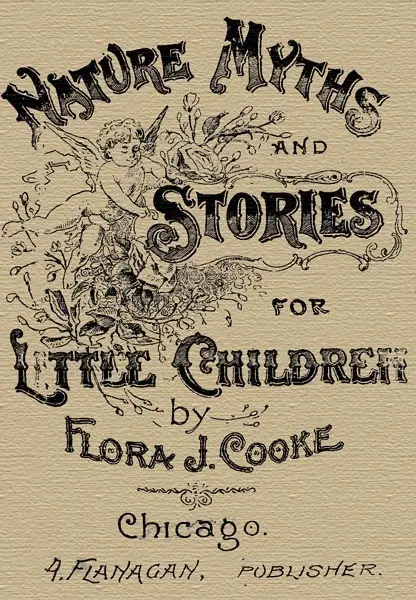
"Nature Myths and Stories for Little Children" by Flora J. Cooke is a collection of children's stories written in the late 19th century. The book is designed for young readers, introducing them to myths and tales drawn from nature and classical mythology. Through her work, Cooke aims to enrich children's understanding of the natural world while providing stories that convey deeper lessons and morals. This collection features a variety of stories that are engaging and educational. Each tale explains how natural elements, such as animals, flowers, and celestial bodies, relate to myths or contain moral lessons. For example, stories like "How the Robin's Breast Became Red" and "The Fox and the Stork" not only entertain but also imbue readers with themes of kindness, generosity, and the importance of nature. Each narrative is crafted to be easily understood by children, allowing them to explore their curiosities about the world around them while enjoying whimsical storytelling that connects them to timeless truths.
Introduction adapted from the source catalogue; source summaries may be automatically generated.
Free to read · English · 16,446 words · No account needed
MAKE TIME FOR A GOOD BOOK
On by default. Untick to stop anonymous reading totals. Each page counts after 10 seconds in view. How this works.
Anonymous counting is on unless you have switched it off.
He taught them to cook, and to build houses, and to sail their ships
upon the ocean.
He showed them how to get rich ores from the mountains and prepare them
for use.
They learned how to plow and to reap and to store up their food for the
winter.
Zeus was angry with Prometheus.
He chained him to a rock on the top of a high mountain.
He sent a great bird each day to torment him.
Zeus said that he must stay there until he repented and returned the
fire to heaven.
There Prometheus stayed and suffered for many burning summers and long,
cold winters.
Sometimes he grew faint-hearted and wished to be free.
Then he looked down and saw how the fire was helping the people and how happy they were, and he grew strong again.
After many, many years, a Greek hero who was sailing over the mountain in a golden cup, saw Prometheus.
It was Hercules. He shot the bird with a golden arrow, unbound the chains and set the wise Prometheus free.
AEolus was the father of all the winds, great and small.
Long ago, they all lived happily together in a dark cave near the sea.
On holidays, North Wind, South Wind, East Wind and West Wind and their faithful sisters, came home and told of their travels.
The whirlwinds performed their most wonderful feats, and the zephyrs
sang their sweetest songs.
These holidays, however, did not come often.
There were no idle children in the family of AEolus.
They swept and dusted the whole world. They carried water over all the earth. They helped push the great ships across the ocean.
The smaller winds scattered the seeds and sprinkled the flowers, and did many other things which you may find out for yourselves.
Indeed, they were so busy that AEolus was often left alone in his dark home for several days at a time.
He was glad when one summer morning a baby came to the cave.
The baby's name was Hermes, but AEolus called him "Little Mischief," because he was so little and so full of tricks.
Zeus was Hermes' father and his mother was the beautiful Queen Maia. She was often called "Star of Spring," because people thought that wherever she stepped flowers sprang from under the snow.
AEolus loved Hermes dearly. He taught him many secrets which only the
winds know.
Hermes was a wise baby and understood all that AEolus told him.
When he was only two days old he could run and whistle as well as North
Wind.
Your reading position is saved on this browser. Take it to another device with a library code. Reading pages adapt to text, rather than matching a printed edition.
BEHIND THE BOOK
This eBook is for the use of anyone anywhere in the United States and most other parts of the world at no cost and with almost no restrictions whatsoever. You may copy it, give it away or re-use it under the terms of the Project Gutenberg License included with this eBook or online at www.gutenberg.org. If you are not located in the United States, you will have to check the laws of the country where you are located before using this eBook. Read the source licence.
The original source file, including credits and licence, is retained by this library. Request an original-format copy at no charge. Please include the book title and Project Gutenberg identifier #30800.
KEEP YOUR CURIOSITY GOING
Cécile Tormay

Moritz Busch
Coulson Kernahan
John L. Ransom

Maurice Baring
Frances Wright