THE CLASSIC COLLECTION✦An outlaw’s diary: the CommuneCLASSIC FREE BOOKS
An outlaw’s diary: the Commune
Cécile Tormay
THE CLASSIC COLLECTION · 1895
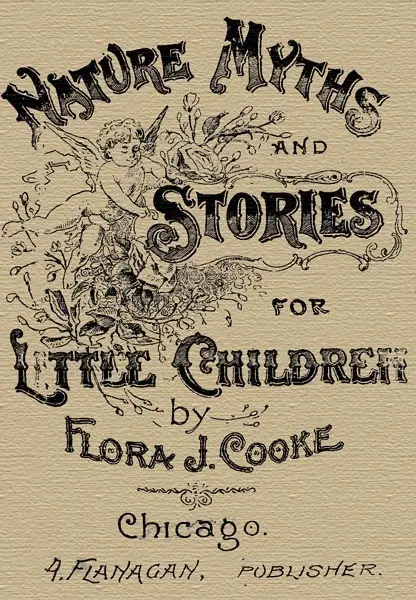
"Nature Myths and Stories for Little Children" by Flora J. Cooke is a collection of children's stories written in the late 19th century. The book is designed for young readers, introducing them to myths and tales drawn from nature and classical mythology. Through her work, Cooke aims to enrich children's understanding of the natural world while providing stories that convey deeper lessons and morals. This collection features a variety of stories that are engaging and educational. Each tale explains how natural elements, such as animals, flowers, and celestial bodies, relate to myths or contain moral lessons. For example, stories like "How the Robin's Breast Became Red" and "The Fox and the Stork" not only entertain but also imbue readers with themes of kindness, generosity, and the importance of nature. Each narrative is crafted to be easily understood by children, allowing them to explore their curiosities about the world around them while enjoying whimsical storytelling that connects them to timeless truths.
Introduction adapted from the source catalogue; source summaries may be automatically generated.
Free to read · English · 16,446 words · No account needed
MAKE TIME FOR A GOOD BOOK
On by default. Untick to stop anonymous reading totals. Each page counts after 10 seconds in view. How this works.
Anonymous counting is on unless you have switched it off.
There was great happiness in Asgard that day.
"Surely," they thought, "everything in the world will weep for Balder."
They had forgotten the cruel Loki.
He sat with dry eyes though rocks and trees, birds and flowers, wind and clouds were shedding tears.
When Odin found that Balder could not return to life, his anger and
grief were terrible to see.
In fear, Loki hid himself deep in the earth under a mountain.
Frigga knew that he was conquered, and she patiently waited for the time when Balder should again be allowed to bring gladness to the earth, and fill all the heavens with the glory of his smile.
Do you all know the little striped chipmunk which lives in our woods?
He has a cousin in far off India called the geloori.
It is said the stripes came on the back of the geloori in a wonderful
way.
One day the great Shiva saw a little gray chipmunk on the seashore.
He was dipping his bushy tail into the sea, and shaking out the water on
the shore.
Twenty times a minute he dipped it into the ocean.
In wonder, Shiva said, "What are you doing, little foolish, gray, geloori? Why do you tire yourself with such hard labor?"
The geloori answered, "I cannot stop, great Shiva.
"The storm blew down the palm tree, where I built my nest.
"See! the tree has fallen seaward, and the nest lies in the water; my wife and pretty children are in it; I fear that it will float away. Therefore all day and all night I must dip the water from the sea.
"I hope soon to bale it dry.
"I must save my darlings even if I spoil my tail."
Shiva stooped and with his great hand stroked the little squirrel.
On the geloori's soft fur from his nose to the end of his tail, there came four green stripes! They were the marks of Shiva's fingers, placed there as signs of love.
Shiva raised his hand, and the water rolled back from the shore. Safe among the rocks and seaweeds, the palm tree lay on dry land.
The little squirrel hastened to it; his tail was now high in the air. He found his wife and children dry and well in their house of woven grass-blades.
As they sang their welcomes to him, the geloori noticed with delight that each smooth little back was striped with marks of Shiva's fingers.
This sign of love is still to be seen upon the back of chipmunks.
That is the reason why in India, good men never kill them.
Your reading position is saved on this browser. Take it to another device with a library code. Reading pages adapt to text, rather than matching a printed edition.
BEHIND THE BOOK
This eBook is for the use of anyone anywhere in the United States and most other parts of the world at no cost and with almost no restrictions whatsoever. You may copy it, give it away or re-use it under the terms of the Project Gutenberg License included with this eBook or online at www.gutenberg.org. If you are not located in the United States, you will have to check the laws of the country where you are located before using this eBook. Read the source licence.
The original source file, including credits and licence, is retained by this library. Request an original-format copy at no charge. Please include the book title and Project Gutenberg identifier #30800.
KEEP YOUR CURIOSITY GOING
Cécile Tormay

Moritz Busch
Coulson Kernahan
John L. Ransom

Maurice Baring
Frances Wright