THE CLASSIC COLLECTION✦An outlaw’s diary: the CommuneCLASSIC FREE BOOKS
An outlaw’s diary: the Commune
Cécile Tormay
THE CLASSIC COLLECTION · 1895
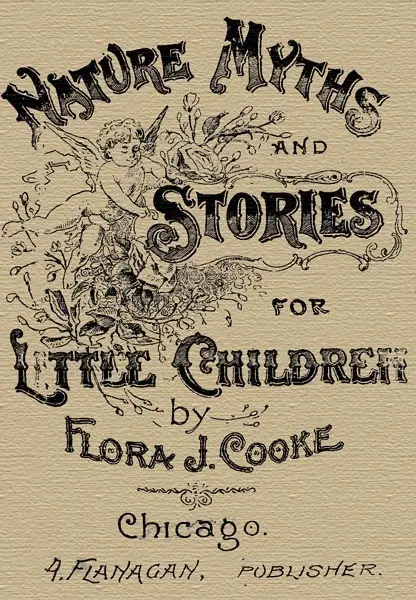
"Nature Myths and Stories for Little Children" by Flora J. Cooke is a collection of children's stories written in the late 19th century. The book is designed for young readers, introducing them to myths and tales drawn from nature and classical mythology. Through her work, Cooke aims to enrich children's understanding of the natural world while providing stories that convey deeper lessons and morals. This collection features a variety of stories that are engaging and educational. Each tale explains how natural elements, such as animals, flowers, and celestial bodies, relate to myths or contain moral lessons. For example, stories like "How the Robin's Breast Became Red" and "The Fox and the Stork" not only entertain but also imbue readers with themes of kindness, generosity, and the importance of nature. Each narrative is crafted to be easily understood by children, allowing them to explore their curiosities about the world around them while enjoying whimsical storytelling that connects them to timeless truths.
Introduction adapted from the source catalogue; source summaries may be automatically generated.
Free to read · English · 16,446 words · No account needed
MAKE TIME FOR A GOOD BOOK
On by default. Untick to stop anonymous reading totals. Each page counts after 10 seconds in view. How this works.
Anonymous counting is on unless you have switched it off.
He did this, but just as he loosened the last cord the sun sprang forth and the bright light shone full in his eyes.
The poor mole dropped to the earth and though his friends were able to save his life, he was blind.
"You need not pity me," he said, "I prefer to live underground, where really there is no use for eyes."
All the moles were so proud of this hero mole that they tried to be like
him in every way.
They, too, went to live in a dark hole in the earth.
Their eyes, which they did not need to use, became so small that they were entirely hidden by their fur. Indeed it is now so hard to find them that many people think the entire mole family is blind.
Long ago when fire was first brought to earth, it was given into the care of two beldams at the end of the world.
The Cahroc Indians knew where it was hidden. They needed fire and were always planning ways to get it.
They went at last to the wise coyote.
"That is simple enough," said he, "I will show you a way to get it. Fire is a great blessing and should be free to all people."
The coyote knew every inch of the road to the beldams' hut.
Along the path leading to it, he stationed beasts, the strongest and best runners nearer the hut and the weaker ones farther off.
Nearest the guarded den, he placed one of the sinewy Cahroc men.
Then he walked boldly up to the door of the hut and knocked.
The beldams, not fearing a coyote in the least, invited him in.
They were often lonely, living so near the end of the world.
When the coyote had rested before the fire for some time, he said, "The Cahroc nation need fire. Could you not give them one small spark? You would never miss it. Here it is of no use."
The beldams answered, "We do not love it, but we dare not give it away. We must guard it while we live."
The coyote had expected them to say this.
He sprang to the window, and instantly outside were heard such sounds, that the beldams rushed out to see what the frightful noise could be.
Each animal in the line was sounding the watch-word of fire in his own
way.
The wild horse neighed, the mountain lion roared, the gray wolf howled, the serpent hissed, the buffalo bellowed, and every small animal did its part equally well.
Your reading position is saved on this browser. Take it to another device with a library code. Reading pages adapt to text, rather than matching a printed edition.
BEHIND THE BOOK
This eBook is for the use of anyone anywhere in the United States and most other parts of the world at no cost and with almost no restrictions whatsoever. You may copy it, give it away or re-use it under the terms of the Project Gutenberg License included with this eBook or online at www.gutenberg.org. If you are not located in the United States, you will have to check the laws of the country where you are located before using this eBook. Read the source licence.
The original source file, including credits and licence, is retained by this library. Request an original-format copy at no charge. Please include the book title and Project Gutenberg identifier #30800.
KEEP YOUR CURIOSITY GOING
Cécile Tormay

Moritz Busch
Coulson Kernahan
John L. Ransom

Maurice Baring
Frances Wright