THE CLASSIC COLLECTION✦An outlaw’s diary: the CommuneCLASSIC FREE BOOKS
An outlaw’s diary: the Commune
Cécile Tormay
THE CLASSIC COLLECTION · 1895
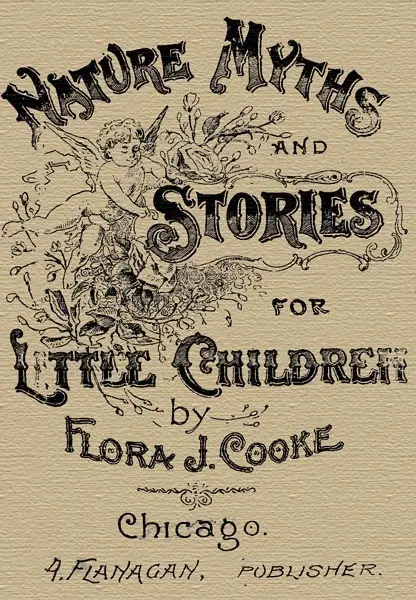
"Nature Myths and Stories for Little Children" by Flora J. Cooke is a collection of children's stories written in the late 19th century. The book is designed for young readers, introducing them to myths and tales drawn from nature and classical mythology. Through her work, Cooke aims to enrich children's understanding of the natural world while providing stories that convey deeper lessons and morals. This collection features a variety of stories that are engaging and educational. Each tale explains how natural elements, such as animals, flowers, and celestial bodies, relate to myths or contain moral lessons. For example, stories like "How the Robin's Breast Became Red" and "The Fox and the Stork" not only entertain but also imbue readers with themes of kindness, generosity, and the importance of nature. Each narrative is crafted to be easily understood by children, allowing them to explore their curiosities about the world around them while enjoying whimsical storytelling that connects them to timeless truths.
Introduction adapted from the source catalogue; source summaries may be automatically generated.
Free to read · English · 16,446 words · No account needed
MAKE TIME FOR A GOOD BOOK
On by default. Untick to stop anonymous reading totals. Each page counts after 10 seconds in view. How this works.
Anonymous counting is on unless you have switched it off.
The giant told the Ocean how the Sun ran away with White Cloud. The Sun heard him and was angry. He placed Sisyphus in the sea saying, "You are far too strong to sit idly here upon the shore. You say you want a great work to do; you shall have it. You shall forever use your strength to push these stones upon the shore, and they shall forever roll back upon you."
The giant began his work at once, and has worked faithfully every day
since that time.
Many people do not yet know what his work is. Do you? Do you know what
Sisyphus is making?
On a high plain covered with flowers once lived good King Alkinoos and his gentle people, the Phaiakians.
They were great sailors and went about in silver ships without rudders
or sails.
These wonderful ships went slowly or very fast just as the sailors
wished.
For many years the Phaiakians were peaceful and happy.
Though they were as brave as they were gentle, they hated war.
Far below the Phaiakians, in a valley, lived a people larger, darker,
fiercer than themselves.
These dark people cared for nothing so much as war and conquest.
When they saw the silver ships with the golden prows, they wanted them
for their own.
They armed themselves and made ready for a great battle.
To be sure of victory, they borrowed the thunder and lightning from
Zeus.
The day came and all was ready for the dark people to advance.
They reached the land of the Phaiakians in the morning and King Alkinoos came forward to meet them.
They soon saw that he alone was more powerful than their entire army.
He was dressed in armor so bright that it dazzled their eyes to look at it. It was covered with millions of golden arrows tipped with diamonds. The king showed the frightened people how he could shoot the arrows in all directions at the same time.
The dark people trembled with fear, but King Alkinoos smiled at them, and then he and his people sailed slowly away toward the West.
On and on they went, until they came to a great silver sea.
Here they stopped and built a palace for their king.
This palace was made of silver and gold and precious stones.
Its towers were rose color and shone with a wonderful light.
Its steps were of pure gold.
On each side of the silver gates were huge dogs which guarded the
palace.
There were boys in the halls dressed in white, holding burning torches.
There were girls weaving wonderful curtains and painting pictures upon
the walls.
Your reading position is saved on this browser. Take it to another device with a library code. Reading pages adapt to text, rather than matching a printed edition.
BEHIND THE BOOK
This eBook is for the use of anyone anywhere in the United States and most other parts of the world at no cost and with almost no restrictions whatsoever. You may copy it, give it away or re-use it under the terms of the Project Gutenberg License included with this eBook or online at www.gutenberg.org. If you are not located in the United States, you will have to check the laws of the country where you are located before using this eBook. Read the source licence.
The original source file, including credits and licence, is retained by this library. Request an original-format copy at no charge. Please include the book title and Project Gutenberg identifier #30800.
KEEP YOUR CURIOSITY GOING
Cécile Tormay

Moritz Busch
Coulson Kernahan
John L. Ransom

Maurice Baring
Frances Wright