THE CLASSIC COLLECTION✦My diaries, being a personal narrative of events 1888-1914, Part 2 (1900-1914)CLASSIC FREE BOOKS
My diaries, being a personal narrative of events 1888-1914, Part 2 (1900-1914)
Wilfrid Scawen Blunt
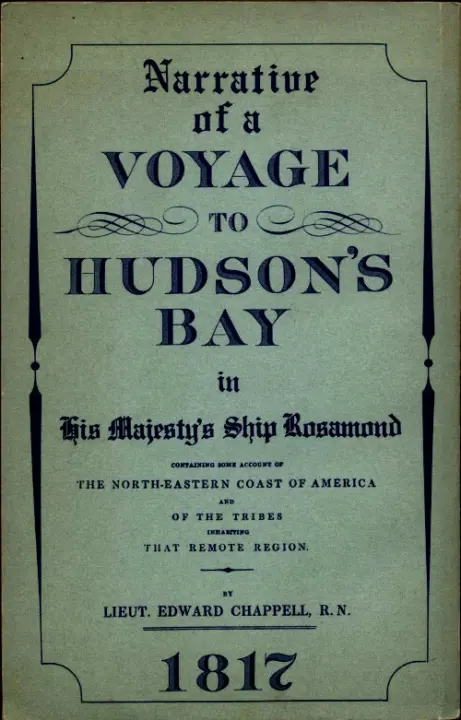
THE CLASSIC COLLECTION · 1817
"Narrative of a Voyage to Hudson's Bay in His Majesty's Ship Rosamond" by Lieutenant Edward Chappell is a historical account written in the early 19th century. This work details Chappell's experiences and observations during his voyage to Hudson's Bay, focusing on the geography and the indigenous tribes inhabiting the northeastern coast of America. It promises a blend of adventure, exploration, and cultural insights into the lives of the local tribes he encounters. The opening of the narrative introduces Lieutenant Chappell as a young naval officer preparing for a voyage that diverges from his initial expectations of conflict to the remote and icy regions of Hudson's Bay. The ship Rosamond sets sail amidst a mixture of apprehension and anticipation. Chappell recounts the various ports they pass, his experiences with fellow naval officers, and the logistical challenges faced during the initial stages of the journey. The descriptions of the ship's journey through challenging waters and the growing sense of trepidation as they approach the unknown territory set the stage for an in-depth examination of the geography and cultures Chappell is about to explore.
Introduction adapted from the source catalogue; source summaries may be automatically generated.
Free to read · English · 43,090 words · No account needed
MAKE TIME FOR A GOOD BOOK
On by default. Untick to stop anonymous reading totals. Each page counts after 10 seconds in view. How this works.
Anonymous counting is on unless you have switched it off.
Oo-ne-gaph, Carrying-place. Oo-skah-ta-gow, or Oo-shisk, Fur. Oo-skun, Bone. Oo-tay-hee, The heart. Oo-tay, Boiling. And, See-cah-che-wut-tay-oo, Boiling over. Oo-mah-moggah, This too, or This also. Oo-mah, This. Oo-tahk, Going behind. Oa-sow-we-quay, Brown face. Owanah-n’gah-nut-to-mine-nah-hook, Who will hunt for me? Oo-tah-coo-sin, Evening. Ow-wee-how, To lend. Oo-wee-hah-sue, To borrow. Oo-tee, and Oo-see, Names of a canoe. Oo-tahk-athuck, Stern of a canoe. O-ask-kah-pus-ke-layoo, Oo-sken-equm, Any thing new or not much used. Oo-scooh-tim, A beaver dam. Oth-this-sah, To cut anything out, as shoes, &c.
Ne-Pah-wah-min, I dream. Pemee, Fat, melted and prepared. Pus-coo-na-oo, Fat animal. Pis-seth-che-hin, Listen to me. Ke-pay-tow-in, You hear me. Ke-Pay-tartin, I hear you. N’ Ne-Pay-tah-soon, I hear myself. Ke-Pay-tahk, You are heard. Ke-Pay-tahk-coo-wow, They hear you, (plural.) Ke-Pay-tahk-coo-wow-uck, Pow-is-stick, A waterfall. Pe-chow, A long distance by land. Pe-tahk-ho-gun, A long distance by water. Pe-tis-quon-my-gow, A long distance by ice. Pus-quas-qua-ow, A hummock of wood. Pay-soo-sin, A short distance. Pim-mith-e-hick-oo-mow, A lake broader than long. Pah-kahk, A ghost, or skeleton. Pow-woggan, Morpheus, or the God of Dreams. Pe-wee-tog-gun, A shooting-place; i.e. a waterfall, practicable for boats to go down. Parqua-sin, Shoal water. Parquow, Dry, or little water. Pim-mah-gam-mah-hummock, Canoes crossing a lake or river obliquely. N’ Ne-Pee-kis-curtain, I am uneasy. Pee-kis-kah-tethe-tah-gun, The case is melancholy. Ke-Pait-twah-tin, I have brought it you. Ke-Pait-tah-hoo-twah-tin, I have brought it you by water. Ke-Pait-lah-hoo-tow-in, You have brought me something. Pemass-sue, To sail. Pimiss-scow, To paddle. Peen-me-gun, Crooked-grained wood. Peemow, Crooked. Pah-tuce, Afterwards. N’ Ne-Puk-kis-cah-tam, I am unhappy. Pis-sin-nah-tis-sue, Mischievous. Pus-ke-thahk, To excel, He is excelled. Ne-Pus-ke-thak-gan, I have excelled. Pay-pay-me-tah-che-moo, To crawl. Pem-oo-tah, To walk. Pe-mo-at-tah-muck, To ride. Pim-me-thow, To fly. Pepoon, Winter. Pepurisue, To winter. Also the name of a winter-bird. N’-Pe-pun-is-sin, I wintered. Pe-mah-tah-gas-gun, To go on the ice. Pah-mah-ta-gow, To go into the water—deep. Pah-coo-pay, To walk ditto—shoal. Pay-coo-pay, To come up after diving. Pan-nis-swow, To split meat. Pus-sah-wow, To split wood, and work it with a hatchet. N’gah-Pus-sa-higgan, I will go and sit down and split some wood. Pah-pe-tues-is-se-nah-gun, Variety. Pus-sah-qua-pue, To shut the eyes. Pus-pah-pue, To look through, or peep. Pus-pah-pue-win, A window. Pun-mis-cah-tayoo, To go to a house any distance in winter. Puah-pee-tway-tin, Missing fire. Pwas-tow-we-mah-tway-tayoo, Hanging fire. Pwas-towe-we, Tedious, Not quick. Pah-ke-tit-tow, To let fall. Pay-catch, Slow. Pet-tah, Thirst. Pah-too-mah, By-and-bye. Pah-pue, Laugh. Pah-pisk, A great laughter. Pah-pin-nah-ne-woo, Very laughable. Ke-Pah-pe-pin, You laugh at me. Ke-Pah-pi-hittan, I laugh at you. Poo-see, To set off by water. Pim-mah-hum-moak, Flying towards the sea-shore. Pemah-tis-sue, Living, Still alive, Longevity. Pe-mah-tis-se-win, Any thing that promotes life. Pe-mah-che-how, To bring to life. Peth-coo-wow, To penetrate. Puck-queth-qua-sue, To let blood. Pah-coo-moo, To vomit. Pah-puthe-tow, To bring up any thing accidentally swallowed. Pis-se-quah-tis-sue, Mischievous. Pee-kis-quay, To sing, or make a noise. Pah-mit-tis-saw-wow, To run after any thing. Peway-pisk, Iron, Almost all kinds of metal. Pah-pus-qua-hum, Breaking-up of lake-ice. Ka-Pah-tis-sue, Dull, Not clever. Pis-us, To doubt. Pee-tah, Any thing that frustrates a design. Pit-tah, Stop. Pitche-coo, To move about from one place to another. Ne-Pit-chin, I have moved. Ne-Pus-cay-wan, I parted. Ne-Pus-cay-pitchin, To part company, A party taking different routes. Pus-ca, To part with a companion by ditto. Pus-cay-tah, To tear with the mouth. Pah-pow-wah-hah, or Poo-two-wah, Shake it. Pah-ke-puthee, A swelling. Pay-nass, or Pach-nass, Come for it.
Your reading position is saved on this browser. Take it to another device with a library code. Reading pages adapt to text, rather than matching a printed edition.
BEHIND THE BOOK
This eBook is for the use of anyone anywhere in the United States and most other parts of the world at no cost and with almost no restrictions whatsoever. You may copy it, give it away or re-use it under the terms of the Project Gutenberg License included with this eBook or online at www.gutenberg.org. If you are not located in the United States, you will have to check the laws of the country where you are located before using this eBook. Read the source licence.
The original source file, including credits and licence, is retained by this library. Request an original-format copy at no charge. Please include the book title and Project Gutenberg identifier #54088.
KEEP YOUR CURIOSITY GOING
Wilfrid Scawen Blunt
Wilfrid Scawen Blunt

E. W. (Edgar Watson) Howe
Cécile Tormay

Moritz Busch
John L. Ransom