THE CLASSIC COLLECTION✦My diaries, being a personal narrative of events 1888-1914, Part 2 (1900-1914)CLASSIC FREE BOOKS
My diaries, being a personal narrative of events 1888-1914, Part 2 (1900-1914)
Wilfrid Scawen Blunt
THE CLASSIC COLLECTION · 1817
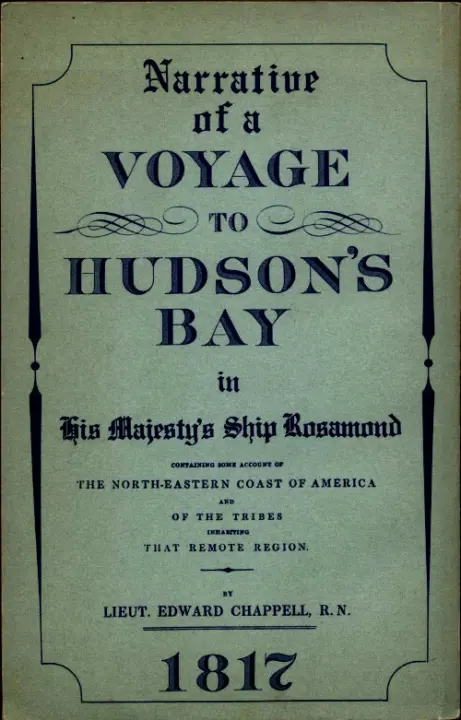
"Narrative of a Voyage to Hudson's Bay in His Majesty's Ship Rosamond" by Lieutenant Edward Chappell is a historical account written in the early 19th century. This work details Chappell's experiences and observations during his voyage to Hudson's Bay, focusing on the geography and the indigenous tribes inhabiting the northeastern coast of America. It promises a blend of adventure, exploration, and cultural insights into the lives of the local tribes he encounters. The opening of the narrative introduces Lieutenant Chappell as a young naval officer preparing for a voyage that diverges from his initial expectations of conflict to the remote and icy regions of Hudson's Bay. The ship Rosamond sets sail amidst a mixture of apprehension and anticipation. Chappell recounts the various ports they pass, his experiences with fellow naval officers, and the logistical challenges faced during the initial stages of the journey. The descriptions of the ship's journey through challenging waters and the growing sense of trepidation as they approach the unknown territory set the stage for an in-depth examination of the geography and cultures Chappell is about to explore.
Introduction adapted from the source catalogue; source summaries may be automatically generated.
Free to read · English · 43,090 words · No account needed
MAKE TIME FOR A GOOD BOOK
On by default. Untick to stop anonymous reading totals. Each page counts after 10 seconds in view. How this works.
Anonymous counting is on unless you have switched it off.
Two of their Images; the one representing a Man, and the other a Woman, in the Esquimaux Dress; shewing the first dawning of sculpture, and their inability to represent the human countenance, hands, or feet.
LIST of Articles illustrating the Manners and Customs of the Natives of the North-western Coast of America; brought to Europe by Commodore Billings.
Machines used in casting their Arrows; from the neighbourhood of Cook’s
River.
Harpoons of Bone, with Ropes made of the Tendons of Animals.
Ditto of Fossil Ivory, with ditto.
Idols of Wood and Hair, brought to the Coast from the interior of the North-American Continent.
Bone Fish-hooks.
Pouches, worn by the Men for covering the Genitals, made of a Marine
Plant.
Head-dresses of the Women, made of the Entrails of Fishes.
Dresses of Men and Women, made of Skins of Moose-Deer.
Bracelets and Fishing-lines made of Fishes’ Entrails.
Thread for Sewing, manufactured of the same materials.
Needle-work of the Women, ditto.
Circular Rattle of the Enchanters or Sorcerers, made of the Beaks of
Sea-Hawks.
Bonnet worn by the Men; adorned with long Spikes made of the Beard of
the Sea-Lion.
Hatchet for making Canoes; the Handle being of wood, to which, by thongs, a piece of Jade is fastened.
Lancet for Bleeding, made of Pitchstone.
Idols made of the Sea-Mouse, adorned with Porcupine’s Quills.
Work-bags and Needle-cases, made of Fishes’ Entrails; the Needles, of Fishes’ Bones; &c. &c.; from Prince William’s Sound.
Small Boxes, and Pouches for carrying Trinkets, &c.
Fish-hooks, False Worms as Baits, Idols, Ornaments for Bonnets, &c.
Seal-skin Boots.
Appendix (F).
A VOCABULARY
OF THE
LANGUAGE
OF THE
CREÉ or KNISTENEAUX[45] INDIANS
INHABITING
THE WESTERN SHORES OF HUDSON’S BAY
Presented to the Author by a Trader who had resided Thirty Years in that
Country.
Athis, implies what is past, and could not be avoided. As-tum, Come here. As-tum-et-tay, On this side of any particular spot. As-kow-wee, Rotten. Ap-pah-qua-soon, Tent leather alone. Ap-pus-swy-uch, Tent-poles. Ah-chakk, The soul. As-tum-as-taik, In the sunshine. Awoos-us-pee, Past such a time. Astum-us-pee, Prior to such a time. A-gues-spee, At such a time. Ath-tha-gusk-cow, Broad. Ah-to-we-thah, It certainly was so. Ah-tues-cay, To work, toil, labour, or attend as a servant. Ah-too-ska-thog-gan, An attendant, or servant. Asse-che, Also, Besides. Ke-we-Assas-su-min, You mean to deceive me. Ah-tah-mah, Very often repeated. Ke-we-Ath-the-mah-hittin, I mean to be troublesome to you. As-cow, Sometimes. Aquay-thakk, or Aqua-thoch, The first time. Athee-mis-sue, Ill-natured, Hard to please. Assus-kee, Earth, or mould. Abby-tow, Half. Abby-tham-oo-tuch, Middle of a canoe. An-nis-coo-tah-pan, A knot of any kind of line. Ah-tie, Fur. Ah-spee-che, In the meanwhile, whilst. An-nouch, Just now.
Your reading position is saved on this browser. Take it to another device with a library code. Reading pages adapt to text, rather than matching a printed edition.
BEHIND THE BOOK
This eBook is for the use of anyone anywhere in the United States and most other parts of the world at no cost and with almost no restrictions whatsoever. You may copy it, give it away or re-use it under the terms of the Project Gutenberg License included with this eBook or online at www.gutenberg.org. If you are not located in the United States, you will have to check the laws of the country where you are located before using this eBook. Read the source licence.
The original source file, including credits and licence, is retained by this library. Request an original-format copy at no charge. Please include the book title and Project Gutenberg identifier #54088.
KEEP YOUR CURIOSITY GOING
Wilfrid Scawen Blunt
Wilfrid Scawen Blunt

E. W. (Edgar Watson) Howe
Cécile Tormay

Moritz Busch
John L. Ransom