THE CLASSIC COLLECTION✦Myths of northern landsCLASSIC FREE BOOKS
Myths of northern lands
H. A. (Hélène Adeline) Guerber
THE CLASSIC COLLECTION · 1893
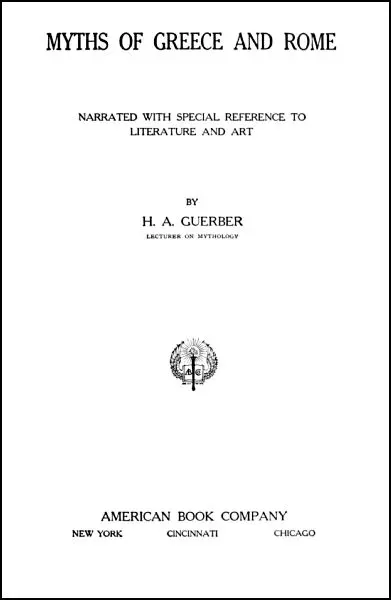
"Myths of Greece and Rome" by H. A. Guerber is a narrative account of classical mythology written in the late 19th century. The work explores the rich tapestry of myths surrounding the ancient Greek and Roman pantheon, providing insights into how these stories influenced literature and art through the ages. The myths are presented in a manner that balances accuracy with readability, making them accessible to a wide audience. The opening of the book introduces readers to the concept of mythology as a collection of ancient narratives explaining the origins of the world and its gods. It begins with the creation myth, describing the chaotic state of the universe before the emergence of order, where elements like Chaos and Nyx (Night) preside over a formless existence. The subsequent emergence of Titans, deities, and the eventual ascendance of Jupiter (Zeus) set the stage for conflicts among gods and the intricate relationships between divinities and mortals. The content reflects a blend of descriptive storytelling and scholarly analysis, showcasing the transformative power these myths held in shaping cultural and artistic expressions.
Introduction adapted from the source catalogue; source summaries may be automatically generated.
Free to read · English · 111,633 words · No account needed
MAKE TIME FOR A GOOD BOOK
On by default. Untick to stop anonymous reading totals. Each page counts after 10 seconds in view. How this works.
Anonymous counting is on unless you have switched it off.
Ne´leus.
Son of Neptune;
brother of Pelias, 154.
Ne´me-a.
Forest in Greece, devastated by a lion slain by Hercules, 220.
Ne´me-an Games.
Games in honor of Jupiter and Hercules, 239.
Ne´me-an Lion.
Monster slain by Hercules, 220.
Nem´e-sis.
Goddess of vengeance, 163;
pursues Orestes, 336.
Ne-op-tol´e-mus.
Same as Pyrrhus;
Achilles' son;
slays Priam, 361.
Neph´e-le.
Wife of Athamas;
mother of Phryxus and Helle, 265;
significance, 391, 397.
Nep´tune.
Same as Poseidon, god of the sea, 149-158;
son of Cronus, 22;
kingdom given to, 25;
Deluge controlled by, 36, 37;
horse created by, 57;
Delos created by, 62;
walls built by, 65;
Mars punished by, 139;
girl protected by, 197;
Vesta wooed by, 198;
Minos punished by, 223;
Pegasus created by, 244;
Hippolytus slain by, 262;
Thetis wooed by, 305;
Trojans punished by, 332, 333;
Polyphemus, son of, 339;
Ulysses' men slain by, 354, 355;
Æneas saved by, 366, 370;
significance, 397, 400.
Ne-re´i-des.
Water nymphs;
daughters of Nereus and Doris, 153, 155;
significance, 397.
Ne´re-us.
God of the sea;
the personification of its pleasant aspect, 154, 226;
father of Thetis, 305;
significance, 397.
Nes´sus.
The Centaur who carries Deianeira across the river;
slain by Hercules, 234, 235;
significance, 390.
Nes´tor.
Greek hero during Trojan war;
noted for wise counsel, 275, 314, 357.
Ni´ce.
Same as Victory;
attendant of Jupiter, 41.
Night.
Same as Nyx or Nox, 13, 15, 57, 208.
Nightmares.
Attendants of Somnus, crouching in his cave, 210.
Ni´o-be.
Daughter of Tantalus, whose children are slain by Apollo and
Diana, 93-96, 167;
significance, 398.
Ni´sus.
Youth who accompanies Euryalus to summon Æneas back to camp, 374.
No´man.
Name assumed by Ulysses to mislead Polyphemus, 343, 344.
No´tus or Auster.
Southwest wind;
son of Æolus and Aurora, 213-215.
Nox.
Same as Nyx, goddess of night;
marries Chaos and Erebus, 13.
Nu´ma Pom-pil´i-us.
Second king of Rome;
built Vesta's temple, 200.
Nymphs.
Name given to female minor divinities, 297.
Ny-si´a-des.
Nymphs who cared for Bacchus, and form a constellation, 174.
Nyx.
Same as Nox, goddess of night;
mother of Day and Light, 13, 15, 17, 163.
O-ce-an´i-des.
Daughters of Oceanus;
nymphs of the ocean, 25, 103, 303;
significance, 397.
O-ce´a-nus.
1. River surrounding the earth, according to ancients, 15, 16, 229.
2. One of the Titans;
son of Uranus and Gæa, 17, 20, 22, 25, 149;
significance, 397.
O-cris´i-a.
A slave;
wife of Vulcan;
mother of Servius Tullius, 148.
O-dys´seus.
Same as Ulysses;
hero of the Odyssey, 337.
Od´ys-sey.
Epic poem of Homer on the adventures of Ulysses, 337.
Oed´i-pus.
Son of Laius and Jocasta;
King of Thebes, 280-290;
significance, 392, 393, 394.
Oe´neus.
Father of Meleager and Deianeira;
husband of Althæa, 232, 275.
Oe-no´ne.
Wife of Paris, son of Priam, 307, 308;
she dies on his funeral pyre, 331;
significance, 394.
Oe-no´pi-on. Father of Merope;
blinds Orion, 99.
Oe´ta.
Mountain on whose summit Hercules builds his funeral pyre, 238.
O-gyg´i-a.
Island where Calypso detains Ulysses seven years, 354.
O-lym´pi-a.
City in Elis noted for its temple and games, 49, 230, 239.
O-lym´pi-ad.
Time between Olympian Games; i.e., four years, 49.
Your reading position is saved on this browser. Take it to another device with a library code. Reading pages adapt to text, rather than matching a printed edition.
H. A. (Hélène Adeline) Guerber
H. A. (Hélène Adeline) Guerber
H. A. (Hélène Adeline) Guerber
BEHIND THE BOOK
This eBook is for the use of anyone anywhere in the United States and most other parts of the world at no cost and with almost no restrictions whatsoever. You may copy it, give it away or re-use it under the terms of the Project Gutenberg License included with this eBook or online at www.gutenberg.org. If you are not located in the United States, you will have to check the laws of the country where you are located before using this eBook. Read the source licence.
The original source file, including credits and licence, is retained by this library. Request an original-format copy at no charge. Please include the book title and Project Gutenberg identifier #39250.
KEEP YOUR CURIOSITY GOING

Maurice Baring
Francis Greenleaf Allinson & Anne C. E. (Anne Crosby Emery) Allinson
Stuart Dodgson Collingwood
Percy Keese Fitzhugh
Mary Macleod & Edmund Spenser

Cooke Don-Carlos