THE CLASSIC COLLECTION✦Myths of northern landsCLASSIC FREE BOOKS
Myths of northern lands
H. A. (Hélène Adeline) Guerber
THE CLASSIC COLLECTION · 1893
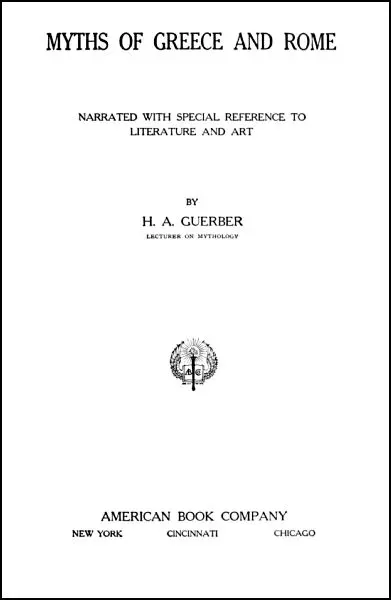
"Myths of Greece and Rome" by H. A. Guerber is a narrative account of classical mythology written in the late 19th century. The work explores the rich tapestry of myths surrounding the ancient Greek and Roman pantheon, providing insights into how these stories influenced literature and art through the ages. The myths are presented in a manner that balances accuracy with readability, making them accessible to a wide audience. The opening of the book introduces readers to the concept of mythology as a collection of ancient narratives explaining the origins of the world and its gods. It begins with the creation myth, describing the chaotic state of the universe before the emergence of order, where elements like Chaos and Nyx (Night) preside over a formless existence. The subsequent emergence of Titans, deities, and the eventual ascendance of Jupiter (Zeus) set the stage for conflicts among gods and the intricate relationships between divinities and mortals. The content reflects a blend of descriptive storytelling and scholarly analysis, showcasing the transformative power these myths held in shaping cultural and artistic expressions.
Introduction adapted from the source catalogue; source summaries may be automatically generated.
Free to read · English · 111,633 words · No account needed
MAKE TIME FOR A GOOD BOOK
On by default. Untick to stop anonymous reading totals. Each page counts after 10 seconds in view. How this works.
Anonymous counting is on unless you have switched it off.
Eu-ro´pa.
Daughter of Agenor;
wife of Jupiter, 44-48, 59;
mother of Minos, Rhadamanthus, and Sarpedon, 45, 325;
significance, 386.
Eu-ro´tas.
River near Sparta, where Helen bathed, 310.
Eu´rus.
East wind;
son of Æolus and Aurora, 213-215.
Eu-ry´a-le.
One of the three terrible Gorgons, 242.
Eu-ry´a-lus.
Youth sent with Nisus to warn Æneas that his son was in danger, 374.
Eu-ry-cle´a.
Nurse of Ulysses;
recognizes him after twenty years' absence, 357;
Penelope awakened by, 358.
Eu-ryd´i-ce.
Wife of Orpheus, who seeks her in Hades, 75-80;
significance, 387-389.
Eu-ryl´o-chus.
Leader of Ulysses' men, 347;
escaped Circe's spell, 349;
Ulysses' men misled by, 353.
Eu-ryn´o-me.
Wife of Jupiter;
mother of the Graces, 105.
Eu-rys´theus.
Hercules' taskmaster;
appointed twelve labors, 218-229.
Eu´ry-tus.
Iole's father;
visited twice by Hercules, 235.
Eu-ter´pe.
One of the Muses;
presided over music, 88.
Eux´ine Sea.
Same as Pontus Euxinus, or the Black Sea, 15.
E-van´der.
King of Tuscans;
ally of Æneas;
father of Pallas, 374, 375.
E-ve´nus.
Father of Marpessa;
drowned himself in river of same name, 155;
Hercules crosses, 234.
Fa´ma.
Attendant of Jupiter, goddess of fame, 41.
Fates.
Three sisters;
also known as Moeræ or Parcæ, 165.
Fau´na.
Wife of Faunus;
a rural divinity of the Romans, 301.
Fau´nus.
Rural divinity of the Romans;
husband of Fauna, 301.
Flo´ra.
Goddess of flowers, 301, 303;
wife of Zephyrus, 215, 301.
Flo-ra´li-a.
Festivals in May in honor of Flora, 301.
Forethought.
Name given to Prometheus, 25.
For-tu´na.
1. Goddess of fortune;
an attendant of Jupiter, 41.
2. Goddess of plenty, 232.
Fo´rum.
Chief place in Rome where public matters were discussed, 142.
Fu´ries.
The Eumenides, or avenging deities, 163;
Oedipus punished by, 286;
Orestes pursued by, 336.
Gæ´a.
Same as Tellus and Terra, 13;
wife of Uranus, 15;
reign of, 17;
conspiracy of, 18;
Typhoeus created by, 23;
Enceladus created by, 24;
Antæus, son of, 227;
Syrinx protected by, 300;
significance, 396.
Gal-a-te´a.
1. Nymph loved by Polyphemus and Acis, 341-343.
2. Statue loved by Pygmalion, who prays Venus to give it life, 121.
Gan´y-mede.
Trojan prince carried off by Jupiter to act as cup-bearer, 43.
Ge.
Same as Gæa, Tellus, Terra, the Earth, 13.
Gem´i-ni.
Same as Dioscuri;
Castor and Pollux, 278.
Ge-ry´o-nes.
Giant whose cattle are taken by Hercules, 226;
significance, 401.
Glau´ce.
Maiden loved by Jason;
slain by Medea, 273;
significance, 392.
Glau´cus.
Fisherman changed to a sea god, 303, 304;
lover of Scylla, 352, 353.
Golden Age.
First age of the ancient world, when all was bliss, 35;
Janus' reign, 205.
Gor´gons.
Three sisters,--Euryale, Stheno, and Medusa, 242-246;
Ægis decorated by head of one of, 58;
significance, 401.
Grac´chi, The.
Unborn souls of Roman heroes, seen by Anchises in Hades, 372.
Gra´ces.
Same as Gratiæ;
the three attendants of Venus, 105.
Gra-di´vus.
Name given to Mars when leader of armies, 143.
Græ´æ.
Three sisters with but one eye and tooth among them, 243;
significance, 391, 401.
Your reading position is saved on this browser. Take it to another device with a library code. Reading pages adapt to text, rather than matching a printed edition.
H. A. (Hélène Adeline) Guerber

H. A. (Hélène Adeline) Guerber
H. A. (Hélène Adeline) Guerber
BEHIND THE BOOK
This eBook is for the use of anyone anywhere in the United States and most other parts of the world at no cost and with almost no restrictions whatsoever. You may copy it, give it away or re-use it under the terms of the Project Gutenberg License included with this eBook or online at www.gutenberg.org. If you are not located in the United States, you will have to check the laws of the country where you are located before using this eBook. Read the source licence.
The original source file, including credits and licence, is retained by this library. Request an original-format copy at no charge. Please include the book title and Project Gutenberg identifier #39250.
KEEP YOUR CURIOSITY GOING

Maurice Baring
Francis Greenleaf Allinson & Anne C. E. (Anne Crosby Emery) Allinson
Stuart Dodgson Collingwood
Percy Keese Fitzhugh
Mary Macleod & Edmund Spenser

Cooke Don-Carlos