THE CLASSIC COLLECTION✦Myths of northern landsCLASSIC FREE BOOKS
Myths of northern lands
H. A. (Hélène Adeline) Guerber
THE CLASSIC COLLECTION · 1893
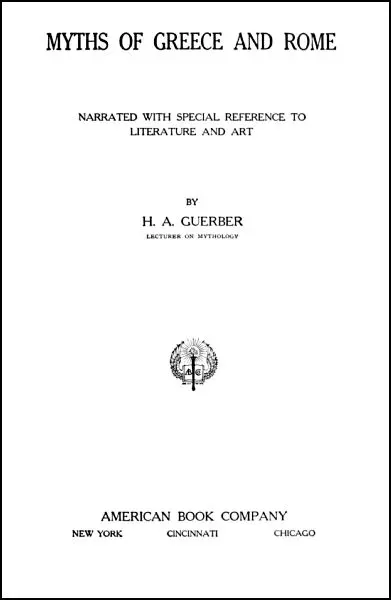
"Myths of Greece and Rome" by H. A. Guerber is a narrative account of classical mythology written in the late 19th century. The work explores the rich tapestry of myths surrounding the ancient Greek and Roman pantheon, providing insights into how these stories influenced literature and art through the ages. The myths are presented in a manner that balances accuracy with readability, making them accessible to a wide audience. The opening of the book introduces readers to the concept of mythology as a collection of ancient narratives explaining the origins of the world and its gods. It begins with the creation myth, describing the chaotic state of the universe before the emergence of order, where elements like Chaos and Nyx (Night) preside over a formless existence. The subsequent emergence of Titans, deities, and the eventual ascendance of Jupiter (Zeus) set the stage for conflicts among gods and the intricate relationships between divinities and mortals. The content reflects a blend of descriptive storytelling and scholarly analysis, showcasing the transformative power these myths held in shaping cultural and artistic expressions.
Introduction adapted from the source catalogue; source summaries may be automatically generated.
Free to read · English · 111,633 words · No account needed
MAKE TIME FOR A GOOD BOOK
On by default. Untick to stop anonymous reading totals. Each page counts after 10 seconds in view. How this works.
Anonymous counting is on unless you have switched it off.
Aq´ui-lo.
West wind, son of Æolus and Aurora, 213, 215.
A-rach´ne.
Minerva's needlework contest with, 58, 59.
Ar-ca´di-a.
Province of Peloponnesus, 221, 275;
Mercury's birthplace, 131.
Ar´cas.
Son of Jupiter and Callisto;
constellation of the Little Bear, 52.
A-re-o-pa-gi´tæ.
Judges of the criminal court of Athens, 140.
A-re-op´a-gus.
Hill near Athens;
site of the Parthenon, 140.
A´res.
Same as Mars, 138;
significance, 400.
A-re´te.
1. Goddess of virtue;
takes charge of Hercules, 218-220.
2. Wife of Alcinous;
mother of Nausicaa, 355.
Ar-e-thu´sa.
Nymph of Diana;
changed to a fountain, 190-193.
Ar´ges (Sheet-lightning).
A Cyclop;
son of Uranus and Gæa, 18.
Ar´go.
Vessel in which Jason set sail in search of the golden fleece,
266-274;
significance, 392.
Ar-go-nau´tic Expedition
in search of golden fleece, 154;
Zetes and Calais in, 215;
Hercules in, 230;
Meleager in, 275;
significance, 391, 392.
Ar´go-nauts.
Name given to Jason and crew, 267-271;
significance, 392.
Ar´gos.
City in Argolis, dedicated to Juno, 52-54;
Eurystheus, king of, 218-220;
Acrisius, king of, 240, 249;
Adrastus, king of, 260, 287;
Proetus, king of, 291;
Agamemnon's return to, 336;
significance, 389, 390.
Ar´gus.
1. Name of myriad-eyed giant who watched Io, 135-137;
significance, 385.
2. Name of Ulysses' faithful hound, 357.
A-ri-ad´ne.
Daughter of Minos;
Theseus aided by, 256, 257;
deserted by Theseus, 179, 257;
marries Bacchus, 181;
significance, 391.
A-ri´on.
1. Winged steed;
the offspring of Neptune and Ceres, 153.
2. Musician;
thrown into the sea by pirates, saved by a dolphin, 82, 83.
Ar-is-tæ´us.
Youth who indirectly causes Eurydice's death, 76.
Ar´te-mis.
Same as Diana, goddess of the moon and the chase, 93, 97.
As-cal´a-phus.
Spirit in Hades who saw Proserpina eat pomegranate seeds, 195.
A´si-a Mi´nor.
West of Asia;
Bacchus' visit to, 176;
Vesta's shrine in, 198;
Thetis' flight from, 326.
As-kle´pi-os.
Same as Æsculapius;
son of Apollo and Coronis, 63.
As-ty´a-nax.
Infant son of Hector and Andromache, 321.
At-a-lan´ta.
Maiden who takes part in Calydonian Hunt and races with Milanion
or Hippomenes, 275-278;
significance, 392.
Ath´a-mas.
King of Thebes;
father of Phryxus and Helle, 265;
Ino in madness slain by, 174;
significance, 391.
A-the´ne.
Same as Minerva, 55;
tutelary goddess of Athens, 57;
significance, 395.
A-the´ni-ans.
Inhabitants of Athens, 215;
tribute of, 253, 256;
ingratitude of, 262.
Ath´ens.
Minerva's festivals at, 60;
tribunal at, 139, 140;
contest for, 152;
Ægeus, king of, 250;
Theseus' arrival at, 252, 253;
Ariadne elopes to, 256;
Castor and Pollux' visit to, 260;
Theseus, king of, 262;
Peleus, king of, 305.
At´las.
1. Mountains.
2. One of Iapetus' sons, 25;
daughters of, 98;
heavens supported by, 227-229;
Perseus petrifies, 244-246;
significance, 379.
At´ro-pos.
One of the Fates;
cuts the thread of life, 165.
At´ti-ca.
Province of Greece;
Cecrops founds city in, 57;
oppression of, 255;
shores of, 259.
Au-ge´as.
King of Elis;
his stables were cleansed by Hercules, 221-223.
Au´lis.
Port in Boeotia, the meeting-place of the Greek expedition
against Troy, 312, 315.
Au-ro´ra.
Same as Eos, goddess of dawn;
attendant of Apollo, 85, 107;
jealousy of, 70;
Tithonus loved by, 90;
Æolus' wife, 213.
Your reading position is saved on this browser. Take it to another device with a library code. Reading pages adapt to text, rather than matching a printed edition.
H. A. (Hélène Adeline) Guerber
H. A. (Hélène Adeline) Guerber
H. A. (Hélène Adeline) Guerber
BEHIND THE BOOK
This eBook is for the use of anyone anywhere in the United States and most other parts of the world at no cost and with almost no restrictions whatsoever. You may copy it, give it away or re-use it under the terms of the Project Gutenberg License included with this eBook or online at www.gutenberg.org. If you are not located in the United States, you will have to check the laws of the country where you are located before using this eBook. Read the source licence.
The original source file, including credits and licence, is retained by this library. Request an original-format copy at no charge. Please include the book title and Project Gutenberg identifier #39250.
KEEP YOUR CURIOSITY GOING

Maurice Baring
Francis Greenleaf Allinson & Anne C. E. (Anne Crosby Emery) Allinson
Stuart Dodgson Collingwood
Percy Keese Fitzhugh
Mary Macleod & Edmund Spenser

Cooke Don-Carlos