THE CLASSIC COLLECTION✦Myths of northern landsCLASSIC FREE BOOKS
Myths of northern lands
H. A. (Hélène Adeline) Guerber
THE CLASSIC COLLECTION · 1893
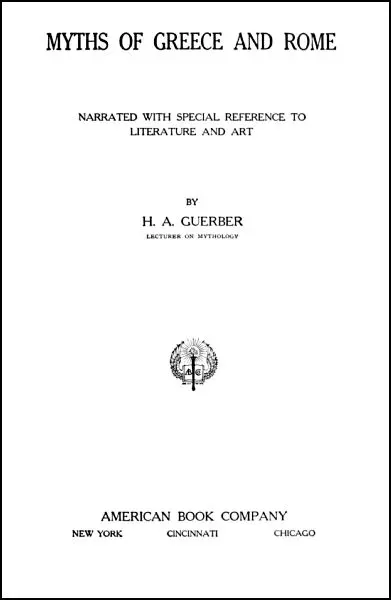
"Myths of Greece and Rome" by H. A. Guerber is a narrative account of classical mythology written in the late 19th century. The work explores the rich tapestry of myths surrounding the ancient Greek and Roman pantheon, providing insights into how these stories influenced literature and art through the ages. The myths are presented in a manner that balances accuracy with readability, making them accessible to a wide audience. The opening of the book introduces readers to the concept of mythology as a collection of ancient narratives explaining the origins of the world and its gods. It begins with the creation myth, describing the chaotic state of the universe before the emergence of order, where elements like Chaos and Nyx (Night) preside over a formless existence. The subsequent emergence of Titans, deities, and the eventual ascendance of Jupiter (Zeus) set the stage for conflicts among gods and the intricate relationships between divinities and mortals. The content reflects a blend of descriptive storytelling and scholarly analysis, showcasing the transformative power these myths held in shaping cultural and artistic expressions.
Introduction adapted from the source catalogue; source summaries may be automatically generated.
Free to read · English · 111,633 words · No account needed
MAKE TIME FOR A GOOD BOOK
On by default. Untick to stop anonymous reading totals. Each page counts after 10 seconds in view. How this works.
Anonymous counting is on unless you have switched it off.
Thetis' joy was all turned to grief, however, when rumors of the war imminent between Greece and Troy came to her ears. She knew her son would soon be summoned, and, to prevent his going, sent him off to the court of Lycomedes, where, under some pretext, he was prevailed upon to assume a disguise and mingle with the king's daughters and their handmaidens.
One messenger after another was dispatched to summon Achilles to join the fleet at Aulis, but one after another returned without having seen him, or being able to ascertain where he was hiding. The Greeks, however anxious to depart, dared not sail without him. They were in despair, until Ulysses, the wily, proposed a plan, and offered to carry it out.
"Ulysses, man of many arts,
Son of Laertes, reared in Ithaca,
That rugged isle, and skilled in every form
Of shrewd device and action wisely planned."
Homer (Bryant's tr.).
[Sidenote: Ulysses discovers Achilles.]
Arrayed in peddler's garb, with a pack upon his shoulders, Ulysses entered Lycomedes' palace, where he shrewdly suspected Achilles was concealed, and offered his wares for sale. The maidens selected trinkets; but one of them, closely veiled, seized a weapon concealed among the ornaments, and brandished it with such skill, that Ulysses saw through the assumed disguise, explained his presence and purpose, and by his eloquence persuaded the young Achilles to accompany him to Aulis.
The Greeks were now ready to embark; but no favorable wind came to swell the sails, which day after day hung limp and motionless against the tall masts of their vessels.
"The troops
Collected and imbodied, here we sit
Inactive, and from Aulis wish to sail
In vain."
Euripides (Potter's tr.).
[Sidenote: Sacrifice of Iphigenia.]
Calchas, the soothsayer of the expedition, was again consulted, to discover how they might best win the favor of the gods; and the reply given purported that no favorable wind would blow until Iphigenia, daughter of Agamemnon, was offered up in sacrifice to appease the everlasting gods.
Many other propitiatory methods were tried; but as they all proved ineffective, Agamemnon, urged by his companions, sent for his daughter, feigning that he wished to celebrate her nuptials with Achilles before his departure.
"I wrote, I seal'd
A letter to my wife, that she should send
Her daughter, to Achilles as a bride
Affianc'd."
Euripides (Potter's tr.).
Your reading position is saved on this browser. Take it to another device with a library code. Reading pages adapt to text, rather than matching a printed edition.
H. A. (Hélène Adeline) Guerber
H. A. (Hélène Adeline) Guerber
H. A. (Hélène Adeline) Guerber
BEHIND THE BOOK
This eBook is for the use of anyone anywhere in the United States and most other parts of the world at no cost and with almost no restrictions whatsoever. You may copy it, give it away or re-use it under the terms of the Project Gutenberg License included with this eBook or online at www.gutenberg.org. If you are not located in the United States, you will have to check the laws of the country where you are located before using this eBook. Read the source licence.
The original source file, including credits and licence, is retained by this library. Request an original-format copy at no charge. Please include the book title and Project Gutenberg identifier #39250.
KEEP YOUR CURIOSITY GOING

Maurice Baring
Francis Greenleaf Allinson & Anne C. E. (Anne Crosby Emery) Allinson
Stuart Dodgson Collingwood
Percy Keese Fitzhugh
Mary Macleod & Edmund Spenser

Cooke Don-Carlos