THE CLASSIC COLLECTION✦Studies in the South and West, with Comments on CanadaCLASSIC FREE BOOKS
Studies in the South and West, with Comments on Canada
Charles Dudley Warner
THE CLASSIC COLLECTION · 1876
"My Winter on the Nile" by Charles Dudley Warner is a travel memoir written in the late 19th century. The book chronicles the author's journey through Egypt, providing detailed observations of the landscape, culture, and daily life of the Egyptian people during his exploration. Warner's narrative style blends humor with keen insight, capturing the essence of both the exotic and familiar aspects of the Orient. The beginning of this work introduces readers to the contrasting worlds of the East and West, setting the scene for Warner's adventurous winter in Egypt. He embarks on this journey in response to a particularly harsh winter in America, detailing his departure from Naples and the passage across the Mediterranean. As he arrives in Alexandria, he is struck by the vibrant chaos of the local port, filled with colorful characters and the bustling energy of the bazaar. Warner's observations of the people, sights, and sounds around him paint a vivid picture of a land steeped in ancient history and modern intrigue, inviting readers to join him on this captivating exploration.
Introduction adapted from the source catalogue; source summaries may be automatically generated.
Free to read · English · 173,522 words · No account needed
MAKE TIME FOR A GOOD BOOK
On by default. Untick to stop anonymous reading totals. Each page counts after 10 seconds in view. How this works.
Anonymous counting is on unless you have switched it off.
The instruments are as African as the music. There is the darabooka, a drum made of an earthen or wooden cylinder with a flaring head, over which is stretched a parchment; the tar, a kind of tambourine; kemengeh, a viol of two strings, with a cocoa-nut sounding-body; the kanoon, an instrument of strings held on the knees, and played with the fingers; the '.od, a sort of guitar with seven double strings; played with a plectrum, a slip of vultures' feather held between the thumb and finger; and the nay, a reed-flute blown at the end.
In the midst of the thumbing and scraping, a rakish youth at the end, is liable, at any moment, to throw back his head and break out in a soft womanish voice, which may go no farther than a nasal yah, ah, m-a-r-r, that appears to satisfy his yearnings; or it may expand into a droning song, “Ya benat Iskendereeyeh,” like that which Mr. Lane renders:—
“O ye damsels of Alexandria!
Your walk over the furniture is alluring:
Ye wear the Kashmeer shawl with embroidered work,
And your lips are sweet as sugar.”
Below the divan sit some idlers or supernumeraries, who, as inclination moves them, mark the rhythm by striking the palms of the hands together, or cry out a prolonged ah-yah, but always in a forgetful, uninterested manner, and then subside into silence, while the picking and throbbing of the demoralized tune goes on. It is the “devilish iteration” of it, I think, that steals away the senses; this, and some occult immorality in the debased tune, that blots virtue out of the world. Yet there is something comic in these blinking owls of the night, giving sentimental tongue to the poetic imagery of the Eastern love-song—“for a solitary gazelle has taken away my soul”:—
“The beloved came to me with a vacillating gait;
And her eyelids were the cause of my intoxication.
I extended my hand to take the cup;
And was intoxicated by her eyes.
O thou in the rose-colored dress!
O thou in the rose-colored dress!
Beloved of my heart! remain with me.”
Or he pipes to the “dark-complexioned, and with two white roses”:—
“O damsel! thy silk shirt is worn out, and thine arms have become
visible,
And I fear for thee, on account of the blackness of thine eyes.
I desire to intoxicate myself, and kiss thy cheeks,
And do deeds that Antar did not.”
Your reading position is saved on this browser. Take it to another device with a library code. Reading pages adapt to text, rather than matching a printed edition.
Charles Dudley Warner

Charles Dudley Warner
Charles Dudley Warner
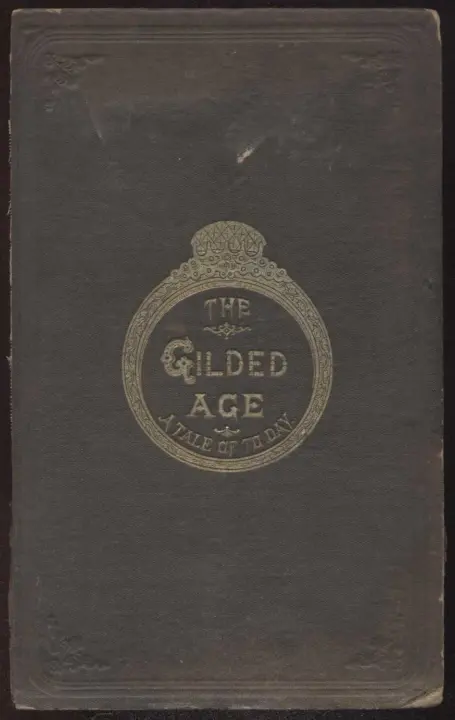
Mark Twain & Charles Dudley Warner
BEHIND THE BOOK
This eBook is for the use of anyone anywhere in the United States and most other parts of the world at no cost and with almost no restrictions whatsoever. You may copy it, give it away or re-use it under the terms of the Project Gutenberg License included with this eBook or online at www.gutenberg.org. If you are not located in the United States, you will have to check the laws of the country where you are located before using this eBook. Read the source licence.
The original source file, including credits and licence, is retained by this library. Request an original-format copy at no charge. Please include the book title and Project Gutenberg identifier #52212.
KEEP YOUR CURIOSITY GOING
Wilfrid Scawen Blunt
Wilfrid Scawen Blunt

E. W. (Edgar Watson) Howe
Francis Greenleaf Allinson & Anne C. E. (Anne Crosby Emery) Allinson
Cyrenus Cole

John Martineau