
The Yoke of the Thorah
Henry Harland
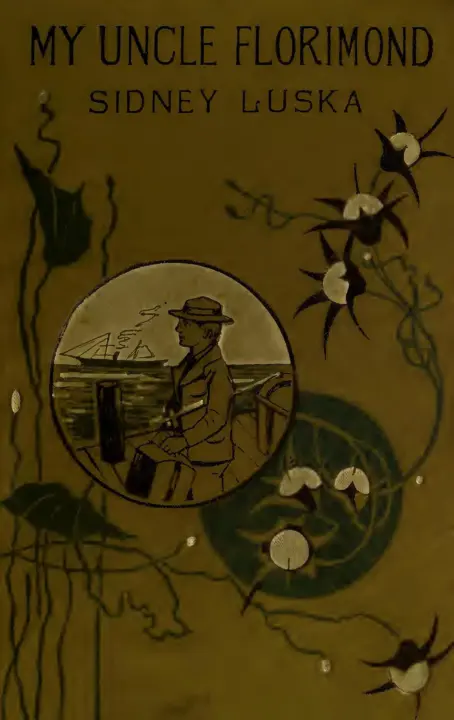
THE CLASSIC COLLECTION · 1888
"My Uncle Florimond" by Henry Harland is a novel written in the late 19th century. The story introduces a young boy named Gregory Brace, who is raised by his strict Uncle Peter after his parents' deaths, and is deeply influenced by his loving grandmother, a French émigré. This familial dynamic sets the stage for Gregory's struggles and aspirations, particularly concerning his idolized Uncle Florimond, who resides in France and embodies the nobility and gallantry that Gregory admires. The opening of the book details Gregory's troubled childhood living under the oppressive guardianship of Uncle Peter, whose stern demeanor sparks fear in the boy. He fondly remembers his grandmother's kindness and her stories about Uncle Florimond, which fill him with wonder and longing. As the narrative unfolds, Gregory receives a beautiful golden-hilted sword from his grandmother and a coveted book from Florimond, igniting his ambition to emulate his uncle's nobility. Yet, the darkening events caused by war and personal loss lead to a pivotal moment in Gregory’s life, pushing him to seek a new future—ultimately leading him to New York City for opportunities and self-discovery.
Introduction adapted from the source catalogue; source summaries may be automatically generated.
Free to read · English · 28,854 words · No account needed
MAKE TIME FOR A GOOD BOOK
On by default. Untick to stop anonymous reading totals. Each page counts after 10 seconds in view. How this works.
Anonymous counting is on unless you have switched it off.
“Solly,” replied Mr. Finkelstein, “you got a good heart; and your brains is simply remarkable. You done shust exaictly right. I'm very glaid to have such a fine boy for a visitor. But look at here, Solly; I was tinking vedder I might not manufacture a shop for him myself.”
“Manufacture a chop? How you mean?” Mr. Marx queried.
“How I mean? How should I mean? I mean I ain't got no ready-mait shops on hand shust now in dis estaiblishment; but I might mainufacture a shop for the right party. You see de point?”
“You mean you'll make a chop for him? You mean you'll give him a chop here, by you?” cried Mr. Marx.
“Vail, Solomon, if you was as vise as your namesake, you might haif known dot mitout my going into so much eggsblanations.”
“My kracious, fader-in-law, you're simply elegant, you're simply loafly, and no mistake about it. Well, I svear!”
“Oh! dot's all right. Don't mention it. I took a chenu-wine liking to Kraikory; he's got so much enterprise about him,” said Mr. Finkelstein.
“Well, what sort of a chop would it be, fader-in-law?” questioned Mr.
Marx.
“Vail, I tink I give him de position of clerk, errant boy, and sheneral assistant,” Mr. Finkelstein replied.
“Well, Krekory, what you say to dot?” Mr. Marx inquired.
“De question is, do you accept de appointment?” added Mr. Finkelstein.
“O, yes, sir!” I answered. “You're very, very kind, you're very good to me. I--” I had to stop talking, and take a good big swallow, to keep down my tears; yet, surely, I had nothing to cry about!
“Well, fader-in-law, what vages will you pay?” pursued Mr. Marx.
“Vail, Solly, what vages was dey paying now to boys of his age?”
“Well, they generally start them on two dollars a week.”
“Two tollars a veek, and he boards and clodes himself, hey?”
“Yes, fader-in-law, dot's de system.”
“Vail, Solly, I tell you what I do. I board and clode him, and give him a quarter a veek to get drunk on. Is dot saitisfaictory?”
“But, sir,” I hastened to put in, pained and astonished at his remark, “I--I don't get drunk.”
“O, Lord, Bubby!” cried Mr. Marx, laughing. “You're simply killing! He don't mean get drunk. Dot's only his witty way of saying pocket-money.”
“Oh! I--I understand,” I stammered.
“You must excuse me, Shonny,” said Mr. Finkelstein. “I didn't mean to make you maid. But I must haif my shoke, you know; I cain't help it. Vail, Solly, was de proposition saitisfaictory?”
“Well, Bubby, was Mr. Finkelstein's proposition satisfactory?” asked Mr.
Marx.
“O, yes, sir! yes, indeed,” said I.
Your reading position is saved on this browser. Take it to another device with a library code. Reading pages adapt to text, rather than matching a printed edition.
Henry Harland

Henry Harland

Henry Harland

Henry Harland
BEHIND THE BOOK
This eBook is for the use of anyone anywhere in the United States and most other parts of the world at no cost and with almost no restrictions whatsoever. You may copy it, give it away or re-use it under the terms of the Project Gutenberg License included with this eBook or online at www.gutenberg.org. If you are not located in the United States, you will have to check the laws of the country where you are located before using this eBook. Read the source licence.
The original source file, including credits and licence, is retained by this library. Request an original-format copy at no charge. Please include the book title and Project Gutenberg identifier #50698.
KEEP YOUR CURIOSITY GOING
Coulson Kernahan

Maurice Baring
Frances Wright
Cécile Tormay

Frederic Jesup Stimson

W. H. P. (William Henry Pope) Jarvis