THE CLASSIC COLLECTION✦The old English dramatistsCLASSIC FREE BOOKS
The old English dramatists
James Russell Lowell

THE CLASSIC COLLECTION · 1899
"My Study Windows" by James Russell Lowell is a collection of essays written in the late 19th century. The work draws from the author's reflections and experiences over a span of years, presenting a range of topics that encompass nature, literature, and personal musings. It hints at a thoughtful exploration of the beauty of the natural world, alongside cultural commentary, making it appealing for readers interested in nuanced observations about life and the environment. The opening of the book sets the stage with a prefatory note where Lowell introduces the collection, explaining that the essays included were composed over the last fifteen years. He expresses his intention to compile these writings as a means of 'shutting them between two covers' to make space for new thoughts. The initial essay, "My Garden Acquaintance," begins with the author reminiscing about the joy he found in reading Gilbert White's "Natural History of Selborne," drawing parallels between White's observations of nature and his own experiences. Lowell invokes a vivid portrayal of his garden and its inhabitants, offering insights into the interplay between humanity and nature, which will be a recurring theme throughout the collection.
Introduction adapted from the source catalogue; source summaries may be automatically generated.
Free to read · English · 137,668 words · No account needed
MAKE TIME FOR A GOOD BOOK
On by default. Untick to stop anonymous reading totals. Each page counts after 10 seconds in view. How this works.
Anonymous counting is on unless you have switched it off.
But beside any disheartening influences which might affect the timid or the despondent, there were reasons enough of settled gravity against any over-confidence of hope. A war--which, whether we consider the expanse of the territory at stake, the hosts brought into the field, or the reach of the principles involved, may fairly be reckoned the most momentous of modern times--was to be waged by a people divided at home, unnerved by fifty years of peace, under a chief magistrate without experience and without reputation, whose every measure was sure to be cunningly hampered by a jealous and unscrupulous minority, and who, while dealing with unheard-of complications at home, must soothe a hostile neutrality abroad, waiting only a pretext to become war. All this was to be done without warning and without preparation, while at the same time a social revolution was to be accomplished in the political condition of four millions of people, by softening the prejudices, allaying the fears, and gradually obtaining the co-operation, of their unwilling liberators. Surely, if ever there were an occasion when the heightened imagination of the historian might see Destiny visibly intervening in human affairs, here was a knot worthy of her shears. Never, perhaps, was any system of government tried by so continuous and searching a strain as ours during the last three years; never has any shown itself stronger; and never could that strength be so directly traced to the virtue and intelligence of the people,--to that general enlightenment and prompt efficiency of public opinion possible only under the influence of a political framework like our own. We find it hard to understand how even a foreigner should be blind to the grandeur of the combat of ideas that has been going on here,--to the heroic energy, persistency, and self-reliance of a nation proving that it knows how much dearer greatness is than mere power; and we own that it is impossible for us to conceive the mental and moral condition of the American who does not feel his spirit braced and heightened by being even a spectator of such qualities and achievements. That a steady purpose and a definite aim have been given to the jarring forces which, at the beginning of the war, spent themselves in the discussion of schemes which could only become operative, if at all, after the war was over; that a popular excitement has been slowly intensified into an earnest national will; that a somewhat impracticable moral sentiment has been made the unconscious instrument of a practical moral end; that the treason of covert enemies, the jealousy of rivals, the unwise zeal of friends, have been made not only useless for mischief, but even useful for good; that the conscientious sensitiveness of England to the horrors of civil conflict has been prevented from complicating a domestic with a foreign war;--all these results, any one of which might suffice to prove greatness in a ruler, have been mainly due to the good sense, the good-humor, the sagacity, the large-mindedness, and the unselfish honesty of the unknown man whom a blind fortune, as it seemed, had lifted from the crowd to the most dangerous and difficult eminence of modern times. It is by presence of mind in untried emergencies that the native metal of a man is tested; it is by the sagacity to see, and the fearless honesty to admit, whatever of truth there may be in an adverse opinion, in order more convincingly to expose the fallacy that lurks behind it, that a reasoner at length gains for his mere statement of a fact the force of argument; it is by a wise forecast which allows hostile combinations to go so far as by the inevitable reaction to become elements of his own power, that a politician proves his genius for state-craft; and especially it is by so gently guiding public sentiment that he seems to follow it, by so yielding doubtful points that he can be firm without seeming obstinate in essential ones, and thus gain the advantages of compromise without the weakness of concession; by so instinctively comprehending the temper and prejudices of a people as to make them gradually conscious of the superior wisdom of his freedom from temper and prejudice,--it is by qualities such as these that a magistrate shows himself worthy to be chief in a commonwealth of freemen. And it is for qualities such as these that we firmly believe History will rank Mr. Lincoln among the most prudent of statesmen and the most successful of rulers. If we wish to appreciate him, we have only to conceive the inevitable chaos in which we should now be weltering, had a weak man or an unwise one been chosen in his stead.
Your reading position is saved on this browser. Take it to another device with a library code. Reading pages adapt to text, rather than matching a printed edition.
James Russell Lowell
James Russell Lowell

James Russell Lowell
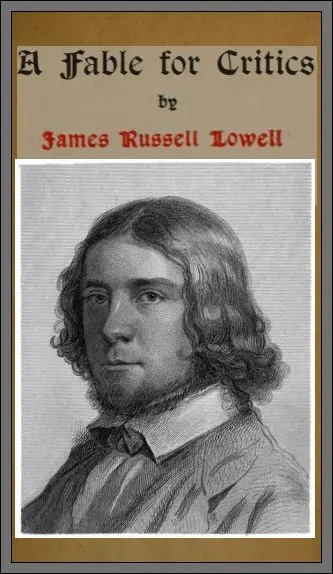
James Russell Lowell
BEHIND THE BOOK
This eBook is for the use of anyone anywhere in the United States and most other parts of the world at no cost and with almost no restrictions whatsoever. You may copy it, give it away or re-use it under the terms of the Project Gutenberg License included with this eBook or online at www.gutenberg.org. If you are not located in the United States, you will have to check the laws of the country where you are located before using this eBook. Read the source licence.
The original source file, including credits and licence, is retained by this library. Request an original-format copy at no charge. Please include the book title and Project Gutenberg identifier #73710.
KEEP YOUR CURIOSITY GOING

David Patterson (Spirit) Hatch

David Patterson (Spirit) Hatch

David Patterson (Spirit) Hatch

Ralph Waldo Emerson

Maurice Baring

Oscar Wilde & James McNeill Whistler