THE CLASSIC COLLECTION✦The old English dramatistsCLASSIC FREE BOOKS
The old English dramatists
James Russell Lowell

THE CLASSIC COLLECTION · 1899
"My Study Windows" by James Russell Lowell is a collection of essays written in the late 19th century. The work draws from the author's reflections and experiences over a span of years, presenting a range of topics that encompass nature, literature, and personal musings. It hints at a thoughtful exploration of the beauty of the natural world, alongside cultural commentary, making it appealing for readers interested in nuanced observations about life and the environment. The opening of the book sets the stage with a prefatory note where Lowell introduces the collection, explaining that the essays included were composed over the last fifteen years. He expresses his intention to compile these writings as a means of 'shutting them between two covers' to make space for new thoughts. The initial essay, "My Garden Acquaintance," begins with the author reminiscing about the joy he found in reading Gilbert White's "Natural History of Selborne," drawing parallels between White's observations of nature and his own experiences. Lowell invokes a vivid portrayal of his garden and its inhabitants, offering insights into the interplay between humanity and nature, which will be a recurring theme throughout the collection.
Introduction adapted from the source catalogue; source summaries may be automatically generated.
Free to read · English · 137,668 words · No account needed
MAKE TIME FOR A GOOD BOOK
On by default. Untick to stop anonymous reading totals. Each page counts after 10 seconds in view. How this works.
Anonymous counting is on unless you have switched it off.
Imagination, as we have said, has more virtue to keep a book alive than any other single faculty. Burke is rescued from the usual doom of orators, because his learning, his experience, his sagacity are rimmed with a halo by this bewitching light behind the intellectual eye from the highest heaven of the brain. Shakespeare has impregnated his common sense with the steady glow of it, and answers the mood of youth and age, of high and low, immortal as that dateless substance of the soul he wrought in. To have any chance of lasting, a book must satisfy, not merely some fleeting fancy of the day, but a constant longing and hunger of human nature; and it needs only a superficial study of literature to be convinced that real fame depends rather on the sum of an author’s powers than on any brilliancy of special parts. There must be wisdom as well as wit, sense no less than imagination, judgment in equal measure with fancy, and the fiery rocket must be bound fast to the poor wooden stick that gives it guidance if it would mount and draw all eyes. There are some who think that the brooding patience which a great work calls for belonged exclusively to an earlier period than ours. Others lay the blame on our fashion of periodical publication, which necessitates a sensation and a crisis in every number, and forces the writer to strive for startling effects, instead of that general lowness of tone which is the last achievement of the artist. The simplicity of antique passion, the homeliness of antique pathos, seem not merely to be gone out of fashion, but out of being as well. Modern poets appear rather to tease their words into a fury, than to infuse them with the deliberate heats of their matured conception, and strive to replace the rapture of the mind with a fervid intensity of phrase. Our reaction from the decorous platitudes of the last century has no doubt led us to excuse this, and to be thankful for something like real fire, though of stubble; but our prevailing style of criticism, which regards parts rather than wholes, which dwells on the beauty of passages, and, above all, must have its languid nerves pricked with the expected sensation at whatever cost, has done all it could to confirm us in our evil way. Passages are good when they lead to something, when they are necessary parts of the building, but they are not good to dwell in. This taste for the startling reminds us of something which happened once at the burning of a country meeting-house. The building stood on a hill, and, apart from any other considerations, the fire was as picturesque as could be desired. When all was a black heap, licking itself here and there with tongues of fire, there rushed up a farmer gasping anxiously, “Hez the bell fell yit?” An ordinary fire was no more to him than that on his hearthstone; even the burning of a meeting-house, in itself a vulcanic rarity, (so long as he was of another parish,) could not tickle his outworn palate; but he had hoped for a certain tang in the downcome of the bell that might recall the boyish flavor of conflagration. There was something dramatic, no doubt, in this surprise of the brazen sentinel at his post, but the breathless rustic has always seemed to us a type of the prevailing delusion in æsthetics. Alas! if the bell must fall in every stanza or every monthly number, how shall an author contrive to stir us at last, unless with whole Moscows, crowned with the tintinnabulary crash of the Kremlin? For ourselves, we are glad to feel that we are still able to find contentment in the more conversational and domestic tone of our old-fashioned wood-fire. No doubt a great part of our pleasure in reading is unexpectedness, whether in turn of thought or of phrase; but an emphasis out of place, an intensity of expression not founded on sincerity of moral or intellectual conviction, reminds one of the underscorings in young ladies’ letters, a wonder even to themselves under the colder north-light of matronage. It is the part of the critic, however, to keep cool under whatever circumstances, and to reckon that the excesses of an author will be at first more attractive to the many than that average power which shall win him attention with a new generation of men. It is seldom found out by the majority, till after a considerable interval, that he was the original man who contrived to be simply natural,--the hardest lesson in the school of art and the latest learned, if, indeed, it be a thing capable of acquisition at all. The most winsome and wayward of brooks draws now and then some lover’s foot to its intimate reserve, while the spirt of a bursting water-pipe gathers a gaping crowd forthwith.
Your reading position is saved on this browser. Take it to another device with a library code. Reading pages adapt to text, rather than matching a printed edition.
James Russell Lowell
James Russell Lowell

James Russell Lowell
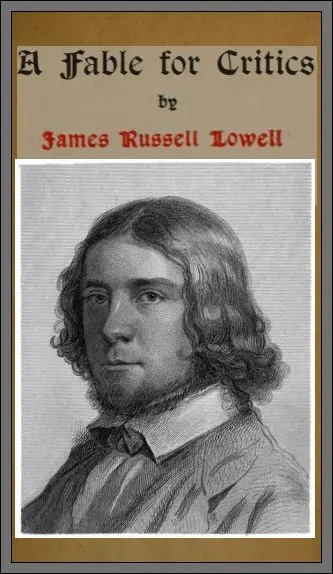
James Russell Lowell
BEHIND THE BOOK
This eBook is for the use of anyone anywhere in the United States and most other parts of the world at no cost and with almost no restrictions whatsoever. You may copy it, give it away or re-use it under the terms of the Project Gutenberg License included with this eBook or online at www.gutenberg.org. If you are not located in the United States, you will have to check the laws of the country where you are located before using this eBook. Read the source licence.
The original source file, including credits and licence, is retained by this library. Request an original-format copy at no charge. Please include the book title and Project Gutenberg identifier #73710.
KEEP YOUR CURIOSITY GOING

David Patterson (Spirit) Hatch

David Patterson (Spirit) Hatch

David Patterson (Spirit) Hatch

Ralph Waldo Emerson

Maurice Baring

Oscar Wilde & James McNeill Whistler