THE CLASSIC COLLECTION✦The old English dramatistsCLASSIC FREE BOOKS
The old English dramatists
James Russell Lowell

THE CLASSIC COLLECTION · 1899
"My Study Windows" by James Russell Lowell is a collection of essays written in the late 19th century. The work draws from the author's reflections and experiences over a span of years, presenting a range of topics that encompass nature, literature, and personal musings. It hints at a thoughtful exploration of the beauty of the natural world, alongside cultural commentary, making it appealing for readers interested in nuanced observations about life and the environment. The opening of the book sets the stage with a prefatory note where Lowell introduces the collection, explaining that the essays included were composed over the last fifteen years. He expresses his intention to compile these writings as a means of 'shutting them between two covers' to make space for new thoughts. The initial essay, "My Garden Acquaintance," begins with the author reminiscing about the joy he found in reading Gilbert White's "Natural History of Selborne," drawing parallels between White's observations of nature and his own experiences. Lowell invokes a vivid portrayal of his garden and its inhabitants, offering insights into the interplay between humanity and nature, which will be a recurring theme throughout the collection.
Introduction adapted from the source catalogue; source summaries may be automatically generated.
Free to read · English · 137,668 words · No account needed
MAKE TIME FOR A GOOD BOOK
On by default. Untick to stop anonymous reading totals. Each page counts after 10 seconds in view. How this works.
Anonymous counting is on unless you have switched it off.
One feels so intimately assured that he is made up, in part, of shreds and leavings of the past, in part of the interpolations of other people, that an honest man would be slow in saying yes to such a question. But “my name is So-and-so” is a safe answer, and I gave it. While I had been romancing with myself, the street-lamps had been lighted, and it was under one of these detectives that have robbed the Old Road of its privilege of sanctuary after nightfall that I was ambushed by my foe. The inexorable villain had taken my description, it appears, that I might have the less chance to escape him. Dr. Holmes tells us that we change our substance, not every seven years, as was once believed, but with every breath we draw. Why had I not the wit to avail myself of the subterfuge, and, like Peter, to renounce my identity, especially, as in certain moods of mind, I have often more than doubted of it myself? When a man is, as it were, his own front-door, and is thus knocked at, why may he not assume the right of that sacred wood to make every house a castle, by denying himself to all visitations? I was truly not at home when the question was put to me, but had to recall myself from all out-of-doors, and to piece my self-consciousness hastily together as well as I could before I answered it.
I knew perfectly well what was coming. It is seldom that debtors or good Samaritans waylay people under gas-lamps in order to force money upon them, so far as I have seen or heard. I was also aware, from considerable experience, that every foreigner is persuaded that, by doing this country the favor of coming to it, he has laid every native thereof under an obligation, pecuniary or other, as the case may be, whose discharge he is entitled-to on demand duly made in person or by letter. Too much learning (of this kind) had made me mad in the provincial sense of the word. I had begun life with the theory of giving something to every beggar that came along, though sure of never finding a native-born countryman among them. In a small way, I was resolved to emulate Hatem Tai’s tent, with its three hundred and sixty-five entrances, one for every day in the year,--I know not whether he was astronomer enough to add another for leap-years. The beggars were a kind of German-silver aristocracy; not real plate, to be sure, but better than nothing. Where everybody was overworked, they supplied the comfortable equipoise of absolute leisure, so æsthetically needful. Besides, I was but too conscious of a vagrant fibre in myself, which too often thrilled me in my solitary walks with the temptation to wander on into infinite space, and by a single spasm of resolution to emancipate myself from the drudgery of prosaic serfdom to respectability and the regular course of things. This prompting has been at times my familiar demon, and I could not but feel a kind of respectful sympathy for men who had dared what I had only sketched out to myself as a splendid possibility. For seven years I helped maintain one heroic man on an imaginary journey to Portland,--as fine an example as I have ever known of hopeless loyalty to an ideal. I assisted another so long in a fruitless attempt to reach Mecklenburg-Schwerin, that at last we grinned in each other’s faces when we met, like a couple of augurs. He was possessed by this harmless mania as some are by the North Pole, and I shall never forget his look of regretful compassion (as for one who was sacrificing his higher life to the fleshpots of Egypt) when I at last advised him somewhat strenuously to go to the D----, whither the road was so much travelled that he could not miss it. General Banks, in his noble zeal for the honor of his country, would confer on the Secretary of State the power of imprisoning, in case of war, all these seekers of the unattainable, thus by a stroke of the pen annihilating the single poetic element in our humdrum life. Alas! not everybody has the genius to be a Bobbin-Boy, or doubtless all these also would have chosen that more prosperous line of life! But moralists, sociologists, political economists, and taxes have slowly convinced me that my beggarly sympathies were a sin against society. Especially was the Buckle doctrine of averages (so flattering to our free-will) persuasive with me; for as there must be in every year a certain number who would bestow an alms on these abridged editions of the Wandering Jew, the withdrawal of my quota could make no possible difference, since some destined proxy must always step forward to fill my gap. Just so many misdirected letters every year and no more! Would it were as easy to reckon up the number of men on whose backs fate has written the wrong address, so that they arrive by mistake in Congress and other places where they do not belong! May not these wanderers of whom I speak have been sent into the world without any proper address at all? Where is our Dead-Letter Office for such? And if wiser social arrangements should furnish us with something of the sort, fancy (horrible thought!) how many a workingman’s friend (a kind of industry in which the labor is light and the wages heavy) would be sent thither because not called for in the office where he at present lies!
Your reading position is saved on this browser. Take it to another device with a library code. Reading pages adapt to text, rather than matching a printed edition.
James Russell Lowell
James Russell Lowell

James Russell Lowell
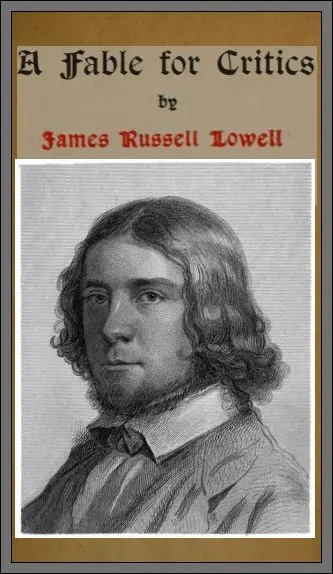
James Russell Lowell
BEHIND THE BOOK
This eBook is for the use of anyone anywhere in the United States and most other parts of the world at no cost and with almost no restrictions whatsoever. You may copy it, give it away or re-use it under the terms of the Project Gutenberg License included with this eBook or online at www.gutenberg.org. If you are not located in the United States, you will have to check the laws of the country where you are located before using this eBook. Read the source licence.
The original source file, including credits and licence, is retained by this library. Request an original-format copy at no charge. Please include the book title and Project Gutenberg identifier #73710.
KEEP YOUR CURIOSITY GOING

David Patterson (Spirit) Hatch

David Patterson (Spirit) Hatch

David Patterson (Spirit) Hatch

Ralph Waldo Emerson

Maurice Baring

Oscar Wilde & James McNeill Whistler