THE CLASSIC COLLECTION✦The old English dramatistsCLASSIC FREE BOOKS
The old English dramatists
James Russell Lowell

THE CLASSIC COLLECTION · 1899
"My Study Windows" by James Russell Lowell is a collection of essays written in the late 19th century. The work draws from the author's reflections and experiences over a span of years, presenting a range of topics that encompass nature, literature, and personal musings. It hints at a thoughtful exploration of the beauty of the natural world, alongside cultural commentary, making it appealing for readers interested in nuanced observations about life and the environment. The opening of the book sets the stage with a prefatory note where Lowell introduces the collection, explaining that the essays included were composed over the last fifteen years. He expresses his intention to compile these writings as a means of 'shutting them between two covers' to make space for new thoughts. The initial essay, "My Garden Acquaintance," begins with the author reminiscing about the joy he found in reading Gilbert White's "Natural History of Selborne," drawing parallels between White's observations of nature and his own experiences. Lowell invokes a vivid portrayal of his garden and its inhabitants, offering insights into the interplay between humanity and nature, which will be a recurring theme throughout the collection.
Introduction adapted from the source catalogue; source summaries may be automatically generated.
Free to read · English · 137,668 words · No account needed
MAKE TIME FOR A GOOD BOOK
On by default. Untick to stop anonymous reading totals. Each page counts after 10 seconds in view. How this works.
Anonymous counting is on unless you have switched it off.
Among the dramatis personæ of the “Fawn,” as we said before, occurs “Granuffo, a silent lord.” He speaks only once during the play, and that in the last scene. In Act I. Scene 2, Gonzago says, speaking to Granuffo,--
“Now, sure, thou art a man
Of a most learned scilence, and one whose words
Have bin most pretious to me.”
This seems quite plain, but Mr. Halliwell annotates thus: “Scilence.--Query, science? The common reading, silence, may, however, be what is intended. That the spelling should have troubled Mr. Halliwell is remarkable; for elsewhere we find “god-boy” for “good-bye,” “seace” for “cease,” “bodies” for “boddice,” “pollice” for “policy,” “pitittying” for “pitying,” “scence” for “sense,” “Misenzius” for “Mezentius,” “Ferazes” for “Ferrarese,”--and plenty beside, equally odd. That he should have doubted the meaning is no less strange; for on p. 41 of the same play we read, “My Lord Granuffo, you may likewise stay, for I know you’l say nothing,”--on pp. 55, 56, “This Granuffo is a right wise good lord, a man of excellent discourse and never speaks,”--and on p. 94, we find the following dialogue:--
“Gon. My Lord Granuffo, this Fawne is an excellent fellow.
“Don. Silence.
“Gon. I warrant you for my lord here.”
In the same play (p. 44) are these lines:--
“I apt for love?
Let lazy idlenes fild full of wine
Heated with meates, high fedde with lustfull ease
Goe dote on culler [color]. As for me, why, death a sence,
I court the ladie?”
This is Mr. Halliwell’s note: “Death a sence.--‘Earth a sense,’ ed. 1633. Mr. Dilke suggests: ‘For me, why, earth’s as sensible.’ The original is not necessarily corrupt. It may mean,--why, you might as well think Death was a sense, one of the senses. See a like phrase at p. 77.” What help we should get by thinking Death one of the senses, it would demand another Œdipus to unriddle. Mr. Halliwell can astonish us no longer, but we are surprised at Mr. Dilke, the very competent editor of the “Old English Plays,” 1815. From him we might have hoped for better things. “Death o’ sense!” is an exclamation. Throughout these volumes we find a for o’,--as, “a clock” for “o’clock,” “a the side” for “o’ the side.” A similar exclamation is to be found in three other places in the same play, where the sense is obvious. Mr. Halliwell refers to one of them on p. 77,--“Death a man! is she delivered?” The others are,--“Death a justice! are we in Normandy?” (p. 98); and “Death a discretion! if I should prove a foole now,” or, as given by Mr. Halliwell, “Death, a discretion!” Now let us apply Mr. Halliwell’s explanation. “Death a man!” you might as well think Death was a man, that is, one of the men!--or a discretion, that is, one of the discretions!--or a justice, that is, one of the quorum! We trust Mr. Halliwell may never have the editing of Bob Acres’s imprecations. “Odd’s triggers!” he would say, “that is, as odd as, or as strange as, triggers.”
Your reading position is saved on this browser. Take it to another device with a library code. Reading pages adapt to text, rather than matching a printed edition.
James Russell Lowell
James Russell Lowell

James Russell Lowell
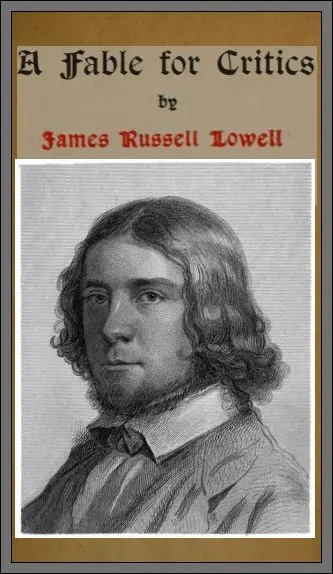
James Russell Lowell
BEHIND THE BOOK
This eBook is for the use of anyone anywhere in the United States and most other parts of the world at no cost and with almost no restrictions whatsoever. You may copy it, give it away or re-use it under the terms of the Project Gutenberg License included with this eBook or online at www.gutenberg.org. If you are not located in the United States, you will have to check the laws of the country where you are located before using this eBook. Read the source licence.
The original source file, including credits and licence, is retained by this library. Request an original-format copy at no charge. Please include the book title and Project Gutenberg identifier #73710.
KEEP YOUR CURIOSITY GOING

David Patterson (Spirit) Hatch

David Patterson (Spirit) Hatch

David Patterson (Spirit) Hatch

Ralph Waldo Emerson

Maurice Baring

Oscar Wilde & James McNeill Whistler