THE CLASSIC COLLECTION✦The old English dramatistsCLASSIC FREE BOOKS
The old English dramatists
James Russell Lowell

THE CLASSIC COLLECTION · 1899
"My Study Windows" by James Russell Lowell is a collection of essays written in the late 19th century. The work draws from the author's reflections and experiences over a span of years, presenting a range of topics that encompass nature, literature, and personal musings. It hints at a thoughtful exploration of the beauty of the natural world, alongside cultural commentary, making it appealing for readers interested in nuanced observations about life and the environment. The opening of the book sets the stage with a prefatory note where Lowell introduces the collection, explaining that the essays included were composed over the last fifteen years. He expresses his intention to compile these writings as a means of 'shutting them between two covers' to make space for new thoughts. The initial essay, "My Garden Acquaintance," begins with the author reminiscing about the joy he found in reading Gilbert White's "Natural History of Selborne," drawing parallels between White's observations of nature and his own experiences. Lowell invokes a vivid portrayal of his garden and its inhabitants, offering insights into the interplay between humanity and nature, which will be a recurring theme throughout the collection.
Introduction adapted from the source catalogue; source summaries may be automatically generated.
Free to read · English · 137,668 words · No account needed
MAKE TIME FOR A GOOD BOOK
On by default. Untick to stop anonymous reading totals. Each page counts after 10 seconds in view. How this works.
Anonymous counting is on unless you have switched it off.
It is this power of sympathy which makes Chaucer’s satire so kindly,--more so, one is tempted to say, than the panegyric of Pope. Intellectual satire gets its force from personal or moral antipathy, and measures offences by some rigid conventional standard. Its mouth waters over a galling word, and it loves to say Thou, pointing out its victim to public scorn. Indignatio facit versus, it boasts, though they might as often be fathered on envy or hatred. But imaginative satire, warmed through and through with the genial leaven of humor, smiles half sadly and murmurs We. Chaucer either makes one knave betray another, through a natural jealousy of competition, or else expose himself with a naïveté of good-humored cynicism which amuses rather than disgusts. In the former case the butt has a kind of claim on our sympathy; in the latter, it seems nothing strange if the sunny atmosphere which floods that road to Canterbury should tempt anybody to throw off one disguise after another without suspicion. With perfect tact, too, the Host is made the choragus in this diverse company, and the coarse jollity of his temperament explains, if it does not excuse, much that would otherwise seem out of keeping. Surely nobody need have any scruples with him.
Chaucer seems to me to have been one of the most purely original of poets, as much so in respect of the world that is about us as Dante in respect of that which is within us. There had been nothing like him before, there has been nothing since. He is original, not in the sense that he thinks and says what nobody ever thought and said before, and what nobody can ever think and say again, but because he is always natural, because, if not always absolutely new, he is always delightfully fresh, because he sets before us the world as it honestly appeared to Geoffrey Chaucer, and not a world as it seemed proper to certain people that it ought to appear. He found that the poetry which had preceded him had been first the expression of individual feeling, then of class feeling as the vehicle of legend and history, and at last had wellnigh lost itself in chasing the mirage of allegory. Literature seemed to have passed through the natural stages which at regular intervals bring it to decline. Even the lyrics of the jongleurs were all run in one mould, and the Pastourelles of Northern France had become as artificial as the Pastorals of Pope. The Romances of chivalry had been made over into prose, and the Melusine of his contemporary Jehan d’Arras is the forlorn hope of the modern novel. Arrived thus far in their decrepitude, the monks endeavored to give them a religious and moral turn by allegorizing them. Their process reminds one of something Ulloa tells us of the fashion in which the Spaniards converted the Mexicans: “Here we found an old man in a cavern so extremely aged as it was wonderful, which could neither see nor go because he was so lame and crooked. The Father, Friar Raimund, said it were good (seeing he was so aged) to make him a Christian; whereupon we baptized him.” The monks found the Romances in the same stage of senility, and gave them a saving sprinkle with the holy water of allegory. Perhaps they were only trying to turn the enemy’s own weapons against himself, for it was the free-thinking “Romance of the Rose” that more than anything else had made allegory fashionable. Plutarch tells us that an allegory is to say one thing where another is meant, and this might have been needful for the personal security of Jean de Meung, as afterwards for that of his successor, Rabelais. But, except as a means of evading the fagot, the method has few recommendations. It reverses the true office of poetry by making the real unreal. It is imagination endeavoring to recommend itself to the understanding by means of cuts. If an author be in such deadly earnest, or if his imagination be of such creative vigor as to project real figures when it meant to cast only a shadow upon vapor; if the true spirit come, at once obsequious and terrible, when the conjurer has drawn his circle and gone through with his incantations merely to produce a proper frame of mind in his audience, as was the case with Dante, there is no longer any question of allegory as the word and thing are commonly understood. But with all secondary poets, as with Spenser for example, the allegory does not become of one substance with the poetry, but is a kind of carven frame for it, whose figures lose their meaning, as they cease to be contemporary. It was not a style that could have much attraction for a nature so sensitive to the actual, so observant of it, so interested by it as that of Chaucer. He seems to have tried his hand at all the forms in vogue, and to have arrived in his old age at the truth, essential to all really great poetry, that his own instincts were his safest guides, that there is nothing deeper in life than life itself, and that to conjure an allegorical significance into it was to lose sight of its real meaning. He of all men could not say one thing and mean another, unless by way of humorous contrast.
Your reading position is saved on this browser. Take it to another device with a library code. Reading pages adapt to text, rather than matching a printed edition.
James Russell Lowell
James Russell Lowell

James Russell Lowell
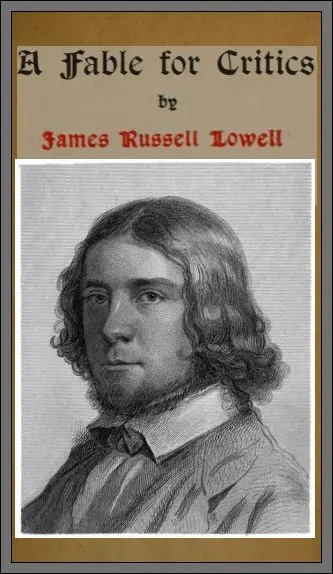
James Russell Lowell
BEHIND THE BOOK
This eBook is for the use of anyone anywhere in the United States and most other parts of the world at no cost and with almost no restrictions whatsoever. You may copy it, give it away or re-use it under the terms of the Project Gutenberg License included with this eBook or online at www.gutenberg.org. If you are not located in the United States, you will have to check the laws of the country where you are located before using this eBook. Read the source licence.
The original source file, including credits and licence, is retained by this library. Request an original-format copy at no charge. Please include the book title and Project Gutenberg identifier #73710.
KEEP YOUR CURIOSITY GOING

David Patterson (Spirit) Hatch

David Patterson (Spirit) Hatch

David Patterson (Spirit) Hatch

Ralph Waldo Emerson

Maurice Baring

Oscar Wilde & James McNeill Whistler