THE CLASSIC COLLECTION✦The old English dramatistsCLASSIC FREE BOOKS
The old English dramatists
James Russell Lowell

THE CLASSIC COLLECTION · 1899
"My Study Windows" by James Russell Lowell is a collection of essays written in the late 19th century. The work draws from the author's reflections and experiences over a span of years, presenting a range of topics that encompass nature, literature, and personal musings. It hints at a thoughtful exploration of the beauty of the natural world, alongside cultural commentary, making it appealing for readers interested in nuanced observations about life and the environment. The opening of the book sets the stage with a prefatory note where Lowell introduces the collection, explaining that the essays included were composed over the last fifteen years. He expresses his intention to compile these writings as a means of 'shutting them between two covers' to make space for new thoughts. The initial essay, "My Garden Acquaintance," begins with the author reminiscing about the joy he found in reading Gilbert White's "Natural History of Selborne," drawing parallels between White's observations of nature and his own experiences. Lowell invokes a vivid portrayal of his garden and its inhabitants, offering insights into the interplay between humanity and nature, which will be a recurring theme throughout the collection.
Introduction adapted from the source catalogue; source summaries may be automatically generated.
Free to read · English · 137,668 words · No account needed
MAKE TIME FOR A GOOD BOOK
On by default. Untick to stop anonymous reading totals. Each page counts after 10 seconds in view. How this works.
Anonymous counting is on unless you have switched it off.
On the whole, it would be hard to find anything more tediously artificial than the Provençal literature, except the reproduction of it by the Minnesingers. The Tedeschi lurchi certainly did contrive to make something heavy as dough out of what was at least light, if not very satisfying, in the canorous dialect of Southern Gaul. But its doom was inevitably predicted in its nature and position, nay, in its very name. It was, and it continues to be, a strictly provincial literature, imprisoned within extremely narrow intellectual and even geographical limits. It is not race or language that can inflict this leprous isolation, but some defect of sympathy with the simpler and more universal relations of human nature. You cannot shut up Burns in a dialect bristling with archaisms, nor prevent Béranger from setting all pulses a-dance in the least rhythmic and imaginative of modern tongues. The healthy temperament of Chaucer, with its breadth of interest in all ranks and phases of social life, could have found little that was sympathetic in the evaporated sentiment and rhetorical punctilios of a school of poets which, with rare exceptions, began and ended in courtly dilettantism.
The refined formality with which the literary product of Provençe is for the most part stamped, as with a trademark, was doubtless the legacy of Gallo-Roman culture, itself at best derivative and superficial. I think, indeed, that it may well be doubted whether Roman literature, always a half-hardy exotic, could ripen the seeds of living reproduction. The Roman genius was eminently practical, and far more apt for the triumphs of politics and jurisprudence than of art. Supreme elegance it could and did arrive at in Virgil, but, if I may trust my own judgment, it produced but one original poet, and that was Horace, who has ever since continued the favorite of men of the world, an apostle to the Gentiles of the mild cynicism of middle-age and an after-dinner philosophy. Though in no sense national, he was, more truly than any has ever been since, till the same combination of circumstances produced Béranger, an urbane or city poet. Rome, with her motley life, her formal religion, her easy morals, her spectacles, her luxury, her suburban country-life, was his muse. The situation was new, and found a singer who had wit enough to turn it to account. There are a half-dozen pieces of Catullus unsurpassed (unless their Greek originals should turn up) for lyric grace and fanciful tenderness. The sparrow of Lesbia still pecks the rosy lips of his mistress, immortal as the eagle of Pindar. One profound imagination, one man, who with a more prosperous subject might have been a great poet, lifted Roman literature above its ordinary level of tasteful common-sense. The invocation of Venus, as the genetic force of nature, by Lucretius, seems to me the one sunburst of purely poetic inspiration which the Latin language can show. But this very force, without which neque fit lœtum neque amabile quicquam was wholly wanting in those poets of the post-classic period, through whom the literary influences of the past were transmitted to the romanized provincials. The works of Ausonius interest us as those of our own Dwights and Barlows do. The “Conquest of Canaan” and the “Columbiad” were Connecticut epics no doubt, but still were better than nothing in their day. If not literature, they were at least memories of literature, and such memories are not without effect in reproducing what they regret. The provincial writers of Latin devoted themselves with a dreary assiduity to the imitation of models which they deemed classical, but which were truly so only in the sense that they were the more decorously respectful of the dead form in proportion as the living spirit had more utterly gone out of it. It is, I suspect, to the traditions of this purely rhetorical influence, indirectly exercised, that we are to attribute the rapid passage of the new Provençal poetry from what must have been its original popular character to that highly artificial condition which precedes total extinction. It was the alienation of the written from the spoken language (always, perhaps, more or less malignly operative in giving Roman literature a cold-blooded turn as compared with Greek), which, ending at length in total divorce, rendered Latin incapable of supplying the wants of new men and new ideas. The same thing, I am strongly inclined to think, was true of the language of the Troubadours. It had become literary, and so far dead. It is true that no language is ever so far gone in consumption as to be beyond the great-poet-cure. Undoubtedly a man of genius can out of his own super-abundant vitality compel life into the most decrepit vocabulary. But it is by the infusion of his own blood, as it were, and not without a certain sacrifice of power. No such rescue came for the langue d’oc, which, it should seem, had performed its special function in the development of modern literature, and would have perished even without the Albigensian war. The position of the Gallo-Romans of the South, both ethical and geographical, precluded them from producing anything really great or even original in literature, for that must have its root in a national life, and this they never had. After the Burgundian invasion their situation was in many respects analogous to our own after the Revolutionary War. They had been thoroughly romanized in language and culture, but the line of their historic continuity had been broken. The Roman road, which linked them with the only past they knew, had been buried under the great barbarian land-slide. In like manner we, inheriting the language, the social usages, the literary and political traditions of Englishmen, were suddenly cut adrift from our historical anchorage. Very soon there arose a demand for a native literature, nay, it was even proposed that, as a first step toward it, we should adopt a lingo of our own to be called the Columbian or Hesperian. This, to be sure, was never accomplished, though our English cousins seem to hint sometimes that we have made very fair advances toward it; but if it could have been, our position would have been precisely that of the Provençals when they began to have a literature of their own. They had formed a language which, while it completed their orphanage from their imperial mother, continually recalled her, and kept alive their pride of lineage. Such reminiscences as they still retained of Latin culture were pedantic and rhetorical,[9] and it was only natural that out of these they should have elaborated a code of poetical jurisprudence with titles and subtitles applicable to every form of verse and tyrannous over every mode of sentiment. The result could not fail to be artificial and wearisome, except where some man with a truly lyrical genius could breathe life into the rigid formula and make it pliant to his more passionate feeling. The great service of the Provençals was that they kept in mind the fact that poetry was not merely an amusement, but an art, and long after their literary activity had ceased their influence reacted beneficially upon Europe through their Italian pupils. They are interesting as showing the tendency of the Romanic races to a scientific treatment of what, if it be not spontaneous, becomes a fashion and erelong an impertinence. Fauriel has endeavored to prove that they were the first to treat the mediæval heroic legends epically, but the evidence is strongly against him. The testimony of Dante on this point is explicit,[10] and moreover not a single romance of chivalry has come down to us in a dialect of the pure Provencal.
Your reading position is saved on this browser. Take it to another device with a library code. Reading pages adapt to text, rather than matching a printed edition.
James Russell Lowell
James Russell Lowell

James Russell Lowell
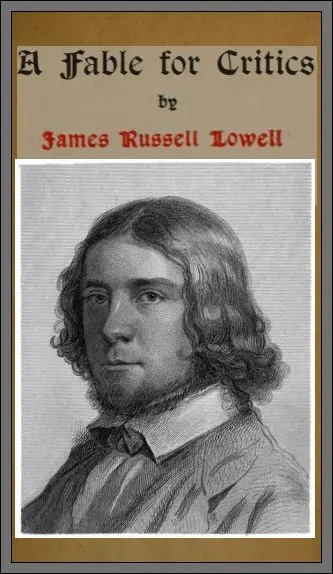
James Russell Lowell
BEHIND THE BOOK
This eBook is for the use of anyone anywhere in the United States and most other parts of the world at no cost and with almost no restrictions whatsoever. You may copy it, give it away or re-use it under the terms of the Project Gutenberg License included with this eBook or online at www.gutenberg.org. If you are not located in the United States, you will have to check the laws of the country where you are located before using this eBook. Read the source licence.
The original source file, including credits and licence, is retained by this library. Request an original-format copy at no charge. Please include the book title and Project Gutenberg identifier #73710.
KEEP YOUR CURIOSITY GOING

David Patterson (Spirit) Hatch

David Patterson (Spirit) Hatch

David Patterson (Spirit) Hatch

Ralph Waldo Emerson

Maurice Baring

Oscar Wilde & James McNeill Whistler