THE CLASSIC COLLECTION✦The old English dramatistsCLASSIC FREE BOOKS
The old English dramatists
James Russell Lowell

THE CLASSIC COLLECTION · 1899
"My Study Windows" by James Russell Lowell is a collection of essays written in the late 19th century. The work draws from the author's reflections and experiences over a span of years, presenting a range of topics that encompass nature, literature, and personal musings. It hints at a thoughtful exploration of the beauty of the natural world, alongside cultural commentary, making it appealing for readers interested in nuanced observations about life and the environment. The opening of the book sets the stage with a prefatory note where Lowell introduces the collection, explaining that the essays included were composed over the last fifteen years. He expresses his intention to compile these writings as a means of 'shutting them between two covers' to make space for new thoughts. The initial essay, "My Garden Acquaintance," begins with the author reminiscing about the joy he found in reading Gilbert White's "Natural History of Selborne," drawing parallels between White's observations of nature and his own experiences. Lowell invokes a vivid portrayal of his garden and its inhabitants, offering insights into the interplay between humanity and nature, which will be a recurring theme throughout the collection.
Introduction adapted from the source catalogue; source summaries may be automatically generated.
Free to read · English · 137,668 words · No account needed
MAKE TIME FOR A GOOD BOOK
On by default. Untick to stop anonymous reading totals. Each page counts after 10 seconds in view. How this works.
Anonymous counting is on unless you have switched it off.
The first question we put to any poet, nay, to any so-called national literature, is that which Farinata addressed to Dante, Chi fur li maggior tui? Here is no question of plagiarism, for poems are not made of words and thoughts and images, but of that something in the poet himself which can compel them to obey him and move to the rhythm of his nature. Thus it is that the new poet, however late he come, can never be forestalled, and the ship-builder who built the pinnace of Columbus has as much claim to the discovery of America as he who suggests a thought by which some other man opens new worlds to us has to a share in that achievement by him unconceived and inconceivable. Chaucer undoubtedly began as an imitator, perhaps as mere translator, serving the needful apprenticeship in the use of his tools. Children learn to speak by watching the lips and catching the words of those who know how already, and poets learn in the same way from their elders. They import their raw material from any and everywhere, and the question at last comes down to this,--whether an author have original force enough to assimilate all he has acquired, or that be so overmastering as to assimilate him. If the poet turn out the stronger, we allow him to help himself from other people with wonderful equanimity. Should a man discover the art of transmuting metals and present us with a lump of gold as large as an ostrich-egg, would it be in human nature to inquire too nicely whether he had stolen the lead?
Nothing is more certain than that great poets are not sudden prodigies, but slow results. As an oak profits by the foregone lives of immemorial vegetable races that have worked-over the juices of earth and air into organic life out of whose dissolution a soil might gather fit to maintain that nobler birth of nature, so we may be sure that the genius of every remembered poet drew the forces that built it up out of the decay of a long succession of forgotten ones. Nay, in proportion as the genius is vigorous and original will its indebtedness be greater, will its roots strike deeper into the past and grope in remoter fields for the virtue that must sustain it. Indeed, if the works of the great poets teach anything, it is to hold mere invention somewhat cheap. It is not the finding of a thing, but the making something out of it after it is found, that is of consequence. Accordingly, Chaucer, like Shakespeare, invented almost nothing. Wherever he found anything directed to Geoffrey Chaucer, he took it and made the most of it. It was not the subject treated, but himself, that was the new thing. Cela m’appartient de droit, Molière is reported to have said when accused of plagiarism. Chaucer pays that “usurious interest which genius,” as Coleridge says, “always pays in borrowing.” The characteristic touch is his own. In the famous passage about the caged bird, copied from the “Romaunt of the Rose,” the “gon eten wormes” was added by him. We must let him, if he will, eat the heart out of the literature that had preceded him, as we sacrifice the mulberry-leaves to the silkworm, because he knows how to convert them into something richer and more lasting. The question of originality is not one of form, but of substance, not of cleverness, but of imaginative power. Given your material, in other words the life in which you live, how much can you see in it? For on that depends how much you can make of it. Is it merely an arrangement of man’s contrivance, a patchwork of expediencies for temporary comfort and convenience, good enough if it last your time, or is it so much of the surface of that ever-flowing deity which we call Time, wherein we catch such fleeting reflection as is possible for us, of our relation to perdurable things? This is what makes the difference between Æschylus and Euripides, between Shakespeare and Fletcher, between Goethe and Heine, between literature and rhetoric. Something of this depth of insight, if not in the fullest, yet in no inconsiderable measure, characterizes Chaucer. We must not let his playfulness, his delight in the world as mere spectacle, mislead us into thinking that he was incapable of serious purpose or insensible to the deeper meanings of life.
Your reading position is saved on this browser. Take it to another device with a library code. Reading pages adapt to text, rather than matching a printed edition.
James Russell Lowell
James Russell Lowell

James Russell Lowell
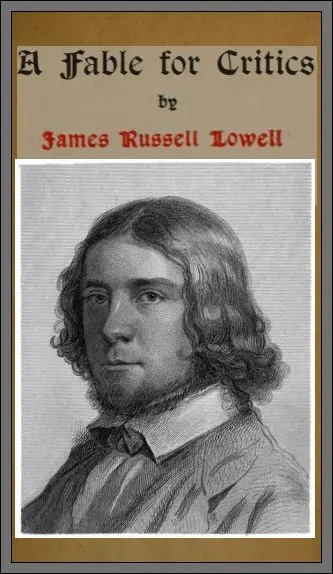
James Russell Lowell
BEHIND THE BOOK
This eBook is for the use of anyone anywhere in the United States and most other parts of the world at no cost and with almost no restrictions whatsoever. You may copy it, give it away or re-use it under the terms of the Project Gutenberg License included with this eBook or online at www.gutenberg.org. If you are not located in the United States, you will have to check the laws of the country where you are located before using this eBook. Read the source licence.
The original source file, including credits and licence, is retained by this library. Request an original-format copy at no charge. Please include the book title and Project Gutenberg identifier #73710.
KEEP YOUR CURIOSITY GOING

David Patterson (Spirit) Hatch

David Patterson (Spirit) Hatch

David Patterson (Spirit) Hatch

Ralph Waldo Emerson

Maurice Baring

Oscar Wilde & James McNeill Whistler