THE CLASSIC COLLECTION✦The old English dramatistsCLASSIC FREE BOOKS
The old English dramatists
James Russell Lowell

THE CLASSIC COLLECTION · 1899
"My Study Windows" by James Russell Lowell is a collection of essays written in the late 19th century. The work draws from the author's reflections and experiences over a span of years, presenting a range of topics that encompass nature, literature, and personal musings. It hints at a thoughtful exploration of the beauty of the natural world, alongside cultural commentary, making it appealing for readers interested in nuanced observations about life and the environment. The opening of the book sets the stage with a prefatory note where Lowell introduces the collection, explaining that the essays included were composed over the last fifteen years. He expresses his intention to compile these writings as a means of 'shutting them between two covers' to make space for new thoughts. The initial essay, "My Garden Acquaintance," begins with the author reminiscing about the joy he found in reading Gilbert White's "Natural History of Selborne," drawing parallels between White's observations of nature and his own experiences. Lowell invokes a vivid portrayal of his garden and its inhabitants, offering insights into the interplay between humanity and nature, which will be a recurring theme throughout the collection.
Introduction adapted from the source catalogue; source summaries may be automatically generated.
Free to read · English · 137,668 words · No account needed
MAKE TIME FOR A GOOD BOOK
On by default. Untick to stop anonymous reading totals. Each page counts after 10 seconds in view. How this works.
Anonymous counting is on unless you have switched it off.
People of more sensitive organizations may be shocked, but we are glad that in this our true war of independence, which is to free us forever from the Old World, we have had at the head of our affairs a man whom America made, as God made Adam, out of the very earth, unancestried, unprivileged, unknown, to show us how much truth, how much magnanimity, and how much statecraft await the call of opportunity in simple manhood when it believes in the justice of God and the worth of man. Conventionalities are all very well in their proper place, but they shrivel at the touch of nature like stubble in the fire. The genius that sways a nation by its arbitrary will seems less august to us than that which multiplies and reinforces itself in the instincts and convictions of an entire people. Autocracy may have something in it more melodramatic than this, but falls far short of it in human value and interest.
Experience would have bred in us a rooted distrust of improvised statesmanship, even if we did not believe politics to be a science, which, if it cannot always command men of special aptitude and great powers, at least demands the long and steady application of the best powers of such men as it can command to master even its first principles. It is curious, that, in a country which boasts of its intelligence, the theory should be so generally held that the most complicated of human contrivances, and one which every day becomes more complicated, can be worked at sight by any man able to talk for an hour or two without stopping to think.
Mr. Lincoln is sometimes claimed as an example of a ready-made ruler. But no case could well be less in point; for, besides that he was a man of such fair-mindedness as is always the raw material of wisdom, he had in his profession a training precisely the opposite of that to which a partisan is subjected. His experience as a lawyer compelled him not only to see that there is a principle underlying every phenomenon in human affairs, but that there are always two sides to every question, both of which must be fully understood in order to understand either, and that it is of greater advantage to an advocate to appreciate the strength than the weakness of his antagonist’s position. Nothing is more remarkable than the unerring tact with which, in his debate with Mr. Douglas, he went straight to the reason of the question; nor have we ever had a more striking lesson in political tactics than the fact, that, opposed to a man exceptionally adroit in using popular prejudice and bigotry to his purpose, exceptionally unscrupulous in appealing to those baser motives that turn a meeting of citizens into a mob of barbarians, he should yet have won his case before a jury of the people. Mr. Lincoln was as far as possible from an impromptu politician. His wisdom was made up of a knowledge of things as well as of men; his sagacity resulted from a clear perception and honest acknowledgment of difficulties, which enabled him to see that the only durable triumph of political opinion is based, not on any abstract right, but upon so much of justice, the highest attainable at any given moment in human affairs, as may be had in the balance of mutual concession. Doubtless he had an ideal, but it was the ideal of a practical statesman,--to aim at the best, and to take the next best, if he is lucky enough to get even that. His slow, but singularly masculine, intelligence taught him that precedent is only another name for embodied experience, and that it counts for even more in the guidance of communities of men than in that of the individual life. He was not a man who held it good public economy to pull down on the mere chance of rebuilding better. Mr. Lincoln’s faith in God was qualified by a very well-founded distrust of the wisdom of man. Perhaps it was his want of self-confidence that more than anything else won him the unlimited confidence of the people, for they felt that there would be no need of retreat from any position he had deliberately taken. The cautious, but steady, advance of his policy during the war was like that of a Roman army. He left behind him a firm road on which public confidence could follow; he took America with him where he went; what he gained he occupied, and his advanced posts became colonies. The very homeliness of his genius was its distinction. His kingship was conspicuous by its workday homespun. Never was ruler so absolute as he, nor so little conscious of it; for he was the incarnate common-sense of the people. With all that tenderness of nature whose sweet sadness touched whoever saw him with something of its own pathos, there was no trace of sentimentalism in his speech or action. He seems to have had but one rule of conduct, always that of practical and successful politics, to let himself be guided by events, when they were sure to bring him out where he wished to go, though by what seemed to unpractical minds, which let go the possible to grasp at the desirable, a longer road.
Your reading position is saved on this browser. Take it to another device with a library code. Reading pages adapt to text, rather than matching a printed edition.
James Russell Lowell
James Russell Lowell

James Russell Lowell
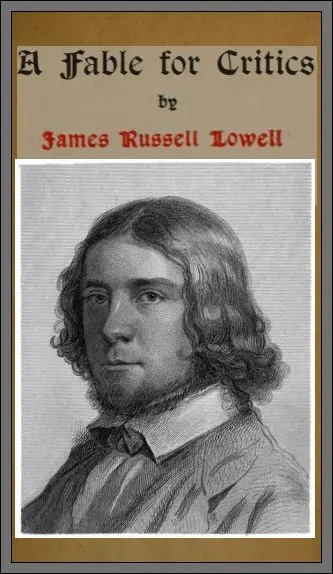
James Russell Lowell
BEHIND THE BOOK
This eBook is for the use of anyone anywhere in the United States and most other parts of the world at no cost and with almost no restrictions whatsoever. You may copy it, give it away or re-use it under the terms of the Project Gutenberg License included with this eBook or online at www.gutenberg.org. If you are not located in the United States, you will have to check the laws of the country where you are located before using this eBook. Read the source licence.
The original source file, including credits and licence, is retained by this library. Request an original-format copy at no charge. Please include the book title and Project Gutenberg identifier #73710.
KEEP YOUR CURIOSITY GOING

David Patterson (Spirit) Hatch

David Patterson (Spirit) Hatch

David Patterson (Spirit) Hatch

Ralph Waldo Emerson

Maurice Baring

Oscar Wilde & James McNeill Whistler