
Some Artists at the Fair
Francis Davis Millet & W. Hamilton (William Hamilton) Gibson & Will H. (Will Hicok) Low & John Ames Mitchell & Francis Hopkinson Smith
THE CLASSIC COLLECTION · 1897
"My Studio Neighbors" by William Hamilton Gibson is a collection of essays written in the late 19th century. The work offers an intimate glimpse into the joys of nature and the curiosities of life surrounding the author’s rural studio, blending personal reflections with observations of wildlife. Through vivid descriptions, Gibson brings to life the interactions he has with various creatures, from squirrels and birds to insects, and meditates on the wonder of their existence in his artistic environment." "The opening of "My Studio Neighbors" establishes a tranquil yet lively atmosphere around the author’s country studio, where he describes an abundance of animal and insect life that frequents his space. He reflects on the contrast between solitude and the chaos of nature, depicting playful squirrels, woodchucks, and various birds that visit his workspace. The narrative captures moments of distraction from his work due to the antics of a hornet, caterpillars discovered in his bamboo brushes, and frequent skirmishes with the buzzing of bees. Gibson's lively depictions set the tone for a celebration of nature, as well as a narrative that blends heartfelt observation with scientific inquiry into the lives of his unexpected studio neighbors."
Introduction adapted from the source catalogue; source summaries may be automatically generated.
Free to read · English · 37,866 words · No account needed
MAKE TIME FOR A GOOD BOOK
On by default. Untick to stop anonymous reading totals. Each page counts after 10 seconds in view. How this works.
Anonymous counting is on unless you have switched it off.
Queer Little Family:
--Tree-hopper (Membracis binotata); a singular entertainment;
graceful curves, 87;
a branch in masquerade; queer thorns, 88;
a sudden disappearance; animated thorns; like a covey of quails, 89;
like "Bob White," 90;
singular agility; queer anatomy; always ready for flight, 91;
fondness for locust and oak-trees, simulating the color and character
of the branches, 92;
manner of sitting on the branches, 93;
always headed towards the top; tiny tufts of cotton, 94;
color and size of the tufts; a mere frothy shell; a riddle, 95;
its relations, 96;
an investigation, 97;
its technique, 98;
aerated cement; froth-house builder, 99;
period of hatching, 100;
a house for the winter; not a wanderer, 101.
Ragged Orchid (H. lacera), 200.
"Rattlesnake-plantain," 213.
Rudbeckia hirta, cone-flower, 138.
Sage (Salvia officinalis), strange curved stamen, 119;
nature's arrangement, 112.
Salvia, its welcome to the bee, 117.
Self-fertilization, 141.
Sheep-spit, 80.
Showy orchid (H. orbicularis),194.
Snorting war-horse, 18.
Solitude, the pleasures of, 3.
"Solomon's ant," 152.
Spectabilis, orchid, 182;
its favorite haunt, 195.
Spiders, agalena, epeira, argiope, 8;
a two years' span, 7;
a silken vortex;
miscellaneous food, 8.
Spiranthes, "Lady's-tresses," 218.
Sprengel, Christian Conrad:
--Inspiration from the wild geranium, 108;
on the mystery of color, 112;
theory of fertilization;
a poser to Linnaeus, 113;
his wrong theory, 114;
divining half the truth, 176;
assumption disproved, 178.
Spume-bearer (Aprophora), its domicile of suds;
wonderful power of jumping, 82.
Starling, dispossessing woodpecker from nest, 43.
Studio Company:
--"Tumultuous privacy"; contested territory; snickering squirrels, 4;
selected food; unsymmetrical carpentry; drone of bees; carol of birds;
flurry of swifts; accompaniments to my toil, 5;
wild fox; pet chipmonk; pet toad; his lightning tongue;
home in a bowl, 6;
an old friend, 9.
Summer yellow-bird (Mnio-tiltidae), 47.
Sweet-pogonia (P. ophioglossoides), 145.
Swift, Jonathan, on parasites, 44.
Tennyson, quoted, 24.
"The Secrets of Nature in Forms and Fertilization of Flowers Discovered," Sprengel's work, 113.
Thevenot, concerning the thrift of insects, 152.
Tiger-beetle (Cicindela), 68.
Toads, 6.
Toad-spit, 80.
Tree-hopper, 93.
Venus's-slipper (Cypripedium acaule), 205.
Vireo, abandons its nest, 45.
Wasps:
--Wren, 10;
microscopic, 45;
tiny black, 69;
digger, 72, 162;
orange-spotted, 79;
brown; mud, 161.
"Waxwork" bittersweet (Celastrus scandens), 88.
Welcome of the flowers:
--The function of the stamen, 106;
difference in cells, 107;
condition of the flower, 108;
physiological features; recognition of sex in flowers, 109;
exchange of courtesies; each flower a law unto itself, 117;
action of "jack-in-the-pulpit"; cypripedium and aristolochias;
peculiarity of the sage, 119;
queer stamens; nature's arrangement, 121;
cross-fertilization insured, 122;
showers of laurel pollen; curious construction of flower, 124;
singular greeting to the bee, 126;
remarkable interior arrangement of the Andromeda, 128;
hidden anthers of the blue-flag, 129;
intercommunication and reciprocity, 135.
Wild geranium (G. sylvaticum), 112.
Wild volapuek, 4.
Wilson, cow-bird's eggs, 33.
Wind as a fertilizing agent, 154.
White, Gilbert, cuckoo's eggs, 32;
rich localities, 58.
Wood, Alphonso:
--On tubercles, 203;
on embarrassed bees, 235.
Woodchucks, 5.
Wren-wasp (Odynerus flavipes):
--A cumbersome prize, 10;
selecting a home; way stations; a second instalment, 11;
very familiar, 12;
a well-stocked home, 13;
impotent anaesthetic, 14;
manner of catching her prey; a hypodermic injection, 15;
food on storage; closing the cell after depositing egg, 16;
living food; preference for ready-made houses; resemblance to
the yellow-jacket, 17.
Your reading position is saved on this browser. Take it to another device with a library code. Reading pages adapt to text, rather than matching a printed edition.
Francis Davis Millet & W. Hamilton (William Hamilton) Gibson & Will H. (Will Hicok) Low & John Ames Mitchell & Francis Hopkinson Smith
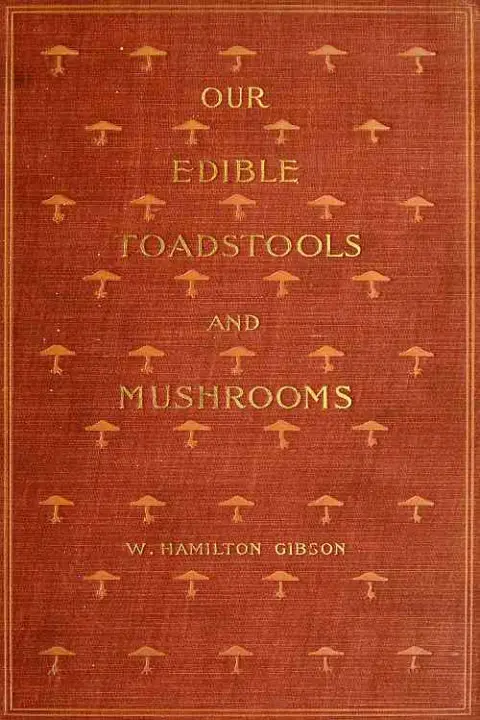
W. Hamilton (William Hamilton) Gibson
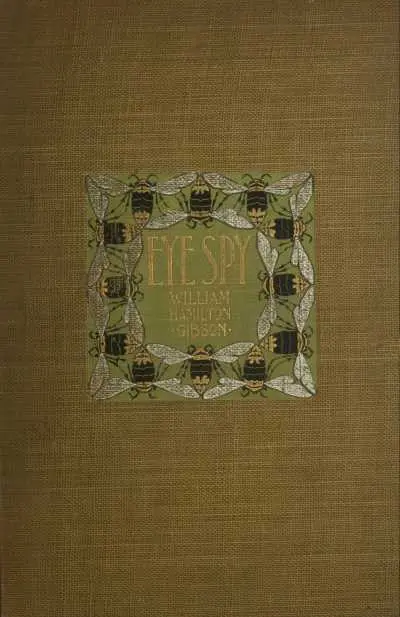
W. Hamilton (William Hamilton) Gibson
BEHIND THE BOOK
This eBook is for the use of anyone anywhere in the United States and most other parts of the world at no cost and with almost no restrictions whatsoever. You may copy it, give it away or re-use it under the terms of the Project Gutenberg License included with this eBook or online at www.gutenberg.org. If you are not located in the United States, you will have to check the laws of the country where you are located before using this eBook. Read the source licence.
The original source file, including credits and licence, is retained by this library. Request an original-format copy at no charge. Please include the book title and Project Gutenberg identifier #22165.
KEEP YOUR CURIOSITY GOING

David Patterson (Spirit) Hatch

David Patterson (Spirit) Hatch

David Patterson (Spirit) Hatch
Cécile Tormay

Moritz Busch
John L. Ransom