
List, Ye Landsmen! A Romance of Incident
William Clark Russell
THE CLASSIC COLLECTION · 1890
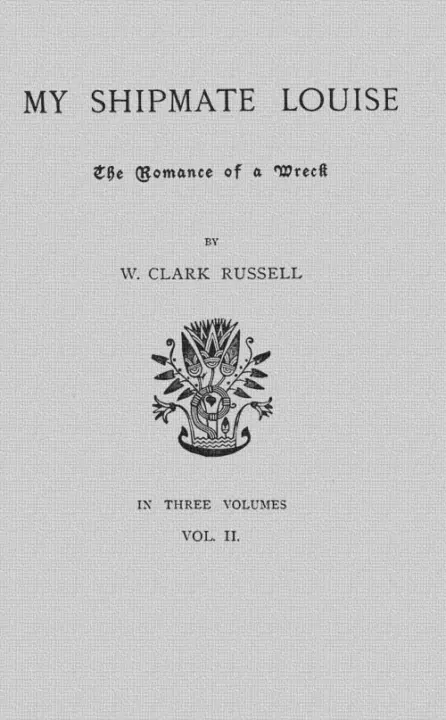
"My Shipmate Louise: The Romance of a Wreck, Volume 2 (of 3)" by W. Clark Russell is a novel written in the late 19th century. The story unfolds aboard a ship, where a complex plot involving intrigue, danger, and human emotions ensues amongst the crew and passengers. Key themes revolve around the peril of life at sea, the challenges of survival, and the interplay between camaraderie and suspicion, with characters like Captain Keeling and the mysterious Crabb at the center of the unfolding narrative. At the start of this volume, the tension is palpable as the crew grapples with the revelation that Crabb, long thought dead, has mysteriously returned, igniting suspicions of conspiracy and probable piracy aboard the vessel. The atmosphere grows more fraught following a fire outbreak, which diverges attention from Crabb's return. As the captain must manage both the fallout from this shocking revelation and the ensuing chaos aboard, they are ultimately confronted with a looming wreck on the horizon, setting the stage for the gripping challenges to come amidst the relentless unpredictability of the ocean.
Introduction adapted from the source catalogue; source summaries may be automatically generated.
Free to read · English · 61,406 words · No account needed
MAKE TIME FOR A GOOD BOOK
On by default. Untick to stop anonymous reading totals. Each page counts after 10 seconds in view. How this works.
Anonymous counting is on unless you have switched it off.
She was looking through the cabin door at the sea, and scarcely seemed to hear or to heed me. Am I strictly honourable in this? thought I. Pshaw! it was no moment to consider the rights and wrongs of such a thing. Her discovery had freed me from all obligation of secrecy, and what I had supplied she would have easily been able to ascertain for herself on her return home, if, indeed, home was ever to be viewed again by either of us.
‘What horrible weather!’ she exclaimed, bringing her eyes to my face; ‘there is no wind, and the sea rolls like liquid lead. When you were at sea, were you ever in a situation of danger such as this?’
‘This is an uneasy time,’ said I; ‘but do not call it a situation of danger yet. I am going shortly to overhaul the wreck. I must keep her afloat until we are taken off her.’
‘How long were you at sea, Mr. Dugdale?’
‘Two years.’
‘Is your father a sailor?’
‘No; my father is dead. He was captain in the 38th Regiment of Foot, and was killed at Burmah.’
There was a kind of dawning of interest in her eyes, an expression I had not noticed when she talked of Colledge and his engagement.
‘My father was in the army, too,’ said she; ‘but he saw very little service. Is your mother living?’
‘She is.’
She sighed bitterly, and hid her face whilst she exclaimed:
‘Oh, my poor mother! my poor mother! How little she knows! And she was so reluctant to let me leave her.’ She sighed again deeply, and let her hands fall, and then sank into silence.
I quitted the deck-house to take another look round. Just then rain began to fall, and the sea became shrouded with the discharge. So oil smooth now was the swell that each drop as it fell pitted the lead-coloured rounds with a black point, and the water alongside looked to be spotted with ink. As I had met with no fresh water in the little room that I call the pantry, and as there might be none in the hold, or none that with my single pair of hands I should be able to come at, I resolved to take advantage of the wet that was pouring down, and dived into the cabin to search for any vessel that would catch and hold it. The flour and sugar casks in the pantry would not do. I peered into the other berths, but could see nothing to answer the purpose. It was of the first consequence, however, to us that we should possess a store of drinking water to mix with our wine, for we were in the tropics; the atmosphere was heavy with heat, even under a shrouded heaven; it was easy to figure what the temperature would rise to when the sun should shine forth; and the mere fancy of days of stagnation and of vertical suns, of this hull roasting; under the central broiling eye, of the breathless sea, stretching in feverish breathings into the dim, blue distance, unbroken by any tip of sail, and no fresh water to drink, was horribly oppressive, and rendered me half crazy to find some contrivance to catch the rain, which might at any moment cease. The thought of the lockers in the deck-house occurred to me. I mounted the ladder and searched them, and to my unspeakable joy, found in the locker upon which Miss Temple had been seated during the night, four canvas buckets, apparently brand new, as I might judge, from the cloth and from the rope handles. The rain fell heavily, and the water gushed in streams from the roof of the deck-house at many points of it. In a very short time the buckets were filled, but they were of a permeable substance, and it was necessary to decant them as soon as possible. There was no difficulty in doing this, for there were several empty bottles in the shelves below along with a couple of large jars, some tin pannikins, and so forth. These I brought up, washed them in the rain, and then filled them, and in this manner contrived to store away a good number of gallons, not to mention the contents of the buckets, which I left hanging outside to fill up afresh, meaning to use them first, and taking my chance of loss through the water soaking through them.
Your reading position is saved on this browser. Take it to another device with a library code. Reading pages adapt to text, rather than matching a printed edition.
William Clark Russell

William Clark Russell
William Clark Russell

William Clark Russell
BEHIND THE BOOK
This eBook is for the use of anyone anywhere in the United States and most other parts of the world at no cost and with almost no restrictions whatsoever. You may copy it, give it away or re-use it under the terms of the Project Gutenberg License included with this eBook or online at www.gutenberg.org. If you are not located in the United States, you will have to check the laws of the country where you are located before using this eBook. Read the source licence.
The original source file, including credits and licence, is retained by this library. Request an original-format copy at no charge. Please include the book title and Project Gutenberg identifier #62344.
KEEP YOUR CURIOSITY GOING
Coulson Kernahan

Maurice Baring
Frances Wright
Cécile Tormay

Frederic Jesup Stimson

W. H. P. (William Henry Pope) Jarvis