THE CLASSIC COLLECTION✦Princess Sukey: The story of a pigeon and her human friendsCLASSIC FREE BOOKS
Princess Sukey: The story of a pigeon and her human friends
Marshall Saunders
THE CLASSIC COLLECTION · 1908
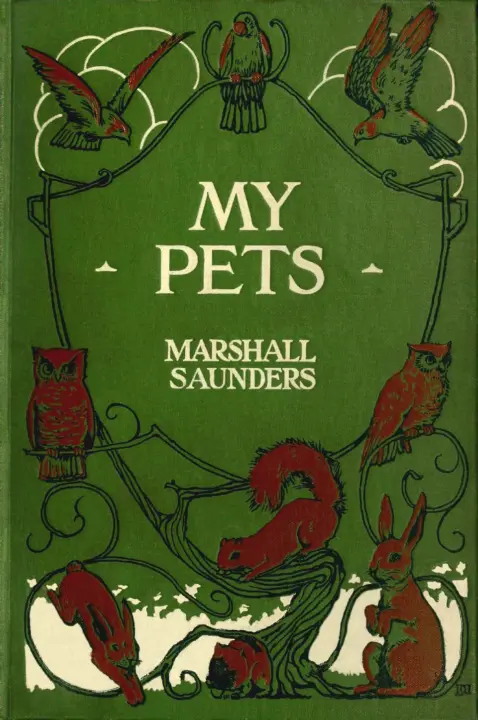
"My Pets: Real Happenings in My Aviary" by Marshall Saunders is a memoir written in the early 20th century that recounts the author's experiences with various birds and other small animals kept in an aviary. The narrative revolves around the delightful tales of the author's numerous pets, including two Californian screech owls named Solomon and Betsy, and highlights the joys and challenges of nurturing different creatures in a domestic setting. At the start of the memoir, Saunders introduces the story of adopting two orphaned owls, showcasing his initial curiosity and compassion for the tiny creatures. He describes how he learned to care for them, including their feeding habits and amusing behaviors, while detailing the backdrop of his experiences in a school environment near San Francisco. Through a blend of humor and heartfelt emotion, the opening sets the stage for a vivid exploration of the interactions between the author, his pets, and the various situations that arise from their companionship. The reader is drawn into a world of affectionate and often humorous encounters that promise a warm reflection on animal friendship and responsibility throughout the rest of the work.
Introduction adapted from the source catalogue; source summaries may be automatically generated.
Free to read · English · 65,380 words · No account needed
MAKE TIME FOR A GOOD BOOK
On by default. Untick to stop anonymous reading totals. Each page counts after 10 seconds in view. How this works.
Anonymous counting is on unless you have switched it off.
No boy with his first pants, first pony, or first anything, can excel the joy of a young robin with his first bath--and like a too-indulgent parent, I made the same mistake with Tardy that I did with Dixie, and let him have as many as he liked.
It seemed incredible to me that wild birds could or would bathe too much. Yet they do, and too late I shut Tardy up and took his bath away. The mischief had been done, and I suppose my little bird really had something like pneumonia.
I was quite upset about his illness, and made up my mind that he should not die, if I could make him live. I have nursed many birds and animals, had many a stubborn fight with their king of terrors, but I never had such hard work to keep breath in a little bird’s body as I had with Tardy.
He became hollow-chested and emaciated, the feathers came out of his head. He was bald while yet a baby, his long legs made him look as if he were on stilts, he coughed persistently, he became snappish and peevish, and sometimes refused to eat.
Night after night I got up every few hours, and coaxed him to take something, for he was like a weak patient that would die if left too long without nourishment.
“I won’t,” he would snap angrily, as I offered him a worm at two P. M.
“Oh, please,” I would coax him. “Good Tardy!”
“Well, just to oblige you,” he would seem to say at last, and the worm
would go down.
“Now another, Tardy boy.”
“I will not,” and this tone was final.
Then I had to open his beak, and he would cough and nearly choke, and I would feel that I was killing him, and would glance toward the chloroform bottle that I kept standing near him, for I was resolved not to let him suffer too much.
I never chloroform an animal or bird that has a chance to get well, even if it undergoes some suffering in the process. Often, as I sit by some intelligent, suffering creature, I try to express to it in some way the hope that it will have courage to endure bravely--just as one says to a human being, “Bear up--be courageous--your pain will soon be over.”
When one speaks in this way, it is touching to see how responsive are the members of the lower creation. Naturally, if their sufferings are too great, they are, like us, utterly oblivious of what goes on around them. But, if there is only intermittent pain, they seem to appreciate one’s sympathy.
Your reading position is saved on this browser. Take it to another device with a library code. Reading pages adapt to text, rather than matching a printed edition.
Marshall Saunders
Marshall Saunders
Marshall Saunders
Marshall Saunders
BEHIND THE BOOK
This eBook is for the use of anyone anywhere in the United States and most other parts of the world at no cost and with almost no restrictions whatsoever. You may copy it, give it away or re-use it under the terms of the Project Gutenberg License included with this eBook or online at www.gutenberg.org. If you are not located in the United States, you will have to check the laws of the country where you are located before using this eBook. Read the source licence.
The original source file, including credits and licence, is retained by this library. Request an original-format copy at no charge. Please include the book title and Project Gutenberg identifier #73801.
KEEP YOUR CURIOSITY GOING

Charles G. (Charles Griffith) Ross
Hannah Webster Foster

Emily Lawless
Edwin Hamlin Carr

Charles De Lano Hine
Andrew Ure