THE CLASSIC COLLECTION✦An outlaw’s diary: the CommuneCLASSIC FREE BOOKS
An outlaw’s diary: the Commune
Cécile Tormay
THE CLASSIC COLLECTION · 1912
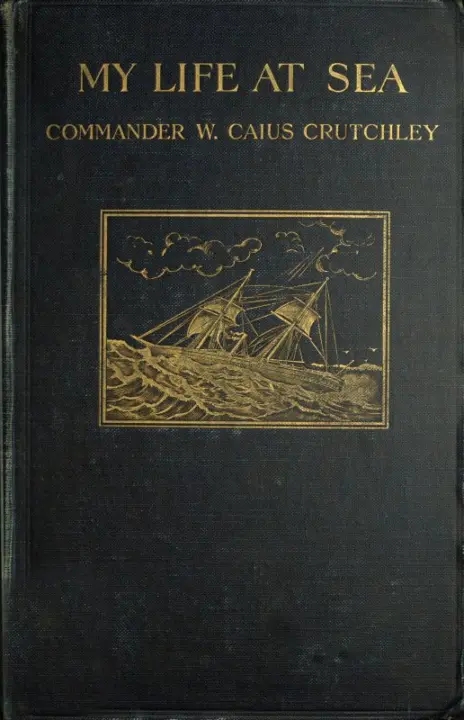
"My Life at Sea" by William Caius Crutchley is an autobiographical narrative written in the early 20th century. This memoir recounts the author's adventurous life as a seaman during the significant transition from sail-powered ships to steam navigation in the British mercantile marine from 1863 to 1894. Crutchley shares personal stories, reflections on the culture of naval life, and experiences sailing various types of ships, capturing the spirit of maritime exploration and the challenges faced by sailors of his time. The opening of this memoir introduces us to Crutchley’s childhood ambitions and the events that led him to a life at sea. The narrative begins with the arrival of the vessel "Figaro" in Margate, which sparked Crutchley's desire to pursue a maritime career. He describes his initial reluctance from his family to support his aspirations but highlights key figures like Mr. Trapp, a shipowner who became influential in his journey. The chapter reflects on his early education, the discipline of maritime life, the connections made in the bustling ports, and the colorful characters encountered, setting the stage for a rich tapestry of sea adventures and life lessons in the chapters to follow.
Introduction adapted from the source catalogue; source summaries may be automatically generated.
Free to read · English · 102,905 words · No account needed
MAKE TIME FOR A GOOD BOOK
On by default. Untick to stop anonymous reading totals. Each page counts after 10 seconds in view. How this works.
Anonymous counting is on unless you have switched it off.
It will thus be seen that the discipline clauses of the Merchant Shipping Act leave a great deal to the discretion of the judicial authority that may be dealing with any particular case, and it can well be realised that some magistrates would view offences against discipline with a more lenient spirit than others. Again, and I am well aware of the gravity of the words I am using, it is not the Board of Trade that has whittled down the master’s authority voluntarily, but it is the deliberate action of shipowners, who, curiously enough, have done more than any other agency to destroy authority on board ship. So long as a master was certain of support from the owner, so long would he act unflinchingly if necessity arose. But in many cases a master will hesitate to involve himself in law when he knows that in doing so he will get no support from his owners. Quite recently the master of a great mail steamer told me that it would not do to have any trouble with his crew, “for the Company would not like it,” a policy, I submit, which is simply asking for trouble, for the men of to-day fully realise that a clever lawyer can make a plausible case from very slight grounds. Hence arises the crying need of one uniform administration of the Merchant Shipping Act, for as it is dealt with at present there is no uniformity of practice.
I had occasion to take part in a police court case in Wellington where a fireman was being prosecuted for assaulting my second officer and knocking some of his teeth out. It was a particularly bad case, and deserved the extreme penalty that could be awarded for that offence, but the magistrate took an entirely different view and only inflicted half the maximum penalty. I was rather put out at this and am afraid that I showed it, for I told the stipendiary that I should advise my officers in future to carry something for their own defence, as they got little protection from the police. This was rather unfortunate, for some little time afterwards, I think it was the next voyage, there was a shooting case which caused a good deal of comment and which nearly got me into serious trouble. The facts were as follows. Two mates of sailing vessels had got themselves disliked by certain seamen belonging to their own and other vessels. They had been threatened, and consequently kept together for mutual protection, one of them, as they went on shore one Sunday morning, putting a revolver in his pocket. They were met by men in search of them with hostile intent, and the mate in possession of the revolver was knocked down. Fearing worse treatment he fired at his assailant from his pocket, and the aggressor fell shot through the heart. It is to be noticed that although this feud had been in existence some little time there was no sign of any police supervision or watching until the mischief was complete. The two men were put on trial for wilful murder together, but the judge ruled that they were to be tried separately. Consequently the man who fired the shot was first tried, and sentenced to a long term of penal servitude. This was on a Saturday. The next day I sat down and wrote a long letter to the New Zealand Times, which was published on the Monday; in it I pointed out former complaints of my own as to police inefficiency, and concluded with an appeal for mitigation of sentence. I did not mention the other man, who had to stand his trial on the Monday. This man was acquitted, but the public prosecutor was furious at my interference in the case. He and I were on very friendly terms as far as whist players went, but meeting me in the Club on Monday afternoon he told me that I had been guilty of contempt of court, and would have to take the consequences. I think, however, that it was just one of those touch-and-go cases where it would have been difficult to convict, for I heard no more of the matter. The man who was acquitted came down to my ship on the Tuesday morning, and meeting East in the gangway told him that he had come to thank me for getting him off, to which my chief replied, “Clear out at once! The old man don’t want to see you, I know!” and really he was quite right. So ended that episode; but I did not make many friends over what was really a fight for principle, and to this day I cherish animosity against a Christchurch newspaper that, taking this case as a handle, attacked me falsely and bitterly in my absence, when I had no opportunity of replying.
Your reading position is saved on this browser. Take it to another device with a library code. Reading pages adapt to text, rather than matching a printed edition.
BEHIND THE BOOK
This eBook is for the use of anyone anywhere in the United States and most other parts of the world at no cost and with almost no restrictions whatsoever. You may copy it, give it away or re-use it under the terms of the Project Gutenberg License included with this eBook or online at www.gutenberg.org. If you are not located in the United States, you will have to check the laws of the country where you are located before using this eBook. Read the source licence.
The original source file, including credits and licence, is retained by this library. Request an original-format copy at no charge. Please include the book title and Project Gutenberg identifier #48582.
KEEP YOUR CURIOSITY GOING
Cécile Tormay

Moritz Busch
John L. Ransom
Frances Wright
Cécile Tormay

Mabel Potter Daggett