THE CLASSIC COLLECTION✦An outlaw’s diary: the CommuneCLASSIC FREE BOOKS
An outlaw’s diary: the Commune
Cécile Tormay
THE CLASSIC COLLECTION · 1912
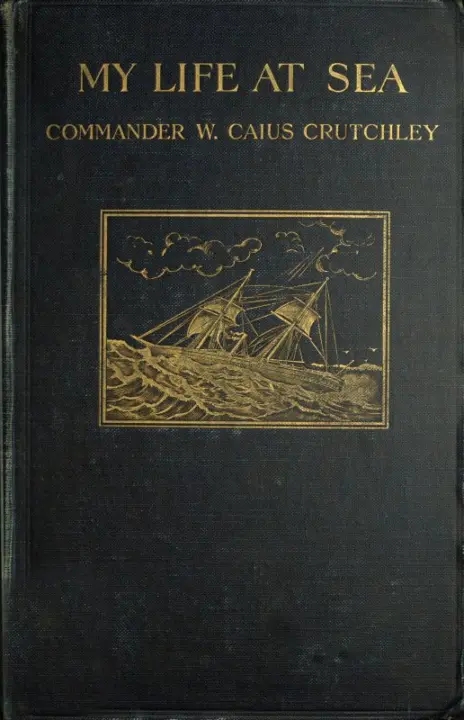
"My Life at Sea" by William Caius Crutchley is an autobiographical narrative written in the early 20th century. This memoir recounts the author's adventurous life as a seaman during the significant transition from sail-powered ships to steam navigation in the British mercantile marine from 1863 to 1894. Crutchley shares personal stories, reflections on the culture of naval life, and experiences sailing various types of ships, capturing the spirit of maritime exploration and the challenges faced by sailors of his time. The opening of this memoir introduces us to Crutchley’s childhood ambitions and the events that led him to a life at sea. The narrative begins with the arrival of the vessel "Figaro" in Margate, which sparked Crutchley's desire to pursue a maritime career. He describes his initial reluctance from his family to support his aspirations but highlights key figures like Mr. Trapp, a shipowner who became influential in his journey. The chapter reflects on his early education, the discipline of maritime life, the connections made in the bustling ports, and the colorful characters encountered, setting the stage for a rich tapestry of sea adventures and life lessons in the chapters to follow.
Introduction adapted from the source catalogue; source summaries may be automatically generated.
Free to read · English · 102,905 words · No account needed
MAKE TIME FOR A GOOD BOOK
On by default. Untick to stop anonymous reading totals. Each page counts after 10 seconds in view. How this works.
Anonymous counting is on unless you have switched it off.
In this same year 1889 I was asked to attend a meeting of the Hobart Chamber of Commerce in order that I might receive the thanks of the Chamber for taking my ship alongside the Dunn Street pier. It reminded me somewhat of an old Mexican episode. A most flattering resolution was passed and I was congratulated upon the fact that the light on the western land I had advocated seven years previously was now actually in course of construction. That sort of thing was gratifying, although no special merit attached to my action, for the pier was large enough to accommodate a far larger ship than mine was.
Among the intimates that I had in New Zealand was Captain Edwin, R.N., the meteorologist, who resided in Wellington. We had many tastes in common, for he was one of the old school and had learned his business thoroughly, commencing with the bombardment of Sebastopol, at which time he was serving as a midshipman in the Albion, and his stories of the bluejackets of the period, of fights between the men on the lower deck, of men, when dying of cholera, asking an officer to hold their hands, these and other matters were graphic in the extreme. As a specimen of his powers as a raconteur the following is an extract from one of his letters to me--
“By the bye, I had a curious dream lately; I had departed this life and found myself covered with feathers and fitted with a pair of three folding wings like an albatross, and was outward bound; being not used to flying, and off my first letter, I did not get on very well; and found I was putting my tail too hard over, which frequently brought me broadside on. After a while I settled down, but made rather heavy weather of it; and a lot of clipper chaps passed me on the way. When I had been out about a month, I heard a fellow coming up astern, and before long he hailed me and it turned out to be you: ‘Hullo, Crutchley,’ said I; ‘where are you bound?’ ‘Gabriel for orders,’ said you. ‘Same here,’ said I; and we flapped along together. After a good while we saw a faint sort of pale light ahead and you remarked that you thought we were running into ice; after some time we made out that it looked like a fog bank, with a bright place in it, and on coming nearer we saw that in this bright part there was a high gate, so we eased down and worked our tails a little so as to be sure we had everything in readiness; for not being accustomed to being up under feathers we were a little anxious; all, however, went well and we both perched on the gate in a masterly style and folded our wings very neatly. We had no sooner landed, so to speak, when a bell rang twice, and immediately a voice hailed us and asked who we were; when we had replied, the voice said: ‘Tell the Recorder that two fellows have come for orders!’ Presently we heard someone say, ‘What name was it? Ah! yes: I see; Crutchley, Master Mariner, Lieutenant Naval Reserve, rather bad style both. Dear me! Dreadful record! I am afraid he must go on. Who did you say the other fellow was? Edwin: I have him! Why, dear me! This is very sad! Naval officer, and bad at that; send him on at once!’ So then we heard the first one hail us. ‘Outside there! You Crutchley! Edwin! Go round by the left immediately.’ But we didn’t see it, being sailormen and willing to contest the point; so we called out that we wanted a rest, being very tired and thirsty--could they not let us come inside and sit down for a while? (you see, that gate was not good holding ground), but a loud voice said, ‘Go away! be off immediately! We shall have others here to deal with directly.’ But we held on; presently a long pole came out of the fog and proceeded to shove us off and in so doing gave us some pretty hard knocks. Still we held on; but at last we each got a most awful punch with the pole end which made us let go, and we so far forgot ourselves as to say cuss words; whereupon there came a clap of thunder and we found ourselves tumbling about anyhow. When we got way upon us again and could see, we found that my starboard wing was singed and that the feathers on your head were badly burned. We consulted what to do, and as we could only just see the light we knew that we must have been blown a long way off shore; we therefore decided to work up to it again, and though we flapped our level best and tried all we knew, we could not rise the light at all and had to give it up. We then noticed that we seemed to be in a strong set, for the light was broad away on the starboard bow, while on the port bow there was a reddish glow which made us feel rather creepy, and we both remarked that we had got into a kind of haze which had a sort of burnt powdery smell. We saw the white light dip, but it comforted us a bit to see that the other did not get any redder--we kept ourselves under easy speed with a bright look-out all round, and to make all sure, one of us wore ship every hour, just dropping a little to leeward and coming up again. Time went by slowly, but we didn’t care about making much headway ‘to the left,’ and at last we sighted something moving, and carefully edged down on it in open order. As we got nearer we saw it had wings and we made it out to be a hoary old chap of a decidedly Egyptian head, but there was no mistaking him, for he was a real true blue old sailorman by the way he worked his wings, which showed he had been a long time afloat, and we could not but admire his style. As we came up he sheered off, but we were one on each side of him and had evidently plenty of wing power in reserve, so he stopped and took a long pull at a bottle that he hauled out from under his port wing and then hove a deep sigh. Now the sight of that bottle did us good and we hailed him, saying that if he didn’t want it all we should be glad of a drop, for we had come a long way; he looked at us compassionately and shook his head: ‘No such luck,’ says he; ‘why, I’ve been sucking this bottle for nigh on to four thousand years and can’t get a drop out of it! Though it seems to be good stuff, too! But there,’ says he, ‘that’s your job.’ He was a pleasant old fellow and was telling us that he commanded a squadron of war boats on the African Lakes under King Rameses the First, and was just deploring the degeneracy of the seamen of the present day, when he suddenly said, ‘Here comes the Old Man,’ and the way he spread his wings was a sight to see.”
Your reading position is saved on this browser. Take it to another device with a library code. Reading pages adapt to text, rather than matching a printed edition.
BEHIND THE BOOK
This eBook is for the use of anyone anywhere in the United States and most other parts of the world at no cost and with almost no restrictions whatsoever. You may copy it, give it away or re-use it under the terms of the Project Gutenberg License included with this eBook or online at www.gutenberg.org. If you are not located in the United States, you will have to check the laws of the country where you are located before using this eBook. Read the source licence.
The original source file, including credits and licence, is retained by this library. Request an original-format copy at no charge. Please include the book title and Project Gutenberg identifier #48582.
KEEP YOUR CURIOSITY GOING
Cécile Tormay

Moritz Busch
John L. Ransom
Frances Wright
Cécile Tormay

Mabel Potter Daggett