THE CLASSIC COLLECTION✦An outlaw’s diary: the CommuneCLASSIC FREE BOOKS
An outlaw’s diary: the Commune
Cécile Tormay
THE CLASSIC COLLECTION · 1912
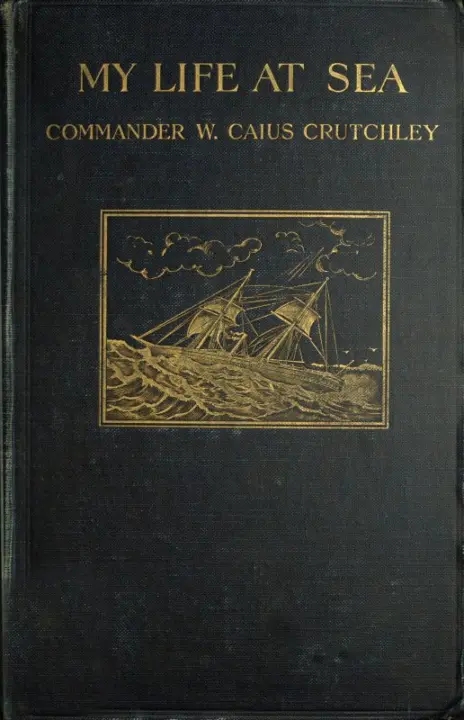
"My Life at Sea" by William Caius Crutchley is an autobiographical narrative written in the early 20th century. This memoir recounts the author's adventurous life as a seaman during the significant transition from sail-powered ships to steam navigation in the British mercantile marine from 1863 to 1894. Crutchley shares personal stories, reflections on the culture of naval life, and experiences sailing various types of ships, capturing the spirit of maritime exploration and the challenges faced by sailors of his time. The opening of this memoir introduces us to Crutchley’s childhood ambitions and the events that led him to a life at sea. The narrative begins with the arrival of the vessel "Figaro" in Margate, which sparked Crutchley's desire to pursue a maritime career. He describes his initial reluctance from his family to support his aspirations but highlights key figures like Mr. Trapp, a shipowner who became influential in his journey. The chapter reflects on his early education, the discipline of maritime life, the connections made in the bustling ports, and the colorful characters encountered, setting the stage for a rich tapestry of sea adventures and life lessons in the chapters to follow.
Introduction adapted from the source catalogue; source summaries may be automatically generated.
Free to read · English · 102,905 words · No account needed
MAKE TIME FOR A GOOD BOOK
On by default. Untick to stop anonymous reading totals. Each page counts after 10 seconds in view. How this works.
Anonymous counting is on unless you have switched it off.
It was a glorious passage from Madeira outward. The weather was fine, the passengers were contented and happy, and altogether we were sorry when we got to the Cape and each went their separate ways. There had been some discussion on the previous voyage as to whether the ship could lay in the Company’s berth, or whether she was not too big to do so. There was only one way to settle this, and that was to put her in it and try. This I did, and I remember there were some complimentary notices in the Cape papers on the transaction. We went up the coast that time as far as East London, and had the best of luck in getting rid of our cargo. I profited greatly by the study of a little work on South African coast weather by my friend Captain Hepworth, who had obtained a wonderful insight into it. To know what the weather on that coast is likely to be is no small advantage in taking up an anchorage. Further, I began to discover that Harry Escombe was more than right in his remarks, and that to keep pace with the time there could be no resting on your oars, but a constant search for, and acquisition of knowledge. On the road back to Algoa Bay my old coasting knowledge saved me some miles, for time was short to save daylight. She was doing fourteen knots, and I slipped along inside Bird Island with happy results.
H.M.S. Boadicea was there, and we resumed former acquaintance, but when sailing day came Admiral Salmon expressed a wish that we should not leave before midnight, as a ball was to take place and a young lady friend of his wished to see a little of it. He promised to put her on board by midnight, observing that mail steamer captains were only like “so many tame cats,” and as the agent was agreeable we stayed until that hour, when we left for the Cape. In the early hours of the morning, however, we had an accident. The strap of the high-pressure eccentric got hot and seized to the sheave, the result being a breakdown which might have been very considerably worse. This, however, was just one of those cases when my chief engineer was at his best. He hung up the end of the link with a piece of chain, and a screw to adjust its proper length, and in a short time was ready to proceed, but was not prepared under any conditions to turn the engines astern. We got into Table Bay the next evening, but had to creep in very cautiously to get the anchor down. We were visited from the shore, and arrangements were made to repair damages, we remaining in the bay until they were completed. This was dreadful; it meant delay in final loading and coaling, and also meant things being in a mess on sailing day. I went to bed considering the matter. Daybreak brought one of those beautiful fine mornings when it is a pleasure to be alive. I had had all night to think over the problem and had made up my mind as to what was the proper thing to do. I ordered steam to move, and sent for John Tyson, my chief. To him I said, “Get the stern anchor ready for letting go (we had a stern davit) and bend on to it the biggest hawser we have; see that the hawser is taken to the bitts so that it can be veered, and let me know when it is ready.” In due course this was done, and shortening in the bower cable I steamed the ship round on her anchor until she was pointed for the dock entrance, but as she had swung a little too far before I got the anchor, I had to let it go again and repeat the operation, this time with success. As soon as the ship’s nose was inside the entrance I let go the stern anchor, and veering on the hawser and holding on as required we got to our berth without the least trouble or damage. I ought, however, to have buoyed the stern anchor, for it gave some trouble to trip to the boat that picked it up. All went on now swimmingly, and we were spick and span when sailing day came. I think the evolution I had performed was considered to have been a little risky by the powers that were, but as it came off all right nothing was said to me. The Cape Times, however, in commenting upon it said that as far as they knew this was the third time in history that such a thing had been done, the other two instances being St. Paul on the occasion of his shipwreck, and Admiral Lord Nelson at the Battle of the Nile! We made a very fine passage home, something just over eighteen days; it was not a record but something very close to it. There are upon my bookshelves now some very pleasant mementoes of kindly souls who helped to make a delightful and memorable trip for me.
Your reading position is saved on this browser. Take it to another device with a library code. Reading pages adapt to text, rather than matching a printed edition.
BEHIND THE BOOK
This eBook is for the use of anyone anywhere in the United States and most other parts of the world at no cost and with almost no restrictions whatsoever. You may copy it, give it away or re-use it under the terms of the Project Gutenberg License included with this eBook or online at www.gutenberg.org. If you are not located in the United States, you will have to check the laws of the country where you are located before using this eBook. Read the source licence.
The original source file, including credits and licence, is retained by this library. Request an original-format copy at no charge. Please include the book title and Project Gutenberg identifier #48582.
KEEP YOUR CURIOSITY GOING
Cécile Tormay

Moritz Busch
John L. Ransom
Frances Wright
Cécile Tormay

Mabel Potter Daggett