THE CLASSIC COLLECTION✦An outlaw’s diary: the CommuneCLASSIC FREE BOOKS
An outlaw’s diary: the Commune
Cécile Tormay
THE CLASSIC COLLECTION · 1912
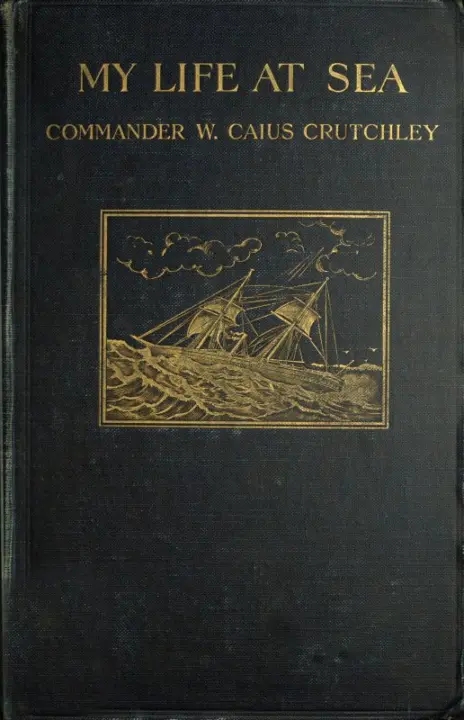
"My Life at Sea" by William Caius Crutchley is an autobiographical narrative written in the early 20th century. This memoir recounts the author's adventurous life as a seaman during the significant transition from sail-powered ships to steam navigation in the British mercantile marine from 1863 to 1894. Crutchley shares personal stories, reflections on the culture of naval life, and experiences sailing various types of ships, capturing the spirit of maritime exploration and the challenges faced by sailors of his time. The opening of this memoir introduces us to Crutchley’s childhood ambitions and the events that led him to a life at sea. The narrative begins with the arrival of the vessel "Figaro" in Margate, which sparked Crutchley's desire to pursue a maritime career. He describes his initial reluctance from his family to support his aspirations but highlights key figures like Mr. Trapp, a shipowner who became influential in his journey. The chapter reflects on his early education, the discipline of maritime life, the connections made in the bustling ports, and the colorful characters encountered, setting the stage for a rich tapestry of sea adventures and life lessons in the chapters to follow.
Introduction adapted from the source catalogue; source summaries may be automatically generated.
Free to read · English · 102,905 words · No account needed
MAKE TIME FOR A GOOD BOOK
On by default. Untick to stop anonymous reading totals. Each page counts after 10 seconds in view. How this works.
Anonymous counting is on unless you have switched it off.
There have been many ugly ships afloat--the Basuto, for instance--but for sheer naked ugliness and brutality unashamed, the Asiatic must be given the palm. She was built at some north-country port, and had a bow like a circular haystack. When she was light and a breeze was blowing, very nice handling was required to prevent her taking charge herself. But she had her good points: for one thing there was a decent compass, and she handled well in fine weather; for the rest she was comfortable enough at sea, but had not been well attended to as regards her upkeep, and wore a slovenly aspect altogether. This I at once set myself to remedy, and she presented a vastly different appearance the next time she came into Southampton. We of course were on the intermediate service, but when we arrived at Zanzibar for some reason there was great jollification going on, in which we participated. I gave a dinner and ball attended by every lady in the place, except two--the French consul’s wife and sister. They were absent, as the captain of a French man-of-war told me in strict confidence, because the unmarried sister’s dress was prettier than that of madam. The fact remains that we mustered, I think, eight ladies, and they were very well pleased. What was of more importance, however, to my mind, was a shooting match got up between the officers of the cable-laying ship, H.M.S. London, and ourselves. The London found the rifles and the ammunition, and P. G. VanderByl, one of the lieutenants, was in charge of the London team. I had known his people at the Cape for years past, and was afterwards shipmates with him in the old Devastation. We sailed up the harbour in one of the London’s sailing cutters; they had several, and very fancifully named they were--after the names then in vogue on the front pages of waltz music. This one was called Olga, and she was navigated and conned by VanderByl as if she had been a battleship. It is, perhaps, needless to say that we were fairly well provided also for a picnic. I had in my team a great big hulking quartermaster whom I had seen do very well on the range at home, and I was relying upon him and some of my officers to make a good show. To make a long story short, the Londons shot abominably, and we did rather worse, the cable ship being a bad third. My quartermaster was a distinct failure. The Londons were delighted to find they were not beaten, for it turned out afterwards that their captain would have been vexed had they been. It was at this time that I made the acquaintance of Captain Ouless, R.N., who was navigator to the London. I always found navigating officers most willing to help a shipmaster with the time, or any information that may be at their disposal. I fancy it was on this voyage also that I first met H. M. Stanley. I was taken by one of the officers from the consulate, a nice fellow named Holmwood, into a large, low, fairly light room. A small white man was leaning against the wall, and squatted all round the room were the men Stanley was engaging for his trip to the interior. It was a rather remarkable gathering, but if the truth be told, neither then nor afterwards did he give me the impression of being the remarkable man he in reality was. There was also in the port that beautiful yacht the Lancashire Witch, afterwards bought by the Admiralty for a surveying craft. She was owned by Sir Thomas Hesketh, but I do not remember making his acquaintance. The Sultan’s forces were then under the command of a British naval officer named Matthews, and it was very remarkable the success that attended his efforts. His men regarded him with immense respect and veneration, and would have gone through fire and water for him. It was quite a sight to see them drilling in the square in front of the palace. I ought also to say that the Sultan was most generous in providing horses for visitors who wished to ride. He had a sort of a henchman called Mahomet, who spoke very good English, but was not, if my memory serves me, an unswerving Mohamedan, for at times he admired the wines of France. Although afflicted badly with elephantiasis, a very common complaint there, he would always manage any little matter that might be required on shore, but naturally he liked his perquisites and saw that he got them. If report spoke correctly, he could have told the tale as to how the death of gallant Captain Brownrigg, R.N., was brought about, but as I cannot state facts it is little use talking over that sad story.
Your reading position is saved on this browser. Take it to another device with a library code. Reading pages adapt to text, rather than matching a printed edition.
BEHIND THE BOOK
This eBook is for the use of anyone anywhere in the United States and most other parts of the world at no cost and with almost no restrictions whatsoever. You may copy it, give it away or re-use it under the terms of the Project Gutenberg License included with this eBook or online at www.gutenberg.org. If you are not located in the United States, you will have to check the laws of the country where you are located before using this eBook. Read the source licence.
The original source file, including credits and licence, is retained by this library. Request an original-format copy at no charge. Please include the book title and Project Gutenberg identifier #48582.
KEEP YOUR CURIOSITY GOING
Cécile Tormay

Moritz Busch
John L. Ransom
Frances Wright
Cécile Tormay

Mabel Potter Daggett