THE CLASSIC COLLECTION✦An outlaw’s diary: the CommuneCLASSIC FREE BOOKS
An outlaw’s diary: the Commune
Cécile Tormay
THE CLASSIC COLLECTION · 1912
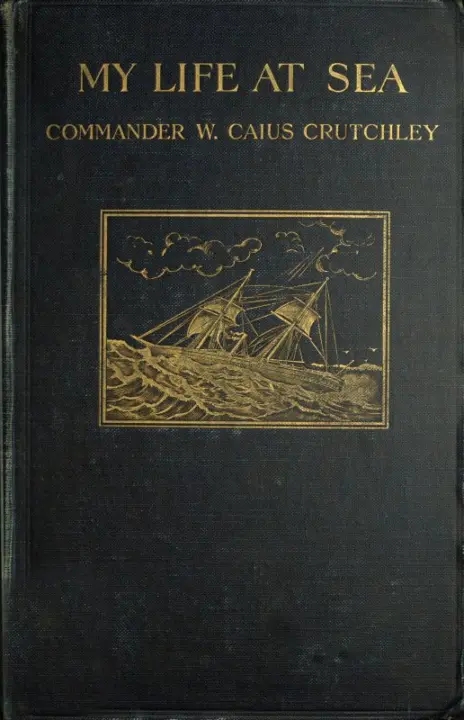
"My Life at Sea" by William Caius Crutchley is an autobiographical narrative written in the early 20th century. This memoir recounts the author's adventurous life as a seaman during the significant transition from sail-powered ships to steam navigation in the British mercantile marine from 1863 to 1894. Crutchley shares personal stories, reflections on the culture of naval life, and experiences sailing various types of ships, capturing the spirit of maritime exploration and the challenges faced by sailors of his time. The opening of this memoir introduces us to Crutchley’s childhood ambitions and the events that led him to a life at sea. The narrative begins with the arrival of the vessel "Figaro" in Margate, which sparked Crutchley's desire to pursue a maritime career. He describes his initial reluctance from his family to support his aspirations but highlights key figures like Mr. Trapp, a shipowner who became influential in his journey. The chapter reflects on his early education, the discipline of maritime life, the connections made in the bustling ports, and the colorful characters encountered, setting the stage for a rich tapestry of sea adventures and life lessons in the chapters to follow.
Introduction adapted from the source catalogue; source summaries may be automatically generated.
Free to read · English · 102,905 words · No account needed
MAKE TIME FOR A GOOD BOOK
On by default. Untick to stop anonymous reading totals. Each page counts after 10 seconds in view. How this works.
Anonymous counting is on unless you have switched it off.
There was nothing of exciting interest on the passage; things went smoothly, but the following incident deserves to be told. The officer commanding the troops visited the troops’ quarters every morning at eleven with his officers and me in attendance. There were sentries posted in different parts of the ship, and one was stationed by the principal hatchway. Some point was raised as we were going below, and the O.C. turned to the sentry and said, “Go and find Sergeant So-and-So.” The man, a youngster, flushed very red and said, “I must not leave my post, sir.” The O.C. turned red too and said, “But I tell you to go,” and again received the same reply. By this time the O.C. had got his breath, some one else was sent, and the sentry was told that he had done quite right. I observed to the O.C. when the inspection was over that I fancied that chap would soon get promotion and I found that the O.C. shared my view. It was an interesting case to me, for I wondered in the circumstances whether a sailor sentry would have hesitated to obey an immediate order from his C.O.
One other story of an entirely different nature. Fatigue parties were at times told off to clean paintwork about the decks, and they were usually in the care of an able seaman who put them in the way of doing it properly. One afternoon I was out of sight but within earshot of a party working with a seaman named McRae, a man I could trust to do anything, but an awfully wild scoundrel if he got out of hand. Said one of the young Tommies, “What would you do if you hadn’t got us to clean the ship for you?” Said McRae, “If it was not for the likes of you carrion there’d be no dirt to clean.” I retired to my cabin for a big laugh over that. I think we landed the regiment at East London, using cheese baskets to put the men into the lighters, and in due course we started homewards, but there was an incident in Algoa Bay that I should like to tell the truth about at last. At this time there was a good deal of rivalry between some of the ships, as to which had made the fastest passage, and some brilliant genius conceived the idea of making the image of a brass cock with his wings extended in the act of crowing. This was mounted on the jackstaff of the commodore’s ship the German, but many of us thought that she did not deserve the trophy, for even the old Roman, which was then in port, had made a wonderful run after a smart chief engineer had altered the lead of his slide valves. Be that as it may, it would be good business to score a point off the chief of the German, if we could manage to do so. There was one officer in the Danube who was born for mischief, his name was Samuel Pechell. Afterwards he came into a baronetcy and soon died. But at the time I write of he was third or fourth officer. There were many ships in the Bay, some belonging to the Currie fleet, so that suspicion would be divided as to the perpetrators of the robbery, especially as it was said that some people from the Conway Castle had made a previous attempt at Cape Town. It was a bright moonlight night, shortly after 3 a.m., when Sammy Pechell and McRae having covered our dingy with white sheets, started to paddle ahead of the American, and drop down to her bows hanging on by the cable. Like a monkey McRae was up the cable, and in less time than it takes me to write these lines was down again with the coveted bird. I had grave suspicions that the Melrose, one of the Currie coasters just coming in, had seen the job, but I suppose that a boat under the bow of an opposition ship did not interest them. There was a watch too in the German, for “seven bells” were struck just after the cock disappeared. We had intended to put it up on the Roman, but I vetoed anything further that night. The bird was afterwards packed in a game hamper and set to Wait, the chief officer, in Southampton. Next morning there was a fine hubbub all round the fleet; there may have been suspicions but no certainty, for many thought it had been done by some of the Currie men. In due course I told my skipper, who dwelt on the enormity of stealing the commodore’s bird and told me I ought to be sacked for encouraging such a thing. Dear old Captain Coxwell was the commodore, and his remarks to me the next time we met were picturesque, but never shall I forget distinctly seeing McRae cross himself before he shinned up that cable. All the people in the German were quite mad over the episode, and I am afraid that Pechell had a bad time of it afterwards when he had to sail with McLean Wait, who I fancy had got to the truth of the business.
Your reading position is saved on this browser. Take it to another device with a library code. Reading pages adapt to text, rather than matching a printed edition.
BEHIND THE BOOK
This eBook is for the use of anyone anywhere in the United States and most other parts of the world at no cost and with almost no restrictions whatsoever. You may copy it, give it away or re-use it under the terms of the Project Gutenberg License included with this eBook or online at www.gutenberg.org. If you are not located in the United States, you will have to check the laws of the country where you are located before using this eBook. Read the source licence.
The original source file, including credits and licence, is retained by this library. Request an original-format copy at no charge. Please include the book title and Project Gutenberg identifier #48582.
KEEP YOUR CURIOSITY GOING
Cécile Tormay

Moritz Busch
John L. Ransom
Frances Wright
Cécile Tormay

Mabel Potter Daggett