THE CLASSIC COLLECTION✦From the Bottom Up: The Life Story of Alexander IrvineCLASSIC FREE BOOKS
From the Bottom Up: The Life Story of Alexander Irvine
Alexander Irvine
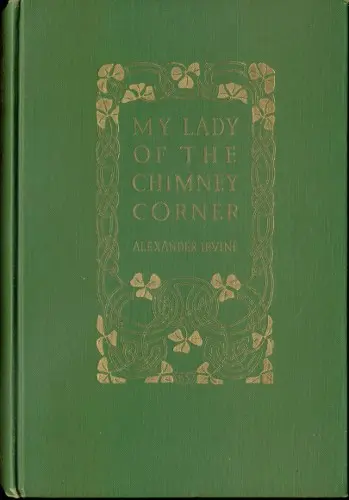
THE CLASSIC COLLECTION · 1913
"My Lady of the Chimney Corner" by Alexander Irvine is a novel written in the early 20th century. The story focuses on the life of Anna, a young girl from a working-class family in County Antrim, and her journey through love, hardship, and the complexities of marriage in an Irish peasant community. It addresses themes of poverty, faith, and resilience, revolving around Anna's life choices and the societal expectations that challenge her. The opening of the novel introduces us to Anna as a beloved and well-regarded child in her community, highlighted by her caring nature and educational aspirations. As she matures, Anna becomes romantically involved with Jamie Irvine, a shoemaker's apprentice from a lower station. Their relationship faces obstacles stemming from familial expectations and religious differences. The narrative describes their courtship, Anna's ambitions for education, and the looming specter of poverty that complicates their lives. Anna's parents have plans for her future that conflict with her feelings for Jamie, setting the stage for the struggles they must navigate as they choose love over societal norms.
Introduction adapted from the source catalogue; source summaries may be automatically generated.
Free to read · English · 33,045 words · No account needed
MAKE TIME FOR A GOOD BOOK
On by default. Untick to stop anonymous reading totals. Each page counts after 10 seconds in view. How this works.
Anonymous counting is on unless you have switched it off.
"No."
"He wants t' dhry thim so he can kiss her cup whin he wipes it! Kiss her cup, ye mind; and right content with that!"
"I don't blame 'im," said he, "I'd kiss th' very groun' she walked on!"
As we proceeded to wash the cups, Mary asked:
"Diz th' ministhers in America wash dishes?"
"Some of them."
"What kind?"
"My kind."
"What do th' others do?"
"The big ones lay corner-stones and the little ones lay foundations."
"Saints alive," she said, "an' what do th' hens do?"
"They clock" (hatch).
"Pavin' stones?"
"I didn't say pavin' stones!"
"Oh, aye," she laughed loudly.
"Luk here," Jamie said, "I want t' laugh too. Now what th' ---- is't yer
gigglin' at?"
I explained.
He smiled and said:
"Jazus, bhoy, that reminds me ov Anna, she cud say more funny things than aany wan I iver know'd."
"And that reminds me," I said, "that the word you have just misused she always pronounced with a caress!"
"Aye, I know rightly, but ye know I mane no harm, don't ye?"
"I know, but you remember when she used that word every letter in it was dressed in its best Sunday clothes, wasn't it?"
"Och, aye, an' I'd thravel twinty miles jist t' hear aany wan say it
like Anna!"
"Well, I have traveled tens of thousands of miles and I have heard the greatest preachers of the age, but I never heard any one pronounce it so beautifully!"
"But as I was a-sayin' bhoy, I haaven't had a rale good laugh since she
died; haave I, Mary?"
"I haaven't naither," Mary said.
"Aye, but ye've had double throuble, dear."
"We never let trouble rob us of laughter when I was here."
"Because whin ye wor here she was here too. In thim days whin throuble came she'd tear it t' pieces an' make fun ov aych piece, begorra. Ye might glour an' glunch, but ye'd haave t' laugh before th' finish--shure ye wud!"
The neighbors began to knock again. Some of the knocks were vocal and as plain as language. Some of the more familiar gaped in the window.
"Hes he hed 'is bath yit?" asked McGrath, the ragman.
We opened the door and in marched the inhabitants of our vicinity for
the second "crack."
This right of mine own people to come and go as they pleased suggested to me the thought that if I wanted to have a private conversation with my father I would have to take him to another town.
Your reading position is saved on this browser. Take it to another device with a library code. Reading pages adapt to text, rather than matching a printed edition.
BEHIND THE BOOK
This eBook is for the use of anyone anywhere in the United States and most other parts of the world at no cost and with almost no restrictions whatsoever. You may copy it, give it away or re-use it under the terms of the Project Gutenberg License included with this eBook or online at www.gutenberg.org. If you are not located in the United States, you will have to check the laws of the country where you are located before using this eBook. Read the source licence.
The original source file, including credits and licence, is retained by this library. Request an original-format copy at no charge. Please include the book title and Project Gutenberg identifier #31765.
KEEP YOUR CURIOSITY GOING
Coulson Kernahan

Maurice Baring
Frances Wright
Cécile Tormay

Frederic Jesup Stimson

W. H. P. (William Henry Pope) Jarvis