The place of the individual in society
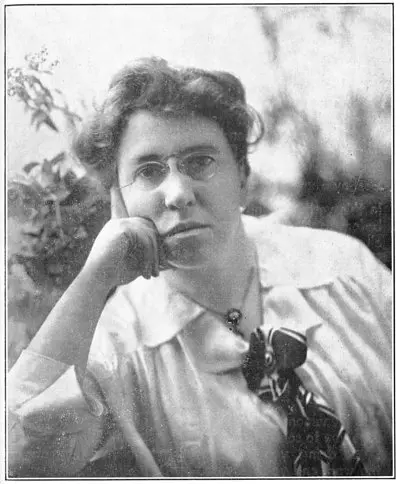
Emma Goldman
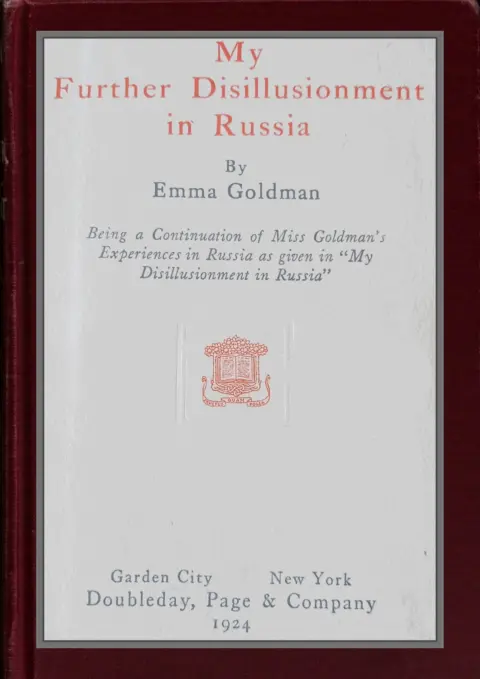
THE CLASSIC COLLECTION · 1924
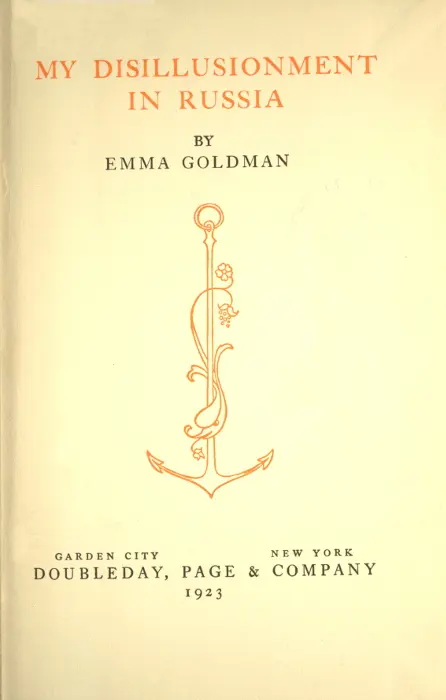
"My Further Disillusionment in Russia" by Emma Goldman is a historical account written in the early 20th century. This work serves as a continuation of Goldman's reflections on her experiences in revolutionary Russia, following her earlier book "My Disillusionment in Russia." The author, an outspoken anarchist and social activist, delves into the grim realities of life under Bolshevik rule, expressing a sense of betrayal as the ideals of the revolution she once supported dissolve into authoritarianism and oppression. The opening of the narrative describes Goldman’s return to Odessa after a challenging journey filled with delays and encounters with the local populace. As she navigates through the towns, she observes the stark contrast between abundant food supplies available and the pervasive poverty affecting the people, particularly the Jewish community in the region. Goldman details her interactions with local officials and citizens, highlighting a general atmosphere of disillusionment and sabotage within Soviet institutions. This sets the tone for her subsequent reflections on the broader implications of the Bolshevik regime and her evolving views on the revolution, indicating a deeper exploration of political disillusionment that characterizes the entire volume.
Introduction adapted from the source catalogue; source summaries may be automatically generated.
Free to read · English · 36,453 words · No account needed
MAKE TIME FOR A GOOD BOOK
On by default. Untick to stop anonymous reading totals. Each page counts after 10 seconds in view. How this works.
Anonymous counting is on unless you have switched it off.
Lenin was the first to realize that criminal blunder. He pointed out that it was a grave error to lead the workers to believe that they could build up the industries and engage in cultural work without the aid and coöperation of the intelligentsia. The proletariat had neither the knowledge nor the training for the task, and the intelligentsia had to be restored in the direction of the industrial life. But the recognition of one error never safeguarded Lenin and his Party from immediately committing another. The technical intelligentsia was called back on terms which added disintegration to the antagonism against the régime.
While the workers continued to starve, engineers, industrial experts, and technicians received high salaries, special privileges, and the best rations. They became the pampered employees of the State and the new slave drivers of the masses. The latter, fed for years on the fallacious teachings that muscle alone is necessary for a successful revolution and that only physical labour is productive, and incited by the campaign of hatred which stamped every intellectual a counter-revolutionist and speculator, could not make peace with those they had been taught to scorn and distrust.
Unfortunately Russia is not the only country where this proletarian attitude against the intelligentsia prevails. Everywhere political demagogues play upon the ignorance of the masses, teach them that education and culture are bourgeois prejudices, that the workers can do without them, and that they alone are able to rebuild society. The Russian Revolution has made it very clear that both brain and muscle are indispensable to the work of social regeneration. Intellectual and physical labour are as closely related in the social body as brain and hand in the human organism. One cannot function without the other.
It is true that most intellectuals consider themselves a class apart from and superior to the workers, but social conditions everywhere are fast demolishing the high pedestal of the intelligentsia. They are made to see that they, too, are proletarians, even more dependent upon the economic master than the manual worker. Unlike the physical proletarian, who can pick up his tools and tramp the world in search of a change from a galling situation, the intellectual proletarians have their roots more firmly in their particular social environment and cannot so easily change their occupation or mode of living. It is therefore of utmost importance to bring home to the workers the rapid proletarization of the intellectuals and the common tie thus created between them. If the Western world is to profit by the lessons of Russia, the demagogic flattery of the masses and blind antagonism toward the intelligentsia must cease. That does not mean, however, that the toilers should depend entirely upon the intellectual element. On the contrary, the masses must begin right now to prepare and equip themselves for the great task the revolution will put upon them. They should acquire the knowledge and technical skill necessary for managing and directing the intricate mechanism of the industrial and social structure of their respective countries. But even at best the workers will need the coöperation of the professional and cultural elements. Similarly the latter must realize that their true interests are identical with those of the masses. Once the two social forces learn to blend into one harmonious whole, the tragic aspects of the Russian Revolution would to a great extent be eliminated. No one would be shot because he “once acquired an education.” The scientist, the engineer, the specialist, the investigator, the educator, and the creative artist, as well as the carpenter, machinist, and the rest, are all part and parcel of the collective force which is to shape the revolution into the great architect of the new social edifice. Not hatred, but unity; not antagonism, but fellowship; not shooting, but sympathy--that is the lesson of the great Russian débâcle for the intelligentsia as well as the workers. All must learn the value of mutual aid and libertarian coöperation. Yet each must be able to remain independent in his own sphere and in harmony with the best he can yield to society. Only in that way will productive labour and educational and cultural endeavour express themselves in ever newer and richer forms. That is to me the all-embracing and vital moral taught by the Russian Revolution.
Your reading position is saved on this browser. Take it to another device with a library code. Reading pages adapt to text, rather than matching a printed edition.
Emma Goldman
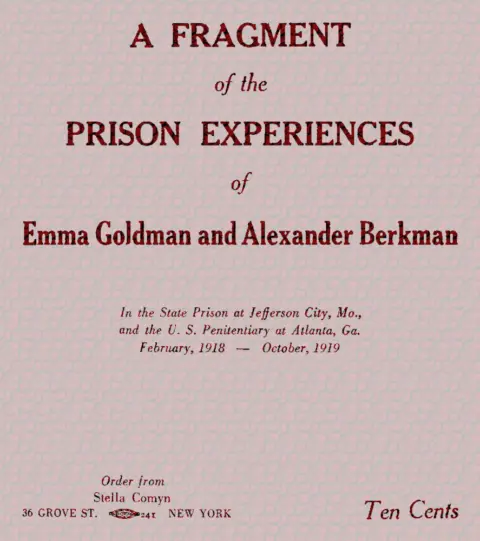
Alexander Berkman & Emma Goldman
Emma Goldman & Alexander Berkman
Emma Goldman
BEHIND THE BOOK
This eBook is for the use of anyone anywhere in the United States and most other parts of the world at no cost and with almost no restrictions whatsoever. You may copy it, give it away or re-use it under the terms of the Project Gutenberg License included with this eBook or online at www.gutenberg.org. If you are not located in the United States, you will have to check the laws of the country where you are located before using this eBook. Read the source licence.
The original source file, including credits and licence, is retained by this library. Request an original-format copy at no charge. Please include the book title and Project Gutenberg identifier #74192.
KEEP YOUR CURIOSITY GOING
Cécile Tormay

Moritz Busch
John L. Ransom
Frances Wright
Cécile Tormay

Mabel Potter Daggett